
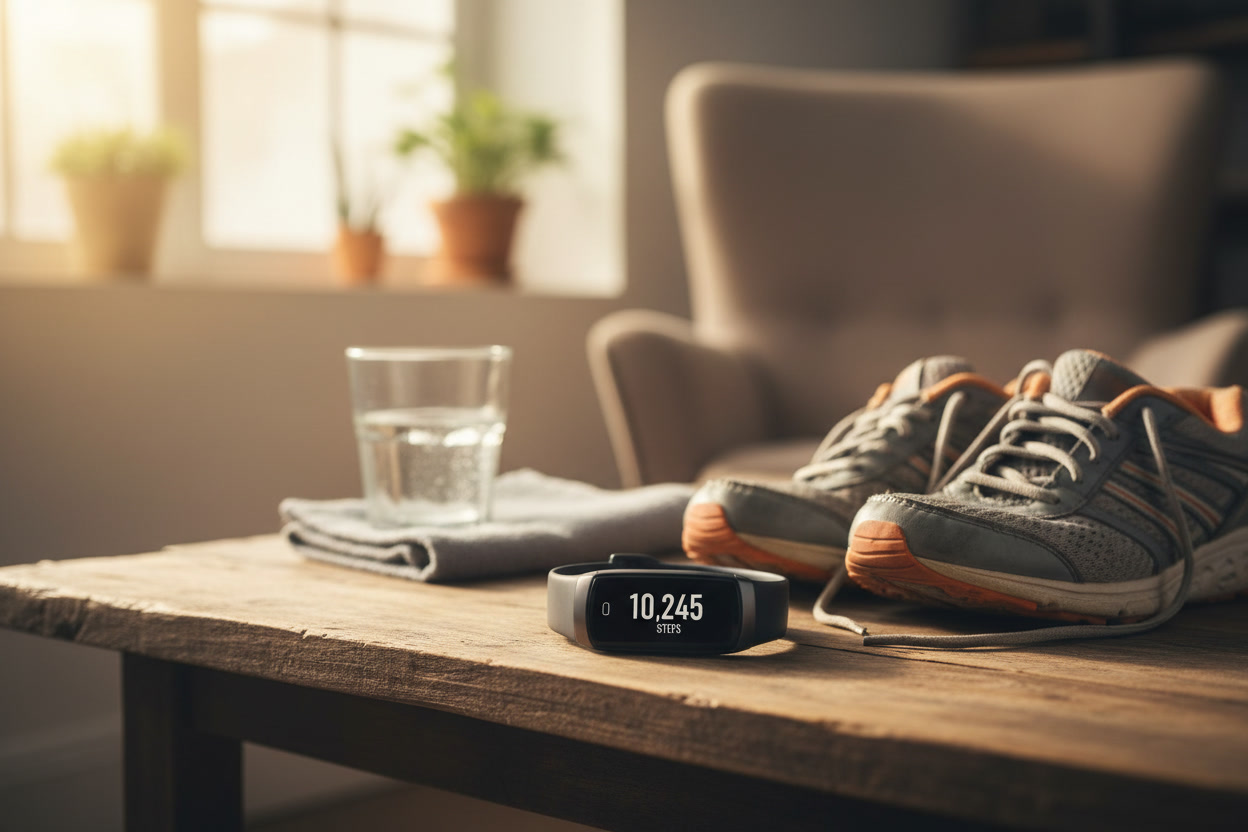
You’ve probably heard that 10,000 steps a day is the gold standard for health. Maybe you’ve even felt guilty watching your step counter tick over at 6,742 by bedtime. But here’s the thing: that number didn’t come from decades of medical research. It came from a 1960s Japanese marketing campaign for a pedometer called “Manpo-kei,” which translates to “10,000 steps meter.” The company thought the character for 10,000 looked like a person walking. That’s it. That’s the origin story.
So if 10,000 isn’t based on science, what number actually is? Turns out, the real answer is more interesting and way more forgiving than you’d think.
The Short Version
Benefits start around 4,000 steps, with the sweet spot between 7,000-8,000 for most adults. More helps, but the biggest health gains happen in those first few thousand steps if you’re currently sedentary. Your age matters too: older adults see maximum benefits around 7,000-8,000 steps, while younger people benefit from pushing closer to 8,000-10,000.

What the Research Actually Shows
A 2022 study published in JAMA Internal Medicine tracked nearly 80,000 UK adults and found something revealing: mortality risk dropped significantly with each additional 2,000 steps, but the curve flattened out between 8,000 and 10,000 steps. In other words, going from 2,000 to 4,000 steps gave people a bigger health boost than going from 10,000 to 12,000.
Another large study from JAMA Network Open in 2021 looked at step counts and death rates across different age groups. For adults over 60, mortality risk leveled off at about 7,000 steps per day. For younger adults under 60, the plateau happened closer to 8,000-10,000 steps. Both groups saw benefits well before hitting five figures.
The pattern is clear: some walking is infinitely better than none, and there’s no magic cliff at 10,000 where benefits suddenly appear.
Why Every Step Actually Counts
Your body doesn’t wait until you hit an arbitrary number to start reaping rewards. Even modest increases in daily steps are linked to:
- Lower blood pressure and reduced cardiovascular disease risk
- Better blood sugar regulation and decreased diabetes risk
- Improved mood and reduced anxiety symptoms
- Stronger bones and better balance as you age
- Reduced risk of certain cancers, particularly colon and breast cancer
A 2019 study from Harvard Medical School found that women who averaged just 4,400 steps per day had significantly lower mortality rates than those who took 2,700 steps. The benefits kept increasing up to about 7,500 steps, then leveled off.
Going from sedentary to somewhat active delivers a bigger health punch than going from active to very active.
Finding Your Personal Step Target
Instead of fixating on 10,000, think about where you are now and where you can realistically go. If you’re currently averaging 3,000 steps a day, bumping that to 5,000 is a genuine achievement that’ll move the needle on your health.
Start With Your Baseline
Track your normal daily steps for a week without trying to change anything. No extra walks, no parking farther away. Just your regular routine. That number is your baseline. Now add 1,000-2,000 steps to that. That’s your initial target.
Once that feels manageable for a few weeks, add another 1,000. Keep going until you hit somewhere in the 7,000-9,000 range, or until adding more steps starts to feel like a burden rather than a habit.
Consider Your Age and Goals
If you’re over 60, aiming for 7,000-8,000 steps aligns with research showing maximum longevity benefits. If you’re younger and trying to maintain weight or build fitness, pushing toward 8,000-10,000 makes sense. But if you’re managing a chronic condition, recovering from illness, or just starting an exercise habit, 5,000-6,000 steps might be your sweet spot.
There’s also the intensity factor. A 2022 study in JAMA Internal Medicine found that step intensity (your pace) matters as much as total count. Getting 7,000 steps that include 20-30 minutes of brisk walking delivers better cardiovascular benefits than 10,000 slow, meandering steps.
Practical Ways to Actually Hit Your Number
You don’t need to carve out an hour for a dedicated walk, though that works too. Most people find it easier to distribute steps throughout the day.
Morning Moves
A 10-minute walk before breakfast adds about 1,000-1,200 steps and has the bonus effect of helping regulate your circadian rhythm. If you’re working from home, this also creates a psychological commute that helps separate sleep mode from work mode.
Break Up Your Day
- Take calls while walking, either outside or around your space
- Set a timer to get up every 90 minutes for a 5-minute walk loop
- Park at the far end of the lot (genuinely adds 200-400 steps per trip)
- Walk to a colleague’s desk instead of messaging when possible
- Use the bathroom or break room on a different floor
The after-dinner walk might be the most underrated health habit. A 15-minute stroll about 30 minutes after eating helps with blood sugar control and digestion, plus it adds 1,500-2,000 steps without requiring any schedule reorganization.
The best step count is the one you’ll actually maintain six months from now.
When Weather or Schedule Interferes
Some days, outdoor walking isn’t happening. Indoor alternatives that count:
- Walking in place during TV commercials or between episodes
- Pacing while listening to podcasts or audiobooks
- Dancing to 3-4 songs (seriously, it counts)
- Walking laps around your home or apartment building hallways
- Mall walking before stores open

What Matters More Than the Number
Here’s something most step-counting articles won’t tell you: consistency beats heroics. Walking 6,000 steps six days a week delivers better health outcomes than walking 15,000 steps twice a week and being sedentary the other five days.
Your body adapts to regular movement. It starts to expect it, crave it even. But it also remembers long stretches of inactivity. Building a sustainable habit at a moderate level beats burning out on an aggressive goal.
Listen to Your Body’s Signals
If your knees ache, your feet hurt, or you’re exhausted, that’s information. More isn’t always better. Some people thrive on 12,000 steps a day. Others feel their best at 6,000. The research shows benefits across a wide range because humans are variable.
Also worth noting: steps are just one measure of movement. If you’re swimming, cycling, doing yoga, or lifting weights, those activities improve your health even if they don’t rack up impressive step counts. A 2023 study in the European Journal of Preventive Cardiology found that combining walking with other forms of exercise provided better cardiovascular outcomes than walking alone, even at high step counts.
The Bottom Line
The magic number isn’t 10,000. For most adults, it’s somewhere between 7,000 and 9,000, with significant benefits starting much lower. If you’re currently averaging 3,000 steps, getting to 5,000 is a meaningful improvement. If you’re at 6,000, pushing to 7,500 will likely help. And if you’re already hitting 8,000 most days, you’re doing great. Adding more might help marginally, but you’re already in the zone where walking is genuinely protecting your health.
The goal isn’t perfection. It’s consistency at a level that fits your life, your body, and your schedule. Some walking beats no walking, every single time. And that matters more than any number on a screen.