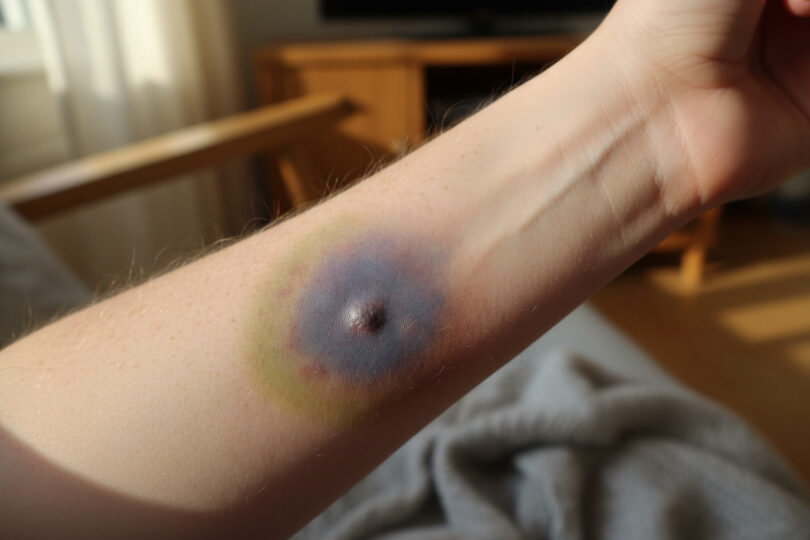
You’re getting dressed and notice a purple splotch on your shin. No memory of bumping into anything. Or maybe you lightly graze the corner of a table and by evening, there’s a bruise the size of a plum. If you feel like you’re collecting bruises faster than a toddler learning to walk, you’re not imagining it.
Bruising happens when tiny blood vessels under your skin break and leak. But some people’s vessels are more fragile than others, and the reasons why range from completely harmless to worth a doctor’s visit. The trick is knowing which category you fall into.
Quick Facts
- Women bruise more easily than men due to thinner skin and different fat distribution
- Bruises change color (purple to green to yellow) as your body breaks down the leaked blood
- Most bruises heal in 2-4 weeks without treatment
- Easy bruising becomes more common after age 50
- Certain medications make you bruise up to 50% more easily
The Normal Reasons You’re Bruising
Before you panic, let’s cover the usual suspects. Most easy bruising has a straightforward explanation that doesn’t involve anything scary.
Your Age and Skin Type
As you age, your skin gets thinner and loses the protective fatty layer that cushions blood vessels. Think of it like bubble wrap with half the bubbles popped. A 2019 study in the Journal of Dermatological Science found that skin thickness decreases by about 6% per decade after age 40. This means your blood vessels are closer to the surface and have less padding when you bump into things.
Fair-skinned people also tend to notice bruises more easily. The bruise is the same size, but it shows up more dramatically against lighter skin. It’s not that you’re bruising more, you’re just seeing the evidence more clearly.

Medications That Thin Your Blood
If you take aspirin, ibuprofen, or prescription blood thinners, bruising comes with the territory. These medications interfere with your blood’s ability to clot quickly. Even supplements count here: fish oil, ginkgo biloba, and high doses of vitamin E can all make you more prone to bruising.
A 2020 review in the American Journal of Medicine found that people on anticoagulants like warfarin or newer drugs like apixaban develop visible bruises from impacts that wouldn’t have left a mark before. This isn’t necessarily dangerous, but it’s something to mention to your doctor if the bruising seems excessive.
Your body is constantly repairing tiny blood vessel breaks you never see. Easy bruising just means your repair system is working a bit slower.
Vitamin Deficiencies
Your blood vessels need certain nutrients to stay strong. Vitamin C helps produce collagen, which keeps vessel walls sturdy. Vitamin K helps your blood clot properly. Low levels of either can lead to more frequent bruising.
Vitamin C deficiency is rare in developed countries, but it can happen if you’re not eating many fruits or vegetables. Vitamin K deficiency is more common in people with digestive issues that interfere with nutrient absorption. If you’re bruising easily and your diet has been terrible lately, that might be your answer.
When Bruising Signals Something More Serious
Most of the time, easy bruising is annoying but harmless. Sometimes, though, it’s your body waving a red flag. Here’s what separates normal from concerning.
Bruising Patterns That Warrant a Doctor Visit
See a healthcare provider if you notice:
- Large bruises (bigger than a quarter) appearing without any remembered injury
- Bruises that don’t start fading after two weeks
- Sudden increase in bruising frequency with no clear explanation
- Bruises accompanied by unusual bleeding (nosebleeds, bleeding gums, heavy periods)
- Bruises plus extreme fatigue or frequent infections
- Tiny red or purple dots (petechiae) appearing in clusters on your skin
The combination of symptoms matters more than bruising alone. A single mystery bruise every few weeks? Probably nothing. Multiple large bruises appearing suddenly along with fatigue and fever? That needs investigation.

Conditions That Cause Easy Bruising
Several medical conditions affect blood clotting or blood vessel strength. Von Willebrand disease, a genetic bleeding disorder, affects about 1% of the population and often goes undiagnosed for years. People with it bruise easily, bleed longer from cuts, and may have heavy menstrual periods.
Liver disease can reduce production of clotting factors, leading to increased bruising. Same with certain cancers affecting bone marrow, like leukemia or lymphoma, though these typically come with other symptoms like unexplained weight loss or persistent fatigue.
Thrombocytopenia means you have too few platelets, the blood cells responsible for clotting. This can result from autoimmune conditions, certain medications, or bone marrow problems. A simple blood test can check your platelet count.
If you’re suddenly bruising much more than usual, your body is trying to tell you something has changed.
What Your Doctor Will Look For
When you mention easy bruising to your doctor, they’ll likely start with questions: When did it start? Are you taking any new medications? Any other symptoms? Then comes a physical exam to look at the bruises themselves, checking their size, location, and pattern.
Blood tests can reveal a lot. A complete blood count checks your platelets and other blood cells. Clotting tests measure how well your blood forms clots. Liver function tests assess whether that organ is producing clotting factors properly. Vitamin levels can be measured directly.
According to research from Johns Hopkins, most people with easy bruising who have normal blood test results don’t have an underlying disease. The bruising is just their normal variation, often related to age, genetics, or sun damage to the skin.
How to Minimize Bruising
You can’t eliminate bruising entirely, but you can reduce how often it happens and how severe the bruises are.
Dietary Changes
Make sure you’re getting enough vitamin C (citrus fruits, bell peppers, strawberries) and vitamin K (leafy greens, broccoli, Brussels sprouts). If you suspect a deficiency, ask your doctor about supplements rather than self-prescribing high doses.
Flavonoids, compounds found in citrus fruits and berries, can strengthen blood vessel walls. A 2018 study in the journal Nutrients found that people who consumed more flavonoid-rich foods had stronger capillaries and less fragile skin.

Protective Measures
If you’re prone to bruising, a bit of padding goes a long way. Long sleeves and pants provide a barrier between your skin and potential impacts. When exercising, shin guards or padded compression sleeves can protect common bruise zones.
Moisturize regularly. Dry, thin skin tears and bruises more easily than well-hydrated skin. Use sunscreen religiously because sun damage breaks down collagen and makes blood vessels more fragile over time.
Medication Review
If you’re taking multiple medications, ask your doctor or pharmacist to review them. Sometimes there’s a combination effect where two or three drugs together increase bruising risk more than any single one would. Don’t stop taking prescribed medications without talking to your doctor, but do mention if bruising has become a problem.
The Bottom Line
Easy bruising is incredibly common and usually harmless. Age, genetics, medications, and minor nutrient deficiencies account for most cases. Your skin is getting thinner, your blood vessels are becoming more fragile, and those mystery bruises on your legs are probably from that chair you walk past every morning without thinking about it.
But context matters. If your bruising pattern has changed suddenly, if bruises are appearing without any cause, or if you’re experiencing other symptoms alongside the bruising, don’t brush it off. A simple blood test can rule out the serious stuff and give you peace of mind.
In the meantime, load up on leafy greens, protect your skin from the sun, and maybe rearrange the furniture so you stop hitting that same corner of the coffee table. Your shins will thank you.