
You finish a run feeling good, then two hours later your knees are complaining. Or maybe the pain shows up mid-run, that dull ache that makes you wonder if you should stop. Either way, you’re not alone. Studies suggest that between 40-50% of runners deal with knee pain at some point, making it the single most common running injury.
The frustrating part? Your knees aren’t necessarily weak or damaged. Most running-related knee pain comes from fixable issues in how you run, how strong your supporting muscles are, and how much you’re asking your body to do too soon.
Let’s figure out what’s going on and how to actually fix it.
The Short Version
Your knees hurt after running because: You’re likely overloading the joint through training errors (too much, too soon), muscle imbalances that shift stress onto your knees, or form issues that increase impact. The fix involves building strength in your hips and glutes, adjusting your training volume, and sometimes tweaking your running form.
Most important action: Start with hip and glute strengthening exercises three times per week. These muscles control how your knee tracks and absorbs force.
What’s Actually Happening Inside Your Knee
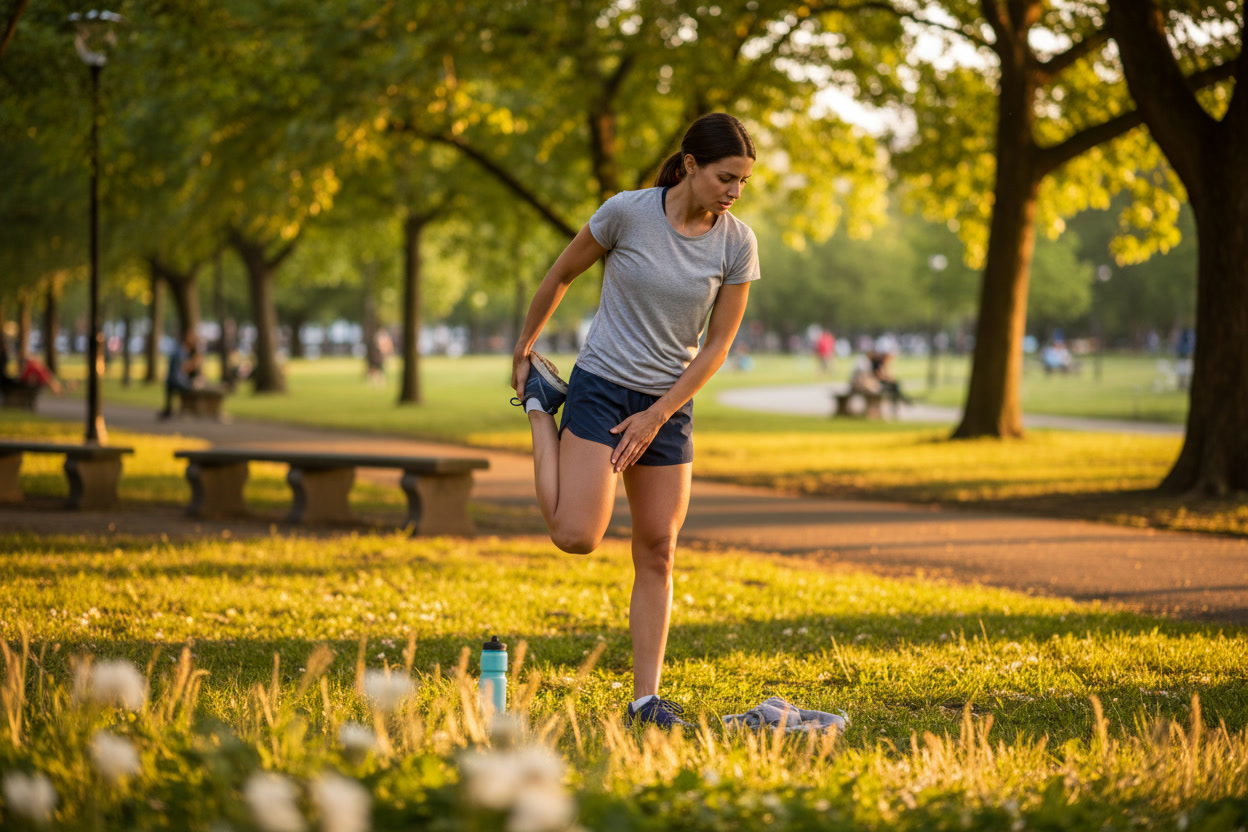
Your knee is caught in the middle. It sits between your hip and ankle, and when either of those joints isn’t doing its job properly, your knee pays the price.
The most common culprit is something called patellofemoral pain syndrome, which is basically your kneecap not tracking properly over your thigh bone. When your kneecap rubs against the bone underneath instead of gliding smoothly, you get that achy, hard-to-pinpoint pain around or behind the kneecap.
Here’s what typically causes it:
Weak Hips and Glutes
When your hip muscles are weak, your thigh bone rotates inward with each step. This pulls your kneecap out of alignment. A 2019 study in the British Journal of Sports Medicine found that runners with patellofemoral pain had significantly weaker hip abductors compared to pain-free runners.
Training Errors
The “too much, too soon” problem is real. Your bones, tendons, and cartilage adapt more slowly than your cardiovascular system. You might feel like you can run farther, but your tissues haven’t caught up yet. Increasing your weekly mileage by more than 10% each week dramatically increases injury risk.
Form Issues
Overstriding (landing with your foot too far in front of your body) creates a braking force that slams into your knee. Running with a cadence that’s too slow often goes hand-in-hand with overstriding.
Your knee doesn’t work in isolation. It’s the victim of what’s happening at your hip and ankle.
The Fixes That Actually Work
You don’t need expensive PT or fancy equipment to fix most running-related knee pain. You need consistency with a few targeted approaches.
Strengthen Your Hips and Glutes
This is the big one. Research consistently shows that hip strengthening reduces knee pain in runners. Do these exercises three times per week, not on your hardest running days:
- Side-lying leg lifts: Lie on your side, lift your top leg 30-45 degrees, hold for 2 seconds. 3 sets of 15 each side.
- Clamshells: Knees bent, feet together, lift your top knee. 3 sets of 20 each side.
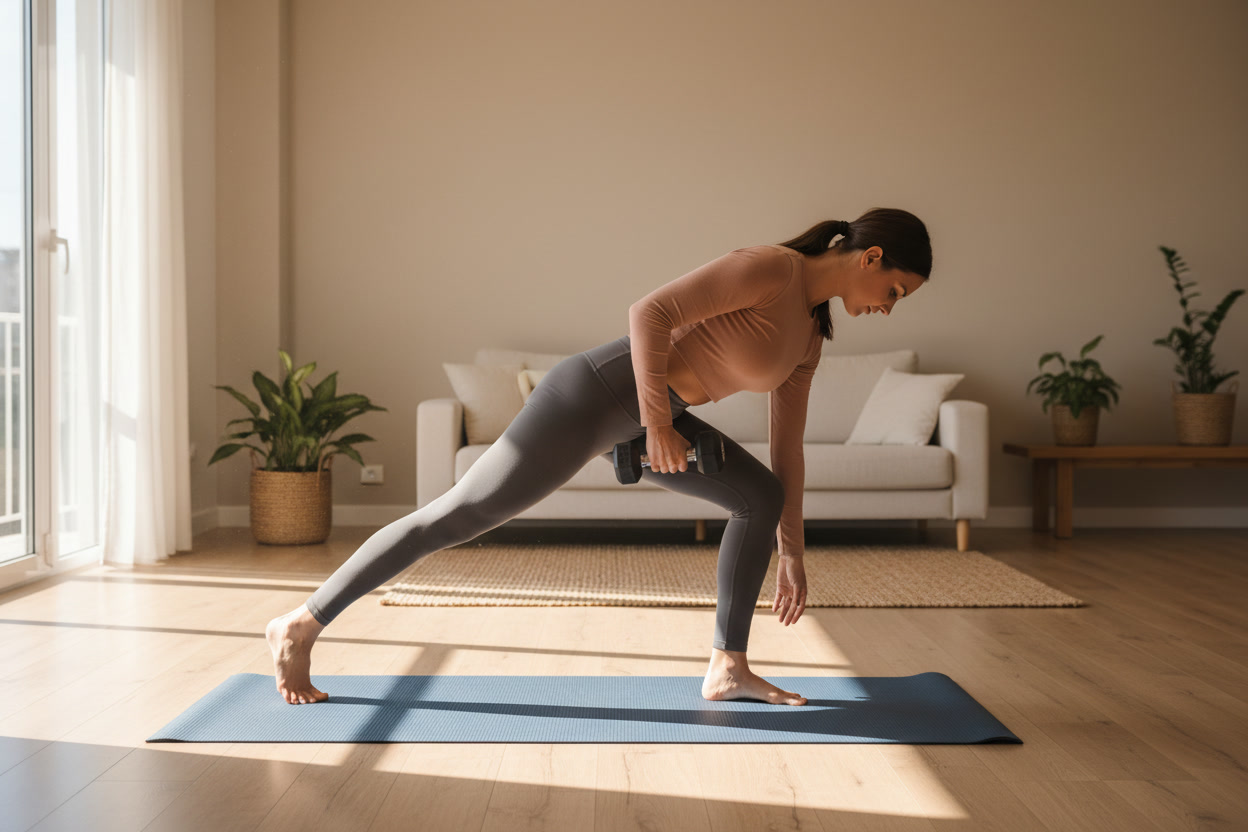
- Single-leg deadlifts: Stand on one leg, hinge forward at the hip while extending the other leg back. Even bodyweight works. 3 sets of 10 each leg.
- Side plank with leg lift: Hold a side plank, lift your top leg. 3 sets of 10-second holds each side.
You should feel these exercises in your outer hip and butt, not your knee. If your knee hurts during any of them, skip that exercise for now.
Adjust Your Training Volume
Back off by 30-50% of your current mileage for two weeks. This feels like giving up, but it’s not. You’re giving your tissues time to adapt while you build strength.
Then rebuild slowly. The 10% rule (don’t increase weekly mileage by more than 10%) is conservative, but it works. Also consider taking a full rest day or easy cross-training day after your hardest runs. Your body builds fitness during recovery, not during the run itself.
Check Your Form
Film yourself running from the side on a treadmill or have a friend record you. Look for these issues:
- Overstriding: Your foot should land roughly under your body, not way out in front.
- Low cadence: Count your steps for 30 seconds and multiply by two. Aim for 170-180 steps per minute. A higher cadence usually means shorter strides and less impact.
- Excessive vertical bounce: You should move forward, not up and down.
To increase your cadence, download a metronome app and set it to 175-180 bpm. Run to the beat for short intervals during easy runs. It’ll feel weird at first but becomes natural within a few weeks.
Ice and Anti-Inflammatories Strategically
Ice your knees for 15 minutes after runs during the acute phase (when pain is worst). NSAIDs like ibuprofen can help in the short term, but don’t use them to mask pain so you can keep running. A 2017 study in the Journal of Applied Physiology suggested that regular NSAID use might actually interfere with tissue adaptation.
Strength training isn’t optional for runners. It’s the difference between staying healthy and constantly dealing with injuries.
When to See a Professional
Most knee pain improves with these fixes within 4-6 weeks. But some situations need professional help:
- Sharp pain rather than dull aching
- Swelling that doesn’t go down within a day
- Pain that gets worse with rest
- Locking or catching sensations
- Pain that doesn’t improve after 6 weeks of modified training and strengthening
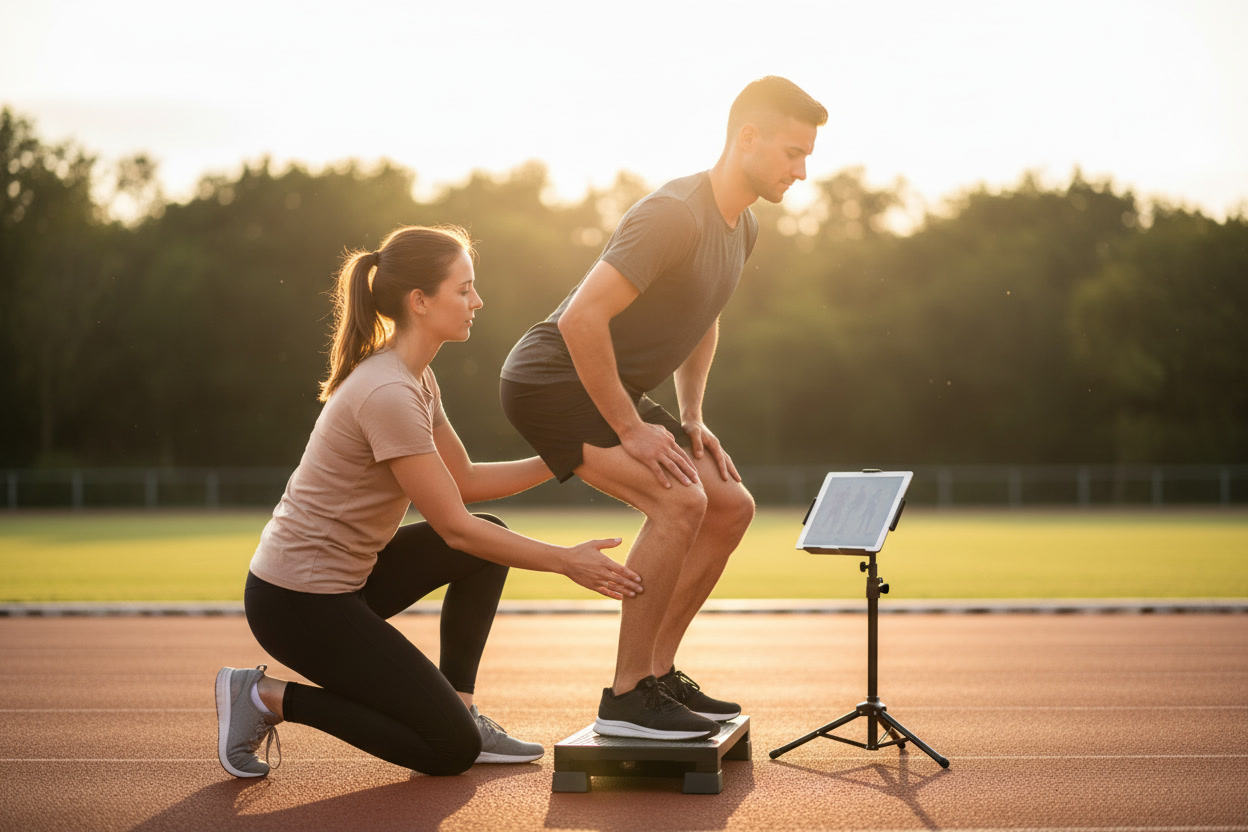
A physical therapist can assess your specific biomechanics and create a targeted plan. Sometimes issues like IT band syndrome or meniscus problems masquerade as general knee pain and need different approaches.
Shoes, Surfaces, and Other Factors
Do Your Shoes Matter?
Yes, but probably not how you think. The best running shoe is the one that’s comfortable and fits well. The idea that you need specific shoes for your “arch type” doesn’t hold up in research. A 2014 study in the British Journal of Sports Medicine found no evidence that prescribing shoes based on foot type prevents injury.
What does matter: replacing your shoes every 300-500 miles. The cushioning breaks down even if they look fine. And if you’re switching to minimal shoes or a very different style, transition gradually over several months.
Where You Run
Concrete is harder than asphalt, which is harder than dirt trails. Softer surfaces reduce impact forces. But constantly running on crowned roads (where one side is higher for drainage) or always running the same direction on a track can create imbalances. Mix up your surfaces when possible.
Putting It All Together
Here’s your action plan if your knees hurt after running:
Week 1-2: Cut your running volume by 30-50%. Start the hip and glute strengthening routine three times per week. Ice after runs if needed.
Week 3-4: Gradually rebuild mileage, increasing by no more than 10% per week. Continue strengthening exercises. Start working on cadence if that’s an issue for you.
Week 5-6: You should notice improvement. Keep up the strength work even when pain resolves. Most runners who stop strengthening exercises see pain return within a few months.
The thing about knee pain is that it’s almost never just about your knees. Your body is a chain, and weakness or dysfunction anywhere along that chain shows up at the joints that can’t compensate anymore. Fix the weak links, respect your body’s adaptation timeline, and you’ll get back to pain-free running.
And honestly? You’ll probably end up a stronger, more efficient runner than you were before.