
The Story Starts Below!

The Quiet That Passes For Nothing

My family has a specific way of describing me at gatherings.
They say I’m doing fine, with a pause before *fine* that holds a whole conversation they’ve already decided not to have.
They say it the way you’d describe weather that isn’t doing anything interesting.
I stopped correcting the picture years ago, somewhere around the third or fourth reunion where someone asked if I was still at that *little office job.*
What Seven Years Actually Looks Like

The Vantara Group occupies four floors of a glass building on Meridian Street.
I run operations across all of them.
Three hundred and twelve employees pass through processes I designed, inside systems I built from analyst-level access and seven years of not making noise about what I was doing.
My title is Director of Operations. My salary would rearrange several assumptions my family holds.
Neither of these facts has ever come up at a Langford dinner, because I have never placed them on the table.
The Economy of Loud Achievement

The Langfords count things that make sound.
Press releases. LinkedIn announcements. Job titles that fit cleanly into a sentence someone can repeat at a party.
My Uncle Gerald once explained the difference between *ambition* and *comfort-seeking* to a table of twelve people, gesturing broadly in my direction without actually pointing.
I ate my green beans and let it land.
The ring on my right index finger, the thin gold band I’ve worn since I was twenty-six, caught the light when I set down my fork.
Nobody asked about it. They never do.
Mason’s Greatest Hits

Mason Langford is thirty years old and has already had four jobs that his family describes as *incredible opportunities.*
The first three ended within eighteen months each.
The pattern, as his mother Ruth tells it, is strategic pivoting: a man refining his trajectory, shedding roles that couldn’t contain him.
The pattern, as I observe it, is something closer to a sparkler, brilliant for exactly as long as the initial impression holds, then dark.
The Resume That Crossed My Desk

Two weeks before the reunion, a resume came through the standard intake pipeline.
Diane flagged it for my conditional approval, as she does with all mid-level operations hires.
The name at the top was Mason T. Langford.
I read it twice. Then I sat with the specific silence of someone who has just been handed a situation with no clean exit.
The referral came through a senior executive I trusted. The credentials looked plausible, if slightly over-presented.
I approved it conditionally, and I did not tell anyone who I was to the applicant.
Why I Didn’t Say Anything

I have asked myself that question since.
The honest answer is that I wanted to see what he would do without the net.
I wanted one clean variable: Mason, in a real institution, without his last name mattering to anyone in the room.
That was the version of fairness I thought I was offering him.
I understand now that I was also protecting myself from a conversation I wasn’t ready to have.
The Reunion, Part One: Arrivals

The Langford summer reunion is held at Gerald and Ruth’s house every July.
Ruth sets the table for twenty. The cloth napkins are ironed.
There is always too much food and a specific arrangement of bodies that signals who is being watched with pride and who is being watched with patience.
I arrived at six-fifteen, hugged my mother, and accepted a glass of iced tea from a cousin whose name I consistently misremember.
Mason arrived at six-forty with the energy of someone who had already decided the evening would be about him.
He was right.
The Reunion, Part Two: The Announcement

Ruth brought it up before the main course.
Mason had accepted a position, she said, at a very competitive firm. Operations sector. Strong culture, demanding leadership, the kind of place that only takes people serious about their careers.
Gerald said *that’s what real ambition looks like* and looked at no particular person while saying it.
My mother touched my arm under the table, very briefly.
The touch meant: *don’t.*
I didn’t.
The Joke

Mason, to his credit, waited until dessert.
He was talking about the firm’s reputation, how selective it was, how intense the vetting process had been.
Then he looked at me with the easy, open smile he deploys when he wants the room to like him, and he said: *Claire, honestly, if you ever fix that attitude problem, you could maybe get a job there someday.*
The table laughed.
Not everyone, but enough.
What I Did With That

I smiled. It was a real smile, actually.
Not warm, but genuine in its way, the smile of someone holding information they have not yet decided to use.
I said: *I’ll keep that in mind.*
Mason laughed, satisfied, and moved on to something else.
He had no idea that the building he’d just finished describing to the table was mine.
He had no idea that on Monday morning, I would be walking into it first.
What My Mother Saw
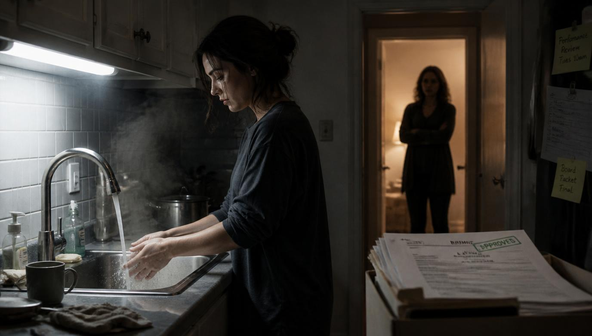
She found me in the kitchen later, rinsing dishes.
She stood in the doorway with the expression she gets when she’s decided something is more complicated than she wants it to be.
She said: *He doesn’t mean anything by it.*
I said: *I know.*
She said: *You could just tell them. About the job.*
I looked at the water running over my hands, and I thought about the resume sitting in my approved files, and I said: *Not tonight, Mom.*
The Drive Home

I took the long route.
I do that sometimes when I need the car to be a room no one else can enter.
The reunion replayed in pieces: Gerald’s broad gesture, Ruth’s proud announcement, the table laughing at Mason’s joke while I kept my face in the neutral register I’ve spent years perfecting.
And Mason himself, so certain that his opportunity had arrived through his own momentum, so certain that his cousin was a cautionary tale about playing it too small.
He was going to walk into that building Monday morning and find out exactly where I kept the keys.
The Part I Still Examine

What I did was not wrong.
I have reviewed it from enough angles to be confident of that, at least professionally.
But there is a version of honesty that would have said his name aloud in that hiring meeting, recused myself or stayed, but done it openly.
I told myself withholding was fairness. I told myself it was a clean experiment.
I did not tell myself what it actually was, which was the same silence I’d been using for a decade, repurposed for a situation with much higher stakes.
The Ring in the Morning Light

I woke early on Sunday, the day after the reunion.
The house was quiet the way it gets when everyone else is still sleeping and the city hasn’t committed to the day yet.
I sat at my kitchen table with coffee and the thin line of morning coming in at the window’s edge, and I turned the gold band on my index finger the way I do when I’m working through something.
The family had a version of me. They’d been building it for years.
Monday was going to introduce them to the one I’d actually built.
What I Knew and What I Didn’t

I knew Mason would be surprised.
I knew it would be uncomfortable, and that my instinct would be to manage his comfort before my own authority.
I knew the reunion joke would sit differently in his memory once he understood the context.
What I didn’t know yet was the full shape of how he’d arrived at Vantara. I didn’t know what his resume was hiding, or what my aunt had done to move it forward.
I didn’t know the explosion was already loaded.
I only knew that I had seven years standing behind me, and a meeting at nine on Monday morning, and a name I had never once needed anyone else to say loudly in order for it to mean something.
Monday Arrives Without Announcing Itself

I was at my desk by seven-forty-five.
The building had that particular morning quiet, the kind that exists before the ventilation system fully commits and the elevator starts its regular rhythm.
Diane was already in, which was not a surprise.
She set a coffee on the edge of my desk without being asked, the way she has for three years, and returned to her office without commentary.
What I Did Before He Arrived
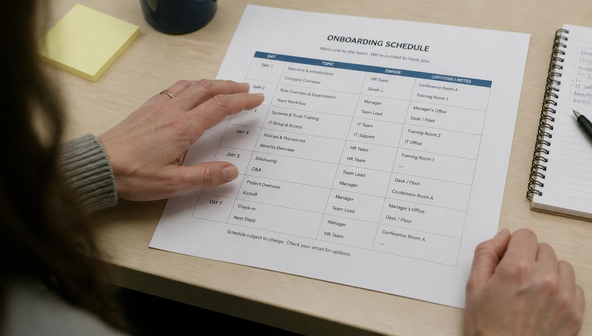
I reviewed the onboarding schedule twice.
Not because it needed review. Because I needed my hands doing something procedural while the rest of me ran its own quiet inventory.
Mason’s start time was nine o’clock.
His manager of record, for initial onboarding purposes, was listed as Diane. My name appeared in a different column, the one that said *department director.*
He had not been told to look at that column.
The Lobby Camera Is Not Something I Watch
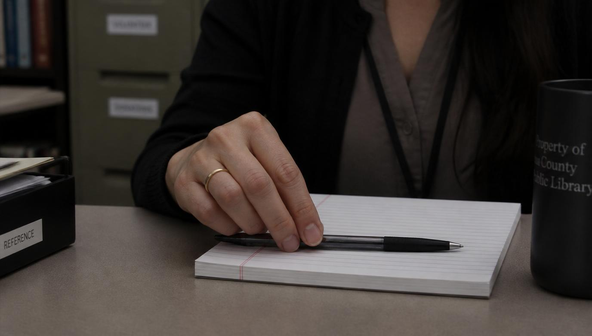
I want to be clear about that.
I did not sit at my desk refreshing the building’s entry log.
I learned he had arrived because Diane sent me a two-word message at eight-fifty-eight: *He’s here.*
That was all it required.
I straightened the pen on my notepad so it was parallel to the edge, and I went back to the quarterly variance report I had been reading since seven forty-six.
What Charm Looks Like From the Third Floor

I heard him before the meeting.
Not specifically his voice, but the particular quality of laughter that follows a person who knows how to enter a room, the sound of a group deciding someone is likable before they’ve said anything worth liking them for.
Priya’s laugh was in there. Light, genuine.
She has not yet learned to hold it in reserve.
The Team Meeting, Nine-Thirty
There are eleven people on my operations team.
They were seated when I came in, which is how it works, not because I require it but because we start on time and the room fills before I arrive.
I set my folder down.
I said my name, my title, and the two things I require from everyone: accuracy and timeliness.
Then I looked at the room the way I look at any room, which is to say, at each face in turn, with the same weight.
The Moment of Recognition
Mason was seated third from the left.
I saw him register it in stages: the name first, then the title, then the full assembly of information arriving in a sequence his expression couldn’t fully manage.
His mouth opened slightly.
He closed it.
To his credit, he held the expression together for approximately four seconds before his face went carefully neutral.
I had moved on to the onboarding materials by then.
What I Did Not Do

I did not acknowledge it with my eyes.
I did not give him a small private nod that said *yes, it’s me, we’ll talk later.*
I did not soften the introduction or add a footnote for his benefit.
The professional frame was the only frame available in that room.
I had decided that on the drive home Sunday night, and the decision held.
What He Tried First

By eleven o’clock he had already tested the edges.
He stopped by my office doorway while I was between calls and said, with the easy smile set to its most familiar register: *So. Small world.*
I looked up.
I said: *Your first check-in with Diane is Thursday at two. She’ll walk you through the project intake process.*
He waited a beat, as if I might add something personal.
I returned to my screen.
What Priya Told Me Later (Much Later)

She said that at lunch, Mason told the table he and I were cousins.
He said it lightly, as an interesting detail, not a demand for special treatment, but she noticed the way he let it sit there.
The way you set something down somewhere visible and then leave the room.
She said she thought it was strange, even then.
The Shape of the Afternoon

Mason was good at the surface work.
He asked the right questions in the right tone, moved through the orientation materials with apparent ease, and by three o’clock had collected three invitations to join various lunch groups.
Diane watched all of it with the expression she uses for quarterly projections: attentive, recording, drawing no conclusions yet.
She would tell me later that she’d noticed, on first read, that his resume had a specific kind of smoothness.
What That Smoothness Means
There is a version of a resume that documents work, and a version that performs it.
Mason’s was the second kind, every achievement landing with exactly the right weight, every title phrased at the ceiling of its possible interpretation.
I had read it as a document that had been prepared with care.
Diane, who has reviewed six hundred resumes in three years, read it as a document that had been prepared with intention.
Before I Left for the Day

I stayed until six-fifteen, which is not unusual.
The building settles differently in the early evening, the ventilation drops, the light through the fourth-floor windows goes amber, and the particular pressure of managing a full team day releases in increments.
I gathered my things.
On my way out, I passed the operations bullpen and saw Mason’s desk, already arranged with the specific geometry of someone who expects to be noticed: a clean surface, one personal item, positioned just right.
The Personal Item

It was a small framed photograph, face out, angled toward the room rather than the occupant.
I didn’t stop to look closely.
But I recognized the edges of it, the particular warm gold of a July afternoon.
It was a photograph from a family gathering.
I could not see which one, but I knew the table, and I knew the cloth napkins, and I knew exactly who had ironed them.
What I Thought on the Drive Home
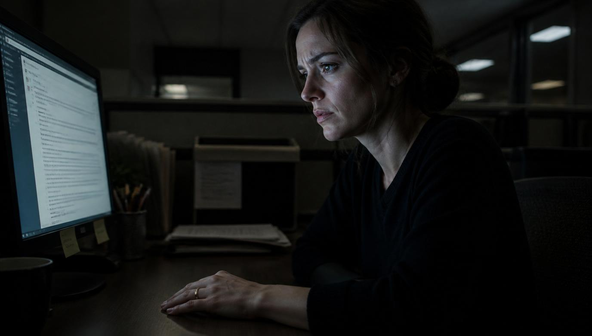
The explosion is already loaded.
That was the phrase that came back to me, the one I’d turned over the night before without fully understanding its weight.
I understood it a little better now.
Mason had brought the family table into my building and set it on his desk, face out, visible to anyone who walked past.
He had no idea what that photograph was sitting next to.
What Tuesday Would Require
The same thing Monday had required.
The same thing the Monday after that would require, and the one after that.
I pulled into my driveway and sat for a moment in the car, the engine off, the thin gold ring catching the last light.
The institution was intact.
The frame was set.
What happened inside it now was entirely up to Mason.
The Week Has a Texture

By Wednesday, I could feel the shape of what Mason was building.
It wasn’t loud. That was the thing about him: he worked quietly underneath the professional surface, threading himself into the social fabric of the team with the patient efficiency of someone who had done this before.
He remembered names, coffee orders, small personal details offered in passing.
He was generous with credit in meetings and careful with blame.
What Priya Said at the Coffee Station

I overheard it accidentally, the way you overhear anything in an open floor plan.
Priya was telling someone that Mason was sharper than she expected, that he’d caught a timeline error in the intake sheet she’d handed him.
She sounded genuinely pleased.
I carried my coffee back to my office and sat with that for a moment.
A man who spots one correct thing and leaves a dozen wrong ones untouched is not sharp. He is strategic.
Diane’s Thursday Note
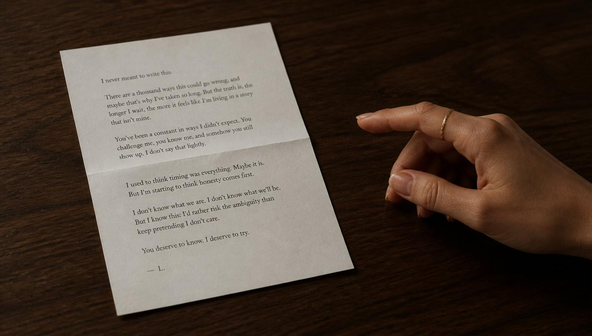
She left it on my desk in the physical format she reserves for things she considers substantive.
A single printed page, folded once.
*Three deliverables from onboarding week. Two submitted on time. Both surface-correct, both thin below the first layer. Recommend we watch the first real project for pattern before flagging. Attaching comparison.*
I read it twice. Refolded it.
She had already attached the comparison.
What the Comparison Showed
Mason’s submitted analysis used the right vocabulary in the right sequence.
It answered the question it was asked, moved in the expected direction, and landed at the expected conclusion.
It did not contain a single observation that was not already implied by the source materials he had been handed.
That is not analysis. That is transcription with better formatting.
I added Diane’s note to a folder I had not named yet.
Friday, Four O’Clock

Mason appeared in my doorway for the second time that week.
This time he knocked, which was an improvement.
I said: *Come in,* and he sat down across from me in the chair reserved for direct reports, settling into it with a comfort that suggested he’d already decided how this conversation would go.
He said: *I wanted to check in. See how you think the week landed.*
The Question Behind His Question

He was not asking about his performance.
He was asking whether I had decided to be his cousin yet.
I held his gaze for a moment, the specific length of time that means I am considering the full weight of what has been said.
I told him the week’s onboarding phase was complete, that Diane would assign his first substantive project on Monday, and that I expected his methodology notes by end of day the following Friday.
What He Did With That

He smiled, the slightly wider version, the one I’d watched him use at the reunion when someone asked about his new role.
He said: *Claire.*
Just the name. An appeal, a hinge, an invitation to step out of the frame.
I looked back at my screen.
I said: *Monday, Mason. Have a good weekend.*
The pause before he left was four full seconds.
Saturday Morning

I run on Saturday mornings when the work week has deposited something I cannot file anywhere productive.
This Saturday I ran longer than usual.
Not because anything had broken. Because nothing had, yet, and the anticipation of a fracture you can see forming is its own specific kind of weight.
I passed my neighbor walking her dog and she waved and I waved back and neither of us stopped.
The Call I Did Not Expect

My mother called at noon.
Not unusual. Except that the particular lightness in her voice told me she was working toward something.
She asked how the week was. I told her fine. She asked whether I’d settled into the new quarter’s projects.
Then she said: *Mason mentioned you’re his director.*
There was a silence after that word where she waited for me to explain why I had not told her first.
What I Said
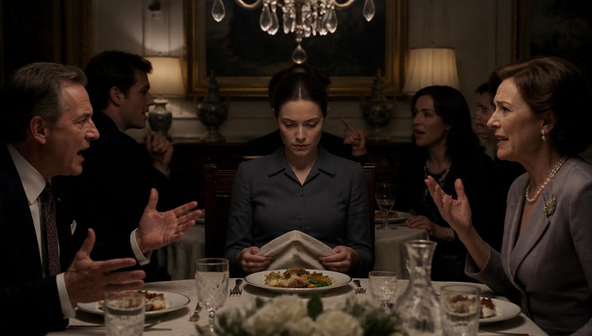
I said: *I know.*
She waited.
I said: *The hire went through the appropriate process. I’m managing him the same way I’d manage anyone else.*
She made the sound she makes when she is deciding whether to press forward or let the water level drop on its own.
She chose the water.
She said: *He sounds excited.* Then: *He says you’re very professional.*
The word professional, in her register, meant that I had not been warm.
What I Did Not Explain

I did not tell her that professional was the only frame I could offer Mason without doing him a disservice.
I did not tell her that warmth, in that context, would have been a kindness that cost Priya and everyone else on the team a fair working environment.
I did not tell her that I had read his resume before the reunion and said nothing because I had not known yet what it would mean.
I told her I’d call Sunday, and I meant it.
The Following Monday

Mason received his first substantive project assignment from Diane at nine-fifteen.
I saw the email thread. He replied within three minutes with a confident, well-phrased acknowledgment and two questions that demonstrated he had read the brief.
Good questions, technically.
The kind that could have been written before reading the brief, because they applied to almost any brief in the same category.
Priya, cc’d as project support, answered them both with patient specificity.
What Three Weeks Looked Like

The pattern established itself with the quiet consistency of a habit forming.
Mason produced work that read correctly from a distance. Diane read everything twice.
He continued mentioning the cousin detail to new colleagues, not loudly, not as a demand, but consistently enough that it had stopped being an interesting fact and started being a positioning statement.
I was aware of this. I was documenting nothing yet. I was watching the architecture assemble itself one small decision at a time.
Diane on a Tuesday Afternoon
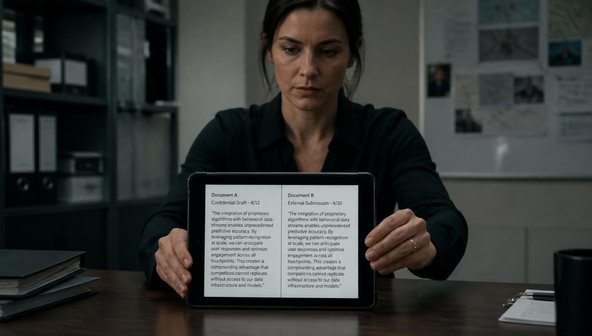
She appeared in my doorway without the printed page this time.
She said: *You should look at this yourself before I write it up.*
She set her tablet on my desk and I looked at what was on the screen.
The first column was Mason’s submitted analysis from his Week Three project.
The second column was a report from a firm he had listed on his resume as a previous employer.
The parallel structure was not approximate. It was specific enough to carry its own explanation.
What I Said to Diane

I said: *Close the door.*
She did.
I read both columns again, carefully, the way you read something you want to be wrong about.
I was not wrong.
I set the tablet down and looked at the far corner of my desk, at the small dark-green plant I have never named, sitting exactly where it always sits.
I said: *Pull everything. I need to start at the beginning.*
What Starting at the Beginning Meant
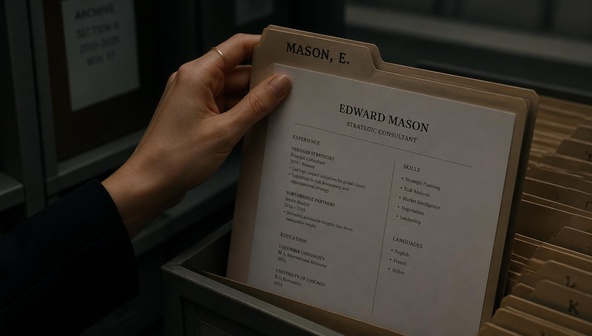
It meant pulling Mason’s application file from the HR archive and reading it the way I should have read it before approval, not as a director vetting a candidate, but as someone who knew the candidate.
The difference in those two readings is significant.
The resume was clean. Formatted with more care than most. The kind of document someone had helped him with, or paid someone to build.
The Title That Did Not Fit
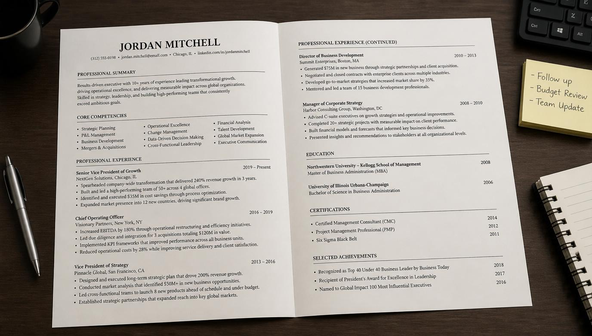
His third listed role read: *Regional Operations Manager, Harwick Consulting Group.*
Eighteen months. The dates aligned with a period I knew, distantly, as one of Mason’s pivots.
At the reunion two years ago, his mother had described that job as something he was overqualified for.
She had never called him a manager.
She had said he was advising their operations team.
Those are not the same sentence.
The Project Listed Below It

*Redesigned client intake workflow. Reduced onboarding time by 34%. Led cross-functional implementation team.*
I sat with those three lines for longer than I needed to.
I had heard Mason tell a version of this story at a family dinner eighteen months ago.
In that version, he had said: *We fixed the intake system. The whole team worked on it for months.*
The word we does not appear anywhere on his resume.
What I Pulled Next

I requested the senior executive’s correspondence from the hiring period through our internal records system.
His name was Patrick Osei. He had been with Vantara for eleven years, two more than me, and occupied a senior advisory role that carried significant referral weight.
Patrick had written three sentences about Mason: that he came highly recommended through a mutual professional contact, that his adaptability made him a strong cultural fit, and that he anticipated Mason would grow quickly in a structured environment.
Recommended through a mutual professional contact.
The Phrase That Did Not Settle

I read that phrase four times.
Patrick was precise with language. He did not write *came with strong references* or *interviewed exceptionally well.*
He wrote *highly recommended through a mutual professional contact.*
That construction places the recommendation outside of Patrick’s direct evaluation.
It means someone else made the case, and Patrick passed it forward.
Finding the Contact
It took me forty minutes and two inter-departmental requests I framed carefully so they read as routine.
The mutual professional contact Patrick had referenced was a woman named Carol Simms, who sat on a regional nonprofit board.
She also, I confirmed by cross-referencing my own memory, attended the same garden society my Aunt Ruth had joined four years ago.
The coincidence had the specific shape of something that was not a coincidence.
Diane, Who Was Still Waiting

She had returned to her office and was processing quarterly reports when I walked to her doorway.
She looked up without surprise, because Diane almost never looks surprised.
I said: *The plagiarism flag is real. But it’s not where this starts.*
She took her glasses off the chain and put them on.
She said: *Where does it start?*
What I Told Her

I told her about Carol Simms and the garden society and what Patrick’s language actually meant when you read it as a process document rather than a professional endorsement.
I told her about the management title and the solo-attributed project.
I told her that I did not know yet whether Mason knew how the referral was constructed, or whether he simply accepted the opportunity without examining its architecture.
She was quiet for long enough that the hallway noise became audible.
What Diane Said

She said: *It doesn’t change the plagiarism flag. That exists independently of how he got here.*
I said: *I know.*
She said: *And it doesn’t change what the work product shows.*
I said: *I know that too.*
She picked up her pen and set it down again, the gesture she makes when she is organizing a response she wants to be accurate.
She said: *What it changes is how careful we have to be.*
What Careful Meant, Exactly

It meant the process had to be cleaner than clean, because any deviation from standard protocol would give Mason, and the family, a legitimate grievance.
It meant Diane would document everything, and I would review nothing before HR did, so that the institutional record could not be characterized as Claire Langford settling a score.
It meant I had to be more rigorous, not less, precisely because of who he was to me.
The Call I Made That Evening

I called Patrick Osei from my car in the parking structure, not from my office, not from my phone’s recorded work line.
He answered on the second ring.
I said: *I need to ask you something about the Langford referral and I need you to be honest with me.*
There was a pause that told me he had been expecting this call, or one very much like it, for some time.
What Patrick Said

He said Carol Simms had reached out to him at a board event.
He said she spoke about Mason for twenty minutes with the specific fluency of someone who had rehearsed it.
He said he passed the application forward because the pitch was credible and he had no reason at the time to verify its source.
He said: *I didn’t know Ruth Langford was your aunt until about two weeks after he started, Claire.*
The Silence After That
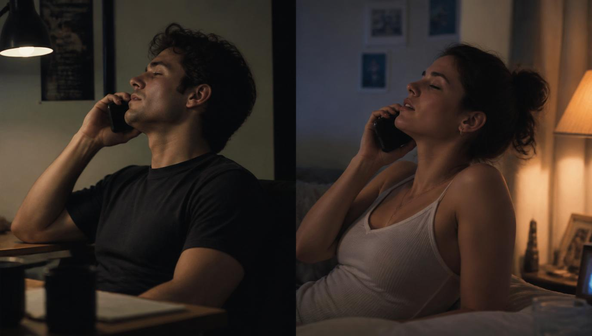
I let it sit for a moment.
Not because I was angry at Patrick. He had done what people do when a credible-sounding endorsement arrives through a legitimate channel.
He had been used as a conduit and had not known it.
I said: *I appreciate you telling me.* I meant it.
He said: *What are you going to do?* and I said: *The same thing I’d do if none of this were personal,* and I heard him exhale like that answer had relieved him of something he’d been holding.
Back at My Desk, Nine-Fourteen PM
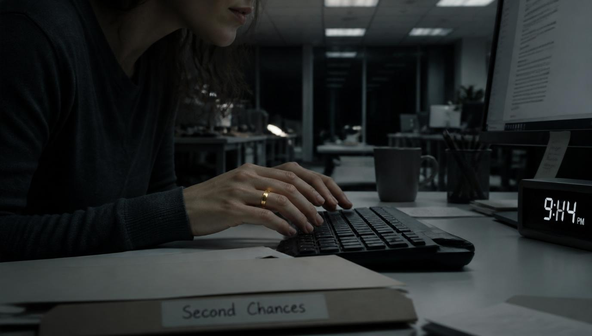
The office was empty except for the building’s maintenance cycle, the faint sound of a vacuum somewhere on the floor below.
I opened the folder I still had not named and I named it.
I typed two words, then deleted them, then typed them again and left them.
The folder was named *Process — Langford.*
Not *Mason.* Not *Cousin.* Not anything that would read as personal to anyone who opened a file directory.
What I Understood, Sitting There

I understood that my aunt had built something she believed was invisible, and that it had worked precisely because I was the one running the room she needed access to.
She had not circumvented me. She had used me, unknowingly, as the mechanism.
And I had approved a hire I believed was legitimate, because the channel was legitimate, because the institution I had spent seven years building was the kind of place where a credible referral from a senior colleague carried weight.
She had known that. She had counted on it.
She had watched me build the room and used my own key to open the door.
What I Did Not Do That Night
I did not call my mother.
I did not call Mason. I did not type a message to my aunt explaining what I had found, giving her the chance to construct a response before I had finished constructing mine.
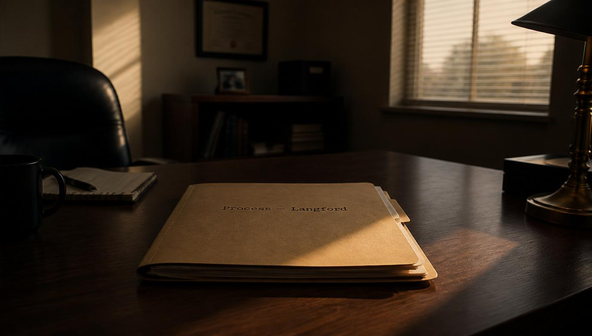
I closed the folder named *Process — Langford* and I sat with the specific weight of knowing something that would change the shape of a family I had spent years navigating quietly.
Then I drove home.
The Sixty-Day Clock

The performance improvement plan went to HR on a Thursday morning.
Diane had prepared the supporting documentation. I reviewed it once, signed where required, and forwarded it without additions or alterations.
Standard language. Standard benchmarks. The same structure I had used for two other employees in Mason’s position over the past four years, both of whom I could name, both of whose files existed in the same archive.
If anyone pulled the comparison, it would hold.
Delivering the Plan
I called Mason into my office at two in the afternoon.
I had scheduled thirty minutes. I had asked Diane to be present, which is standard for any formal performance conversation.
Mason arrived three minutes late, which I noted and did not address, because the lateness was not the subject of the meeting.
He sat down across from me and looked at Diane and then back at me, and something in his expression shifted, the way a person’s face shifts when a room stops matching their expectations.
The Words I Used

I told him the work product from his first assigned project contained analysis that required review.
I told him the performance plan would give him sixty days with clear benchmarks and structured check-ins every two weeks.
I told him this was the standard process and that I expected him to engage with it seriously.
He did not speak until I finished.
What Mason Said First

He said: *You’re serious.*
Not a question. A recalibration.
I said: *The documentation is in the folder your HR contact will send within the hour.*
He looked at the desk between us the way people look at something they want to pick up and argue with but cannot because it is made of paper and facts.
He said: *This is because of the reunion.*
What I Said Back

I said: *This is because of the work product, Mason.*
Diane set her pen down parallel to her notepad.
I said: *The plan is documented. The benchmarks are specific. If you meet them, this conversation will be the last one of its kind.*
He stood before I indicated the meeting was over, which I also noted, and I said: *I’ll need you to sign the acknowledgment form before end of day.*
That Evening’s Call

He called his mother before he signed the form.
I did not know this for certain until three days later, when my own phone rang and my mother’s voice came through it carrying the specific careful tone she uses when she is delivering someone else’s distress.
She said: *Ruth called me.*
I said: *I expected she would.*
What My Mother Reported
My aunt had described the performance plan as targeting.
She had described the sixty-day clock as a countdown that Claire had built specifically to create a paper trail.
She had said: *She knew who he was when she hired him. She let him walk in and then she closed the door behind him.*
My mother read the silence I offered and said: *Is that what happened, Claire?*
My Answer
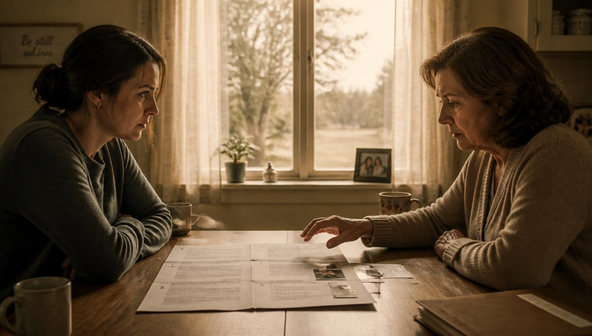
I said: *I approved a hire I believed was properly vetted. The performance plan exists because the work required it.*
My mother said: *She’s very upset.*
I said: *I know.*
She waited, because she was hoping I would say something that gave her a softer version to carry back.
I did not give her one, because I did not have one, and because giving her a softer version would have required me to be dishonest in a way I had already decided I was done being.
Mason’s First Two Weeks on the Plan

He attended the first check-in and was present in the way a person is present when they are performing presence.
His revised work was adequate in structure. It was thin in every place that required actual analysis, the places where Diane’s rubric made thinness measurable.
Priya, who was now formally assigned alongside him on a mid-quarter project, sent me a brief status update at the end of week two. She had written: *Timeline holding, but the analysis sections are coming in lighter than the brief requires. Flagging early.*
What Priya’s Email Actually Meant

She had not mentioned Mason by name.
She did not need to. The project had two contributors, and one of them was producing work that met the standard.
I wrote back: *Noted. Keep flagging.* Three words that meant I saw what she was describing and that her professional instinct to document it was correct.
She replied: *Will do.* Two words that meant she understood.
The Coalition

By the end of Mason’s third week, I had heard secondhand that he had described the performance plan to at least two colleagues as retaliatory.
He had used the word *targeted.* He had mentioned, more than once, that he and the director had a prior relationship that explained the situation.
He was building something, not a defense of his work product, but a social architecture around the idea that the institution was compromised by something personal.
What That Architecture Required

It required colleagues to believe that Claire Langford, who had run this department for four years without a documented complaint about process integrity, had chosen Mason’s hire specifically to destroy him.
It required them to believe she had orchestrated a months-long sequence across an HR process, a senior referral, and a sixty-day performance plan, for the purpose of humiliating one person.
Priya, I learned later, had been approached with this version.
What Priya Did With It
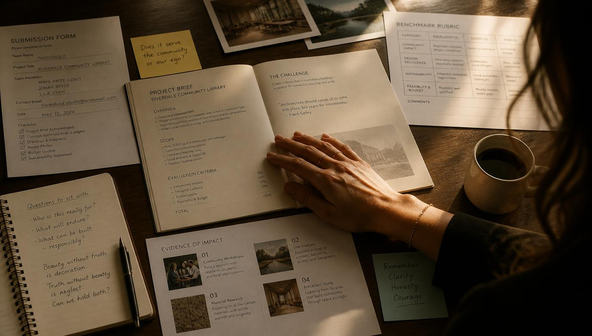
She listened to Mason’s account of things the way she listened to most things: openly, without immediate verdict.
Then she went back to her desk and looked at the project brief and looked at what had been submitted and looked at the benchmark rubric Diane had circulated to the team.
She told me later, weeks after all of it was over, that she had sat with Mason’s version for exactly one afternoon before the math stopped working.
The Invitation

The call came on a Wednesday evening, six weeks into the plan.
It was my mother, using her ordinary voice this time, not the careful one.
She said there was a Sunday dinner at Ruth and Gerald’s and that it would be good if I came, and something in the way she said *good* carried a weight she was not naming.
I said I would be there, and I did not ask who else had been invited, because I already understood that the dinner was not about the food.
The Drive to Ruth’s House

I left my apartment at four-thirty, which was thirty minutes earlier than necessary.
I had not eaten, because eating before this kind of gathering had always felt like preparation for a fight, and I did not want to arrive feeling like I had prepared for a fight.
The drive took twenty minutes through streets that were Sunday-quiet and unhelpful in their stillness.
The Cars in the Driveway
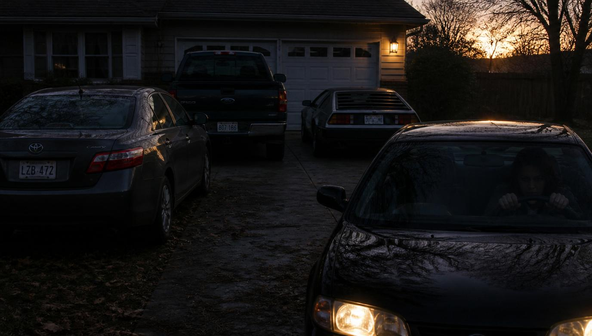
There were four cars when I pulled up.
My mother’s gray sedan. Gerald’s truck. One I did not recognize immediately, and then did: my cousin Daniel’s, which meant he had driven two hours to be present for something billed as an ordinary dinner.
I sat in my own car for exactly ninety seconds.
Then I got out.
Ruth’s Entry Hall

Ruth opened the door before I knocked, which meant she had been watching the driveway.
Her earrings were amber and deliberate. Her expression was warm in the specific way that warm expressions become when they are working very hard.
She said: *Claire, we’re so glad you came.* She touched my arm once, briefly, and stepped back to let me in.
The Table

The table was set the way Ruth always set it for Sunday meals that were meant to look like Sunday meals.
Cloth napkins. The good serving dishes. A centerpiece of something seasonal that she had arranged that morning.
Gerald was already seated and rose when I entered the room, which was a formality I had not seen him perform in years.
The Room’s Configuration

Daniel was there, with the self-conscious posture of someone who arrived because he was asked and is now uncertain he should have.
My mother was in the kitchen doorway, holding a dish she did not need to hold.
Mason was at the far end of the table, and he looked up when I walked in and held my eyes for exactly the length of time it takes to decide something.
The First Hour
We ate.
The conversation moved through the topics family conversations move through when people are not yet ready to move through the topic they assembled for.
Gerald talked about something in the news. Daniel talked about his daughter’s school. My mother asked me about a neighborhood I lived near, a question so general it required nothing from me.
Mason’s Silence

Mason was quiet through most of the meal, which was not his natural register.
He refilled his water glass twice. He laughed at two things Gerald said, the right amount of laughter, the timed kind.
I watched him the way I watch work product: not looking for failure, looking for the structure beneath the presentation.
Ruth’s Pivot

It was Ruth who opened it.
She set her fork down with the small deliberate sound of someone who has rehearsed the moment, and she said: *We wanted to talk together, as a family, about what’s been happening with Mason at the company.*
She said *together* and *family* in the same sentence, which was the frame she had chosen.
What They Asked

Gerald said he felt the situation had become disproportionate.
Daniel said nothing, but nodded once in a way that was meant to indicate agreement without requiring him to speak it.
My mother watched me from across the table with the expression of someone who has already read the weather and is bracing for it.
Claire’s First Response
I let them finish.
Ruth said she thought a different team, a different supervisor, would give Mason room to find his footing without the complication of their prior relationship affecting every evaluation.
She said *prior relationship* the way people say things they have practiced saying without the word that actually describes it.
What I Said

I said: *Mason is being managed the same way any employee in his position would be managed.*
I said it once, without escalation, and I did not add anything to soften it or any qualifier that would give the sentence somewhere to retreat to.
Ruth said: *But Claire, you knew him before.*
Mason’s Miscalculation

It was the pause after Ruth’s sentence that Mason filled.
He said: *She knew who I was when she approved the hire.* His voice was controlled but the flush had reached his jaw. *She let me walk in and then she set the whole thing up.*
Daniel stopped nodding. My mother’s hands went still on the table.
What the Room Did

Gerald looked at Mason with an expression that was not quite agreement and not quite alarm.
Ruth said: *Mason* in a tone that was meant to be support but landed as correction.
The logic of what Mason had said was sitting in the room now, and several people at the table were quietly doing the arithmetic of what it required them to believe about me.
What I Did Not Do

I did not raise my voice.
I did not look at Mason with anything he could name later as contempt.
I picked up my water glass, set it down, and said: *I think we’ve had the conversation we came here to have.* I folded my napkin beside my plate the way I fold things when I am finished with them.
The Drive Home

I took the long route back, the one with fewer lights.
On the drive, I made the decision I had been approaching for six weeks, the one that was never really a question but had taken this specific evening to become an answer.
The family’s version of the story could no longer be the only version available. Not because I wanted to win anything. Because a false account in circulation was still doing work, and I was done allowing work I had not authorized to be done in my name.
The Document Takes Shape

I got home at nine-fourteen and did not turn on any lights except the desk lamp.
The document did not take long to write, because I had been composing it, in the precise operational register I use for everything, for weeks without knowing I was doing it.
I wrote four sections. I labeled them. I attached evidence with clean file names.
What I Did Not Include

I did not include the word *betrayal* anywhere.
I did not include what it felt like to sit at that table while Mason’s logic required everyone present to believe I had spent months constructing a trap.
I wrote only what was documentable, sequential, and impossible to dismiss as emotion. The restraint was not discipline. It was the argument itself.
The Send Button

I addressed it to Ruth and my mother. I did not copy Gerald.
That choice was deliberate: Gerald would receive it through Ruth, the way he received everything that required him to sit with something uncomfortable.
I read the document once more. Then I sent it at nine-fifty-one on a Sunday night and closed my laptop with both hands.
What Silence Sounds Like After

I did not sleep immediately.
I lay in the particular stillness of someone who has done the irreversible thing and is now simply waiting for the world to reorganize around it.
The gold band on my index finger caught the streetlight through the curtain. I had worn it so long I no longer noticed it, which was the entire point.
Monday Morning

Vantara Group at seven-forty-five looked the way it always looked.
Diane was already at her desk, reading glasses on the chain, a coffee going cold beside her keyboard. She nodded when I passed without breaking her reading.
The institution was intact. This was a fact I had to re-register every morning that month, because the family’s noise had a way of following me through the door if I was not careful.
The Calls That Came
My mother called at eleven-seventeen on Monday.
She did not leave a voicemail. She called again at two-forty-three, and I let that one go to voicemail as well, and her message was twenty-two seconds of breathing and two words: *I read it.*
That was all. The absence of the next sentence, the one where she told me to reconsider, to soften, to protect Mason from the sharp edge of what I had documented, was louder than anything she could have said.
Ruth’s Response
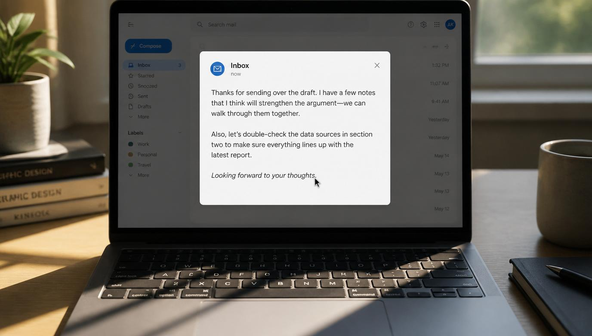
Ruth sent an email on Tuesday afternoon.
It was three paragraphs, and the first two were defensive in the way that people are defensive when they cannot locate the specific lie in what they have been handed. She called the referral advocacy. She called it what any mother would do.
The third paragraph was shorter. It said: *I did not know about the credential concerns. I want you to know that.*
What That Paragraph Meant
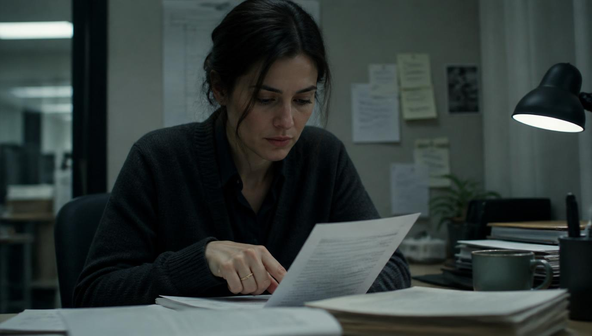
I read it twice.
She was drawing a line between the engineering of his opportunity and the substance of what Diane had found, as if the first could be separated from the second.
It could not. But the fact that she drew the line at all meant she had understood the document clearly enough to identify what part of it she could not explain away.
The Institutional Clock
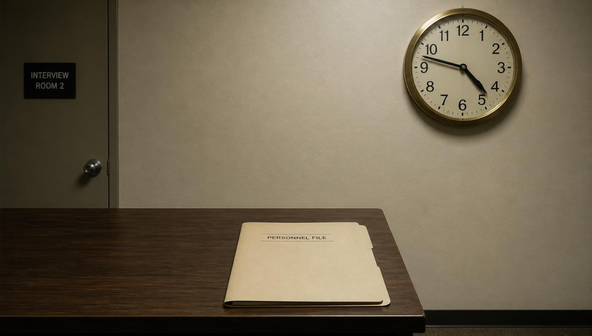
The performance plan’s sixty days completed on a Wednesday.
Diane brought the final documentation to my office in a folder she set on the corner of my desk without ceremony. She said: *The benchmarks are unmet. HR is prepared to proceed.* She said it the way she said everything: flatly, without editorializing.
I reviewed the record. I signed the necessary form. The decision was institutional, not personal, and the care I had taken for sixty days to keep it institutional was exactly why it could survive.
The Separation
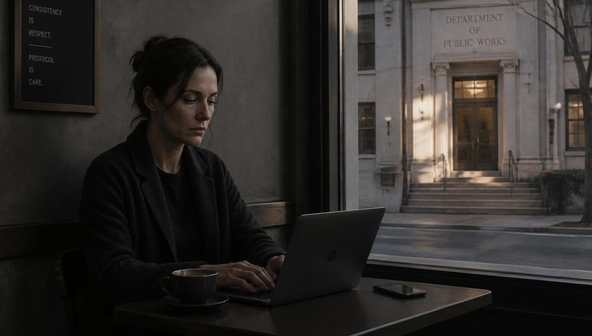
Mason’s separation was processed on Thursday morning.
I was not in the building for it, which was the correct protocol when an employee’s departure had any complexity. Diane handled it with HR. The standard paperwork, the standard severance, the standard exit.
I sat in a coffee shop two blocks away and answered emails until it was finished, and the flatness I felt was not satisfaction and not grief. It was the specific quiet of a process correctly completed.
Priya’s Observation
Priya found me in the corridor that afternoon, between meetings.
She did not extend the conversation into something large. She said: *I watched how you ran the plan.* She paused. *You never once made it about anything except the work.*
She walked on before I had to respond, which was generous, because what I might have said was that making it about anything except the work was never an option I had allowed myself.
The Family’s Two Weeks

For approximately two weeks, the version that circulated was Mason’s version.
I knew this because my mother’s texts became brief in the specific way they become when she is navigating between two accounts of the same event and does not yet know which one she is authorized to confirm.
Then something shifted. The shifts in families are never clean announcements. They are small withdrawals of a particular pressure, and the pressure that had been on me, steady and ambient, loosened.
Sunday Dinner
The invitation came from my mother, not Ruth, which was its own information.
It was framed as Sunday dinner, ordinary, no occasion named. I accepted because what I wanted was not estrangement, which was simple, but the harder thing: to be known accurately by people who had chosen, for years, not to look closely.
I arrived at Ruth’s house at five o’clock. The table was set the same way. The cloth napkins. The serving dishes.
What Ruth Asked

She asked me in the kitchen while the others were in the other room.
She said: *How did you know to wait?* She meant the reunion. She meant why I had said nothing when Mason made his joke about me learning from him, about getting a job there someday if I fixed my attitude.
I told her the truth. I said: *I wanted him to enjoy the applause before he found out who was holding the room key on Monday morning.*
The Drive Home, and the Desk
I said it without triumph, and what I heard in my own voice was something close to tired.
Because the applause had cost me something too, every reunion, every year of comparison, every time my competence made no sound and the family heard silence.
I drove home through Sunday streets. I went to my office the next morning. I sat at my desk, its surface clean, the small plant in the corner unchanged, Diane reading two offices down and Priya’s name already on the morning’s project notes. The institution was intact. I had not burned it to prove I owned it. I knew, now, exactly where every key was kept.


