
The Story Starts Below!

The Hidden Value in Things Others Throw Away

I stood in the doorway of what used to be the Henderson family living room, breathing through my mouth to avoid the smell of neglect and dust. Mrs. Henderson had died three months ago, and her children lived in different states, more interested in a quick sale than sorting through seventy years of accumulated life.
Most people would see junk. I saw potential.
The mahogany sideboard pushed against the far wall was solid wood, not veneer. The tarnished silver tea set on top needed cleaning but bore hallmarks that would make collectors salivate. Even the stack of seemingly worthless books contained first editions hiding in plain sight.
This was my world. Finding value where others saw burden, profit where others saw problems.
The Weight of Gratitude
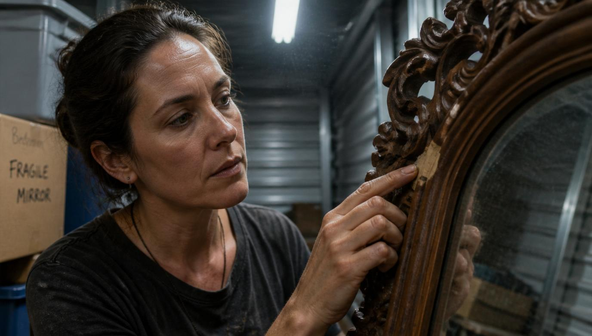
“Another house cleanout?” Marcus Teel appeared beside me, notebook already in hand.
He’d been working estate sales with me for three years, long enough to read a property the way I did. His eyes moved systematically across the room, cataloging and calculating.
“Family wants everything gone in two weeks.” I stepped carefully around a pile of magazines that probably dated to the Reagan administration.
“Their loss.” Marcus crouched next to a wooden crate filled with what looked like random household items.
He held up a small ceramic vase, turning it to catch the light filtering through dirty windows. The glaze had that particular depth that suggested age and quality. In the right auction house, it would easily bring three hundred dollars.
Sunday Dinner Performance

The smell of my mother’s pot roast filled the dining room, same as every third Sunday for the past twenty years. I sat in my designated chair at the far end of the table, watching Vanessa arrange herself like she was posing for a magazine spread.
Her gold pendant necklace caught the overhead light as she leaned forward to cut Grant Jr.’s meat. Everything about her radiated careful perfection, from her highlighted hair to her manicured nails to the way she managed to look elegant while dealing with a fussy eight-year-old.
“Natalie, how’s the junk business?” Vanessa’s voice carried that particular tone she’d perfected over the years.
Sweet enough to sound innocent to our parents, sharp enough to draw blood. I’d learned to recognize it the way you learn to recognize the sound of a car that needs repair.
The Dismissal Ritual
“It’s estate sales,” I said, cutting my roast into smaller pieces than necessary. “And storage auctions. And property management.”
“Right, of course.” Vanessa smiled that practiced smile that never quite reached her eyes.
“It’s such important work, what you do.” Her tone suggested anything but importance.
Grant leaned back in his chair, silver watch glinting as he gestured with his fork. “Different people find fulfillment in different things. Not everyone needs the pressure of major developments and investor meetings.”
The words sounded supportive, but the subtext was clear. Some people aim high, others aim low. Guess which category I belonged in.
The Reality Behind the Performance

What they didn’t know could fill a storage unit.
The medical bills I’d quietly paid when Dad’s insurance fell short after his heart attack. The new roof on this house that my “junk business” had funded when Grant was somehow too tied up in a major deal to help. The steady stream of checks I’d been writing for two years to keep their comfortable suburban life afloat.
But those checks didn’t come with ribbon-wrapped boxes or photo opportunities for Mom’s Facebook page.
They didn’t come with stories Vanessa could share at her charity luncheons. So they didn’t count.
The Comfortable Lie
“How’s the development business, Grant?” Dad asked, genuinely interested.
The way he looked at Grant reminded me of how he used to look at athletes on TV when I was young. Pure admiration for someone operating in a world he could never enter.
“Challenging market, but we’re positioned well.” Grant’s voice carried that easy confidence that came from years of saying the right things to the right people.
“Just closed on a property downtown that’s going to transform the whole district.” He paused to let that sink in, watching our parents’ faces light up with reflected pride.
The Invisible Labor
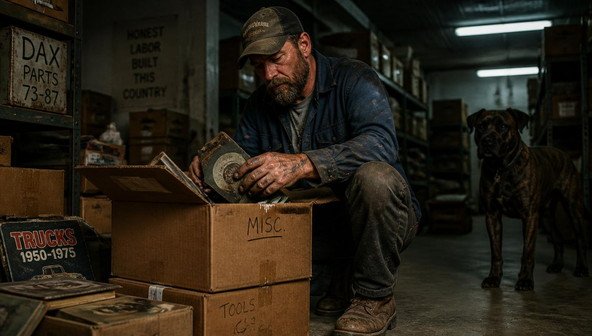
I thought about the Henderson estate sale I’d be running next week.
Two full days of pricing, organizing, and managing the controlled chaos of people hunting for treasures and bargains. Then another day of cleanup and coordinating the donation pickup for whatever remained.
It wasn’t glamorous work. No ribbon cuttings or newspaper photos.
But Mrs. Henderson’s children would each receive checks that would help them handle her final expenses and medical debts. Value extracted from what looked like nothing, money created from understanding what others missed.
The Performance of Success

Vanessa’s laugh drew my attention back to the table.
She was telling our parents about Grant’s latest business trip, something involving investors in Atlanta and a possible expansion opportunity. Her face glowed with the kind of reflected success that she wore better than any jewelry.
“The hotel had a concierge floor,” she was saying, as if proximity to luxury was itself an achievement.
Mom hung on every word, asking questions that let Vanessa elaborate on details that meant nothing but sounded impressive. Dad nodded along, clearly pleased that one of his daughters had landed in what looked like prosperity.
The Growing Weight

I finished my dinner in relative silence, contributing just enough to avoid seeming sullen.
This was the dynamic we’d settled into years ago. Vanessa performed success, our parents celebrated it, and I played the role of the practical daughter who’d found her own smaller path.
Everyone seemed comfortable with the arrangement. Everyone except the part of me that was slowly growing tired of being invisible.
The resentment lived somewhere just below my sternum, a familiar weight that I’d learned to carry without showing.
The Small Deceptions

After dinner, I helped Mom clear the table while Vanessa supervised the kids in the living room.
Grant had stepped outside to take a call, something urgent that required privacy. Through the kitchen window, I could see him pacing the length of the back deck, phone pressed to his ear.
“He works so hard,” Mom said, following my gaze.
“All those business calls, even on Sunday.” There was genuine sympathy in her voice, as if being important enough to receive urgent calls was itself a burden.
I rinsed plates and said nothing, watching Grant’s body language through the glass.
The Cracks in the Foundation

Something about Grant’s posture bothered me.
He wasn’t standing like a man handling routine business. His shoulders were tight, and he kept running his free hand through his hair. When he turned toward the window, his face looked strained in a way that didn’t match the confident man who’d been holding court at our dinner table.
But then Vanessa called him back inside, and the moment passed.
The successful businessman smile returned, easy and practiced. Whatever I’d seen was buried again under the performance of having everything under control.
The Accumulated Resentment

Driving home that evening, I found myself thinking about the ceramic vase Marcus had found in the Henderson house.
Beautiful, valuable, overlooked. Tossed into a box with random household items by people who couldn’t see past the surface.
The metaphor wasn’t lost on me. Some things required a trained eye to recognize their worth.
Cob greeted me at the door of my small house, tail wagging without agenda or performance. No judgment about my unremarkable life, no comparison to more impressive alternatives.
The Quiet Truth

I scratched behind his ears and looked around my living room.
Modest furniture, but every piece chosen for comfort and durability. Books that I’d actually read, not displayed for show. A bank account that could handle emergencies because I lived below my means, not above them.
It wasn’t a magazine-worthy life, but it was mine. Built on work that mattered, relationships that were real, and skills that created value instead of just moving it around.
The fact that my family couldn’t see any of that was their limitation, not my failure.
The Price of Understanding

Still, understanding didn’t make the dismissal hurt less.
Every casual comment about my “little business,” every comparison to Vanessa’s more impressive lifestyle, every time our parents lit up when Grant shared news about his latest development deal. It accumulated like dust in the corners of unused rooms.
I’d been telling myself for years that I was above caring about their approval.
But approval and acknowledgment weren’t the same thing. I didn’t need them to celebrate my choices, but I was tired of having my contributions erased by their selective blindness.
The Growing Distance

The irony was sharp enough to cut.
My unglamorous work had taught me to see value that others missed, to understand the difference between surface appearance and underlying worth. I could appraise a house full of forgotten objects and find the treasures hiding among the trash.
But I couldn’t make my own family see past their preconceptions about success and failure.
Every Sunday dinner, every family gathering, I sat at that table watching them choose the glittering surface over the solid foundation. Watching them mistake performance for substance, leverage for security.
The Warning Signs

And maybe that’s why Grant’s phone call had bothered me so much.
In my work, I’d learned to recognize the signs of financial pressure. The subtle tells that indicated when someone was carrying more debt than they could handle, when the performance of wealth was covering up a precarious reality.
I’d seen it in estate sales, when families discovered that the impressive lifestyle had been funded by loans against assets that no longer existed.
Grant’s strained expression through the kitchen window had looked familiar. Like someone trying to hold together something that was already falling apart.
The First Crack in the Foundation

Two weeks after that dinner, Vanessa called me at seven in the morning. She never called early unless something was wrong, and she definitely never called me first when something was wrong.
“Natalie?” Her voice sounded thin, stretched tight over something she was trying not to say.
“Grant’s investors pulled out of the downtown project. Some kind of financing issue.” The words came out in a rush, like she’d been practicing them.
The Careful Performance
“I’m sure it’s just temporary,” she continued, but the confidence felt forced. “These things happen in real estate all the time.”
I sat up straighter in bed, Cob shifting beside me on the blanket. Vanessa was explaining this to me like I might not understand business complications.
But her voice betrayed what her words were trying to hide. This wasn’t a minor setback she was managing gracefully.
The Uncharacteristic Vulnerability
“The thing is,” Vanessa said, and then stopped. I could hear her breathing, choosing her words carefully.
“We might need to make some adjustments. Temporarily.” The pause before ‘temporarily’ lasted just long enough to undermine the word completely.
“What kind of adjustments?” I asked, though I was already starting to understand where this conversation was heading.
The Condescending Request
“Well, you’re so good with financial things. All that auction and estate work you do.”
There it was. The same dismissive tone she’d always used, but now wrapped around a request for help.
“I thought maybe you could look at some options for us. Just until Grant gets this investor situation sorted out.” She made it sound like she was offering me an opportunity rather than asking for a favor.
The Familiar Pattern
This was classic Vanessa. Even when asking for help, she managed to position herself as the one doing me a kindness.
Like my expertise only became valuable when she needed it. Like my understanding of financial systems was suddenly worth acknowledging because her perfect life had developed a crack.
I found myself curious despite my irritation. What exactly had happened to bring down Grant’s confident empire?
The Surface Story
According to Vanessa, it was a simple matter of investor confidence. Market conditions had changed, some key backers had gotten nervous about commercial real estate, and Grant was regrouping for a stronger position.
“These kinds of setbacks separate the serious developers from the amateurs,” she said, quoting what sounded like Grant’s explanation.
But if it was such a routine business adjustment, why was she calling me instead of their financial advisor?
The Missing Pieces

“How long has this been developing?” I asked, getting dressed while holding the phone against my shoulder.
“Oh, just the last few weeks. Maybe a month.” Her answer came too quickly, too precise for someone describing a gradual business situation.
In my experience, financial problems that surfaced suddenly had usually been building for much longer than anyone wanted to admit.
The Reluctant Agreement

“I can take a look at your situation,” I said finally. “But I’ll need to see actual numbers, not just explanations.”
Vanessa’s relief was audible through the phone. “Of course. Grant will be so grateful for your professional perspective.”
The irony wasn’t lost on me. My perspective had been available for years, but only became valuable when their other options had disappeared.
The Storage Auction Discovery
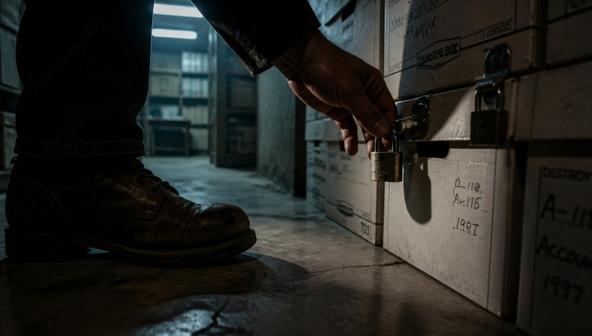
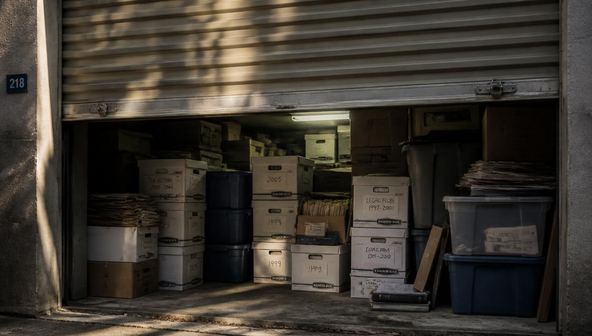
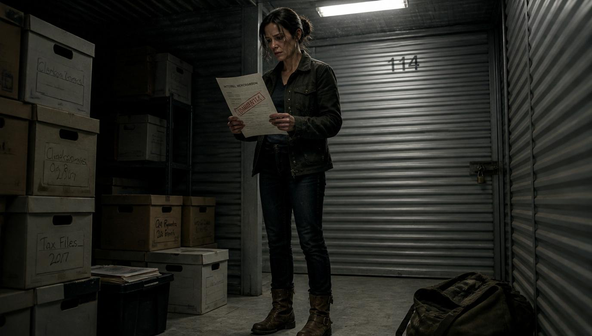
Three days later, I was standing in front of storage unit 114 at Westfield Storage, watching Marcus cut the lock on an abandoned rental.
The unit had been registered under Morrison Development LLC, the same company name I’d seen on Grant’s business cards. The rental had gone unpaid for four months.
Inside, boxes were stacked with the kind of deliberate organization that didn’t match someone simply running out of money.
The Deliberate Concealment
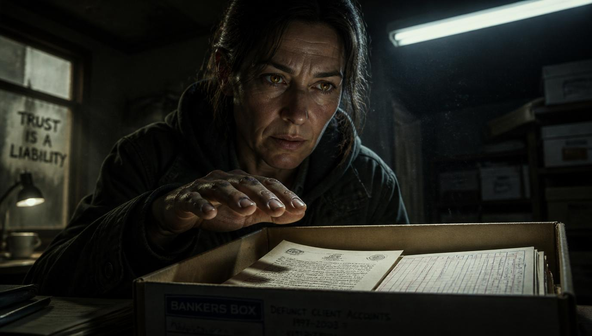
This wasn’t the chaotic mess of someone who’d lost control of their situation. The boxes were labeled, sealed, and arranged like someone had been systematically moving materials out of an office.
Financial records, client files, and personal items that looked like they’d been cleared from desks and filing cabinets. All dated from earlier in the year, months before Vanessa claimed their problems had started.
Marcus whistled low as he opened one of the banker’s boxes. “Somebody was planning ahead.”
The Timeline Contradiction
I pulled out a folder marked with last January’s date. Inside were transfer documents, account statements, and correspondence about liquidating certain assets.
If Grant had been moving money and materials out of his business in January, then the investor pullout story was at best incomplete. At worst, it was a carefully constructed lie.
The reality was starting to look much more complicated than market conditions and nervous backers.
The Professional Recognition

What bothered me most wasn’t just the deception. It was how perfectly Grant had underestimated my world.
He’d used storage facilities to hide his paper trail, not realizing that storage auctions were exactly the environment where someone like me would eventually find them. He’d treated my professional network like it was invisible, forgettable.
That miscalculation was about to cost him everything.
The Weight of Evidence
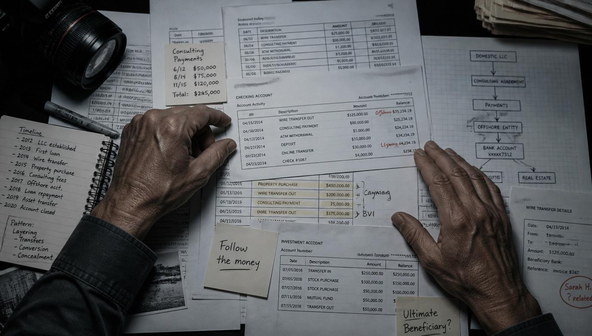
I photographed the box contents methodically, documenting dates and account numbers that painted a very different picture than the one Vanessa had described.
This wasn’t a sudden business setback. This was a controlled demolition that had been months in the planning.
And Vanessa was either completely blind to what her husband had been doing, or she was lying about her own level of awareness.
The Growing Anger

By the time I got home that evening, my hands were shaking slightly as I spread the photos across my kitchen table.
For years, my family had treated my work like a hobby, my expertise like a curiosity. Grant had smiled condescendingly while using my professional world to hide his crimes.
The man who’d lectured me about finding fulfillment in smaller things had been systematically stealing from his investors and creditors.
The Personal Stakes
This wasn’t just about exposing fraud anymore. This was about every dismissive comment, every patronizing smile, every time my contributions had been erased by their selective blindness.
Grant had made a critical error in judgment. He’d mistaken my family’s dismissal of my work for actual insignificance.
Now I held evidence that could destroy the foundation of their performed success, and I was no longer certain I wanted to protect them from the consequences of their choices.
The Calculated Summons
The call from my mother came exactly one week after I’d found Grant’s storage unit. Her voice carried that particular tone she used when the family had already made decisions about me.
“We need to have a family meeting, honey. This Sunday at two.” She didn’t ask if I was available or explain what we’d be discussing.
But I already knew. Vanessa had escalated this beyond my simple offer to review their finances.
The Coordinated Preparation
I arrived at my parents’ house to find Vanessa’s car already in the driveway, parked at an angle that suggested she’d been there for a while. Through the front window, I could see movement in the living room.
They’d had time to prepare their presentation. Time to align their arguments and assign their roles.
I sat in my truck for a moment, watching my family arrange themselves for whatever intervention they’d planned.
The Staged Intervention

The living room felt deliberately arranged when I walked in. Vanessa sat in the center of the couch, flanked by both parents, while a single chair had been positioned facing them.
Mom gestured toward the isolated chair with forced brightness. “Sit down, sweetheart. We want to talk to you about helping Vanessa through this difficult time.”
The phrasing made it clear this wasn’t a discussion. This was a coordinated appeal designed to extract something specific.
The Emotional Manipulation
Dad leaned forward, his reading glasses catching the afternoon light. “Your sister’s going through the hardest thing she’s ever faced. We know you’ve always been independent, but family means stepping up when someone needs you.”
Vanessa’s eyes were red-rimmed, though whether from genuine distress or strategic tears was impossible to determine. She wore her vulnerability like a carefully chosen outfit.
“I never thought I’d be in this position,” she said, her voice breaking slightly on cue.
The Financial Demand
“The thing is,” Mom continued, “you’ve been so successful with your business. You have that lovely house, all those savings from your estate sales.”
The words hung in the air while I processed what they were actually suggesting. They wanted me to liquidate my assets to save Vanessa from the consequences of Grant’s choices.
“We’re not asking you to give up everything,” Vanessa added quickly. “Just enough to help us stabilize until Grant gets back on his feet.”
The Twisted Logic

“You don’t have the same responsibilities we do,” Dad said, his tone gentle but pointed. “No husband, no children depending on you. Your money can work differently than ours.”
The logic was breathtaking in its cruelty. Because I’d chosen a different life path, my financial security was somehow less legitimate than theirs.
Because I’d been careful and successful without a husband’s support, I owed my achievements to the family unit that had never acknowledged them.
The Guilt Weapon

Mom reached across the coffee table to take my hand. “We know you love your sister. We know you’d want to help if she really needed it.”
Her fingers were warm and soft, familiar from childhood comfort that made the manipulation more effective. This was the woman who’d raised me, weaponizing maternal love to justify financial exploitation.
“Vanessa has always been there for family,” she continued, rewriting history with confident certainty. “Now it’s your turn to be there for her.”
The False History
I almost laughed at the audacity. Vanessa had been there for family gatherings where she could perform generosity and receive admiration. She’d never been there for quiet emergencies or unglamorous needs.
But pointing that out would make me look petty and bitter. They’d constructed their appeal to make any resistance seem selfish.
The intervention was designed to corner me emotionally while positioning my refusal as a moral failing.
The Expensive Detail
As Vanessa leaned forward to emphasize her desperation, I noticed the familiar glint of gold at her collarbone. The layered pendant necklace she’d claimed to have sold three weeks ago when she’d first called for help.
The green stone caught the light as she gestured, drawing attention to jewelry that supposedly no longer existed. Either she’d lied about selling it, or she’d somehow bought it back during their financial crisis.
Both possibilities suggested her story was more complicated than she’d admitted.
The Strategic Questions
“How much are we talking about?” I asked, keeping my voice neutral while my mind catalogued the contradictions in their presentation.
Vanessa’s relief was immediate and visible. “Maybe two hundred thousand? Just temporarily, until the market situation improves.”
Two hundred thousand dollars. Nearly half of everything I’d built through years of careful work and calculated risks.
They were asking me to sacrifice my financial independence to subsidize their lifestyle without any guarantee of return.
The Ownership Assumption
“It’s not like you need all that money sitting in accounts,” Dad added reasonably. “Money should work for family when family needs it.”
The casual assumption that my assets were somehow communal property made my chest tighten with anger. They’d never consulted me about their major financial decisions, but my money was apparently available for democratic redistribution.
“This is what family does,” Vanessa said, tears beginning to flow more convincingly. “We take care of each other.”
The Conditional Love

The truth was becoming crystal clear. Their love for me was entirely conditional on my utility to them. My value to this family had always been measured by what I could provide, not who I was.
When my contributions were invisible, they were dismissed. When they needed my resources, those same skills suddenly became family obligations.
I was looking at three people who genuinely believed I owed them my financial security because they’d never bothered to build their own.
The Growing Certainty
As I sat in that carefully arranged chair, facing their coordinated emotional assault, my decision was crystallizing around a hard, clear center. They’d underestimated me in the same way Grant had.
They thought my patience was weakness. They thought my loyalty was exploitable.
They had no idea that I now held evidence that could destroy everything they were trying to preserve.
The Performance Response
“I need to think about this,” I said finally, standing up from the intervention chair they’d positioned for maximum psychological pressure.
Vanessa’s face showed a flicker of panic before she covered it with understanding. “Of course. This is a big decision. But don’t take too long thinking, okay? Every day we wait makes things harder.”
Even in her desperation, she couldn’t resist applying pressure disguised as reasonableness.
The Quiet Exit
I hugged each of them goodbye, feeling the performance of family affection while understanding its transactional nature more clearly than ever before. Mom held on a little longer, Dad patted my shoulder with forced confidence, and Vanessa squeezed me with practiced desperation.
Walking to my truck, I felt their eyes on me through the front window, probably already analyzing my response and adjusting their next approach.
They had no idea I was driving home to evidence that would change everything they thought they knew about their situation.
The Evidence in Plain Sight
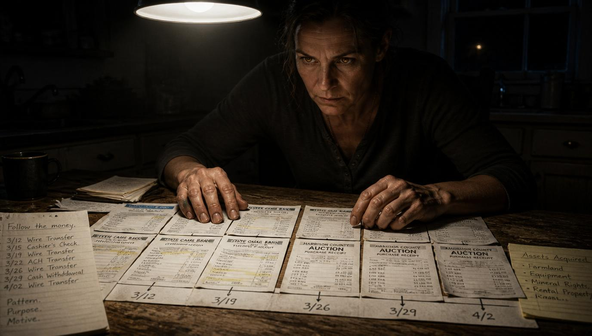
That evening, I spread Grant’s financial documents across my kitchen table under the bright overhead light. The papers told a story of deliberate deception that made my family’s intervention look even more naive.
Bank transfers, auction receipts, and private sale agreements created a timeline that contradicted everything Grant had told them. The collapse hadn’t been sudden at all.
For months before the public crisis, he’d been systematically converting assets to cash and moving money through channels designed to hide it from creditors.
The Professional Network Response
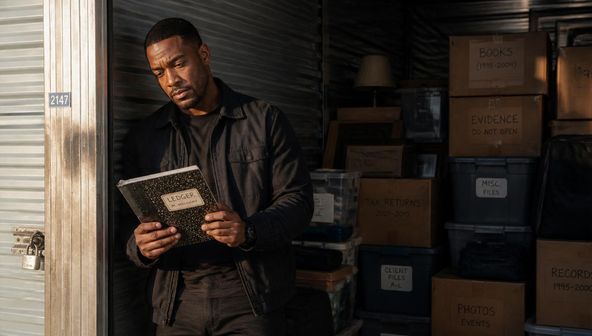
I called Marcus first, knowing he’d have access to storage facility records across three counties. His voice was steady when I explained what I needed to verify.
“Grant Morrison’s been moving stuff for a while,” he confirmed after checking his contacts. “Multiple units, different names, cash payments that made the facility managers remember him.”
The pattern was becoming clear. Grant hadn’t been caught by market forces.
He’d orchestrated his own controlled demolition while positioning Vanessa as an unwitting victim.
The Hidden Asset Trail

The auction house receipts were particularly damaging. Items that officially belonged to Vanessa had been sold without her knowledge, with proceeds flowing to accounts she’d never heard of.
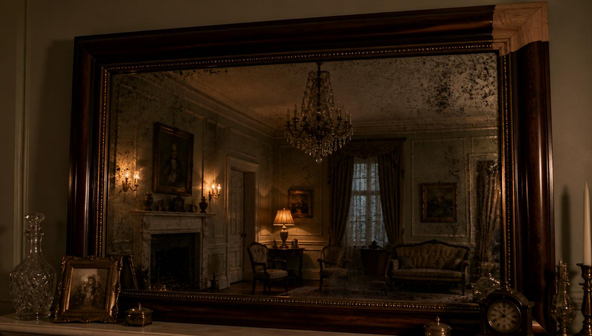
The antique mirror from their hallway had fetched twelve thousand dollars from a private collector. Vanessa had always dismissed it as worthless family junk.
But someone with my expertise would have recognized its value immediately.
Grant had used my professional world to hide his crimes, not understanding that I’d eventually be the one to trace them.
The Scope of Deception
Three different storage units contained evidence of systematic asset stripping that had been happening for six months before Grant’s empire publicly collapsed. He’d been planning his exit while accepting new investments.
The business records showed he’d been moving money offshore through auction house transactions and private sales that created legitimate paper trails for illegitimate purposes.
My family was asking me to contribute to a scheme that was already criminal.
Their intervention wasn’t just misguided—it was potentially illegal.
The Collector’s Testimony
I called Felix Okafor the next morning, knowing he’d handled several high-end pieces that had appeared on the market recently. His voice carried amusement when I described Grant’s situation.
“I wondered when someone would start asking questions about Morrison’s sales,” he said. “Man was liquidating quality pieces like he had insider knowledge about market crashes.”
Felix had documentation showing Grant had sold items worth sixty thousand dollars through private channels in the past four months.
The money had disappeared into accounts that weren’t part of the bankruptcy proceedings.
The Family Heirloom Discovery

Among Felix’s records was the Brooks family mirror that had hung in Vanessa’s hallway for years. She’d complained about it at family gatherings, calling it an ugly old thing that Grant wanted to get rid of.
The sale receipt showed it had been authenticated as a genuine 1890s piece with provenance that significantly increased its value.
Grant had pocketed twelve thousand dollars for something he’d convinced Vanessa was worthless.
The symbolism was perfect—hidden value that only someone with my expertise would have recognized, sold by someone who saw only surface appearances.
The Insurance Implications
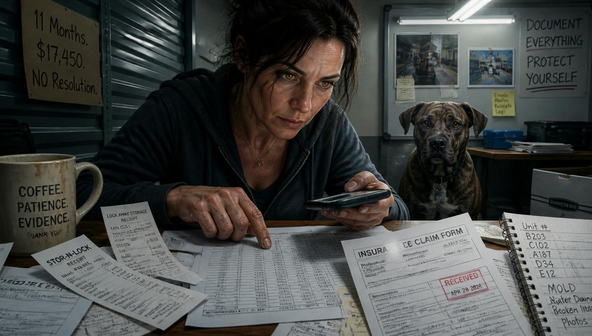
The business insurance claims told another part of the story. Grant had filed for losses on equipment and inventory that the storage unit records proved he’d sold privately months earlier.
He was claiming insurance money for assets he’d already converted to hidden cash.
The federal implications were becoming clear.
This wasn’t just business failure or family crisis—this was organized fraud that involved multiple government agencies once they started investigating.
The Vanessa Question
The hardest evidence to process was proof that Vanessa had signed documents authorizing some of the sales. Her signature appeared on papers that suggested she’d known about at least part of Grant’s asset movement.
Either she’d been completely naive about what she was signing, or she’d been more complicit than her desperate phone calls suggested.
The intervention suddenly looked different.
Was she genuinely asking for help, or was she trying to get me financially entangled in something she knew was criminal?
The Timeline Contradiction
Grant’s travel records, cross-referenced with the storage unit activities, showed he’d been in three different states during the week he’d claimed to be meeting with bankruptcy attorneys.
He’d been moving assets and opening accounts while telling Vanessa he was trying to save their business.
The depth of deception was staggering.
Even if Vanessa was genuinely innocent, she’d been married to someone who’d been lying to her face for months while systematically destroying their legal financial position.
The Federal Interest
Diane Purcell’s voice was grim when I called her office to discuss the implications of what I’d found. As my attorney, she could help me understand how to handle evidence of federal crimes.
“Wire fraud, bankruptcy fraud, insurance fraud,” she listed after I described the documentation. “You’re sitting on evidence that multiple federal agencies would want to examine.”
The question wasn’t whether to report it anymore.
The question was how to protect myself while ensuring the evidence reached the right investigators without making me look complicit.
The Protection Strategy
“You need to document everything about your own involvement,” Diane advised. “Time stamps, communications, evidence of your good faith efforts to help legitimately.”
My family’s intervention had accidentally created a paper trail that proved I’d been approached for money after discovering the fraud, not before.
Their timing had actually protected me from accusations of conspiracy.
The irony was sharp—their attempt to manipulate me had created evidence of my innocence.
The Moral Calculation
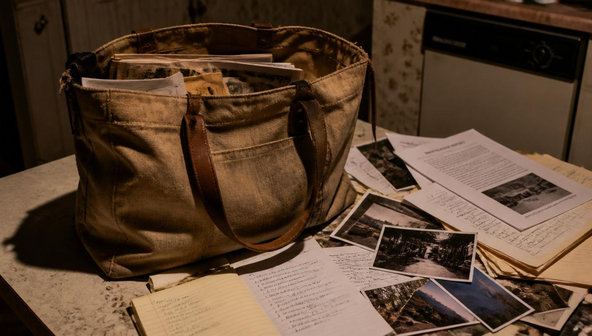
That night, I sat in my kitchen staring at evidence that could send Grant to federal prison and potentially implicate Vanessa in crimes that would destroy what remained of her life.
My family had asked me to sacrifice my financial security to help criminals complete their asset-hiding scheme.
They’d weaponized family loyalty to make me an accessory to fraud.
The betrayal went deeper than I’d initially understood, and my response would determine not just my own future, but the legal consequences my sister would face.
The Strategic Decision

I could turn over the evidence and let federal investigators sort out who knew what and when. I could confront Vanessa privately and demand the truth about her involvement.
Or I could develop a strategy that protected my own interests while ensuring appropriate consequences for the people who’d tried to exploit me.
My family had underestimated my capabilities for years.
Now they were about to learn exactly how strategic those capabilities could be when properly motivated.
The Documentation Process
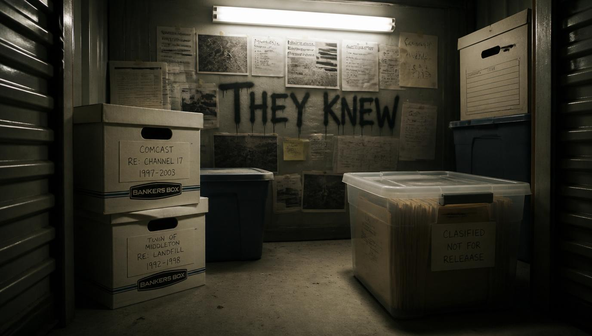
I spent the next two days creating copies of everything, organizing evidence into categories that would be useful to different types of investigators. Financial crimes, insurance fraud, and bankruptcy violations each required specific documentation.
Marcus helped me establish a timeline of storage unit activities that proved Grant had been systematically hiding assets while his business was publicly failing.
Felix provided auction house records that showed the scope of illegal sales.
Everything pointed to a man who’d been planning his crimes for months while positioning his family as unwitting accomplices.
The Contact Decision

By Thursday, I had enough evidence to end Grant’s freedom and possibly Vanessa’s future, depending on how much she’d actually known about his activities.
The question was no longer what I could prove, but how I wanted to use what I’d discovered.
My family was waiting for my answer to their financial demands.
They had no idea I was preparing evidence that would make their intervention look like a confession of attempted conspiracy to commit fraud.
The Friday Morning Call
Friday morning brought Vanessa’s voice through my phone, sharper than usual. She’d been calling twice daily since the family meeting, each conversation growing more demanding.
“Have you made a decision about liquidating your assets?” she asked without preamble. “Grant says we need an answer by Monday or the legal protections expire.”
I gripped the phone tighter, recognizing the manufactured urgency tactic. Grant was creating artificial deadlines to prevent me from thinking too clearly about their request.
“I’m still reviewing the situation,” I said carefully. “There are some financial details that don’t add up.”
The Defensive Shift
Vanessa’s silence stretched long enough that I wondered if the call had dropped. When she spoke again, her voice carried a new quality I couldn’t immediately identify.
“What kind of details?” she asked. “Grant’s been completely transparent about the collapse.”
The word ‘transparent’ almost made me laugh given what I’d spent the week uncovering. Her defensive tone suggested she might know more than she’d been admitting.
“Just inconsistencies in the timeline,” I said. “Nothing that can’t be cleared up with documentation.”
The Fishing Expedition
“What documentation?” Vanessa’s voice sharpened. “Everything was seized by the creditors.”
But I knew that wasn’t true. The storage units alone contained boxes of records that should have been turned over to bankruptcy court.
“I’m sure Grant kept copies of important papers,” I said, testing her reaction. “Most business owners do.”
The pause that followed told me she was either genuinely ignorant or calculating how much to reveal.
The Pressure Campaign
“Natalie, I need you to focus on what’s important here,” Vanessa said, her tone shifting to the manipulative sweetness she used when she wanted something. “My children could lose their home.”
The mention of her kids was deliberate emotional manipulation. She knew I had affection for my nephews despite my complicated relationship with her.
“I understand the stakes,” I replied. “That’s why I want to make sure any help I provide actually solves the problem instead of making it worse.”
The Slip
“How could helping us make anything worse?” Vanessa demanded. “Unless you’re planning to—” She stopped abruptly.
The unfinished sentence hung in the air like an accusation. Planning to what? Report something? Refuse to cooperate with something illegal?
“Planning to what, Vanessa?” I asked quietly.
“Nothing. I just meant unless you’re planning to abandon your family when we need you most.”
The Recovery Attempt
She was trying to walk back whatever she’d almost revealed, but the slip had been telling. Vanessa was worried about something specific, something beyond just losing her house and lifestyle.
“I would never abandon family,” I said. “But I also won’t participate in anything that could create legal problems for any of us.”
Her sharp intake of breath was audible. “Legal problems? What are you talking about?”
The fear in her voice was genuine, which meant she understood exactly what kind of legal problems could arise from Grant’s situation.
The Direct Question
“Vanessa, how much do you know about Grant’s business activities over the past six months?” I asked directly.
The silence stretched so long I thought she might hang up. When she finally spoke, her voice was smaller than I’d heard it in years.
“I know he’s been trying to protect what he could for the family,” she said carefully. “Is that wrong?”
The phrase ‘protect what he could’ was interesting word choice. It suggested awareness of asset movement that hadn’t been disclosed to creditors.
The Warning Signal
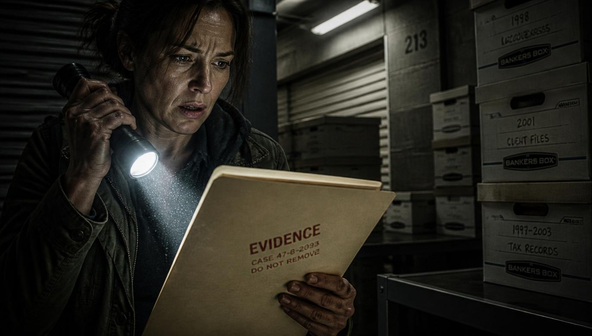
“Some ways of protecting assets can create bigger problems than they solve,” I said. “Especially if they’re not handled properly through legal channels.”
“Are you threatening me?” Vanessa’s voice snapped back to its familiar hostile edge.
“I’m trying to understand the situation before I make any financial commitments,” I replied. “That’s what any reasonable person would do.”
Her laugh was bitter. “Right. Because you’re so much smarter than the rest of us.”
The Familiar Pattern

The conversation was sliding back into our usual dynamic—her resentment of my caution, my frustration with her refusal to consider consequences. But this time, the stakes were federal crimes instead of family drama.
“This isn’t about intelligence,” I said. “It’s about making sure I have accurate information.”
“Grant’s given you all the information you need,” she replied coldly. “The question is whether you’re going to help your family or not.”
The Ultimatum
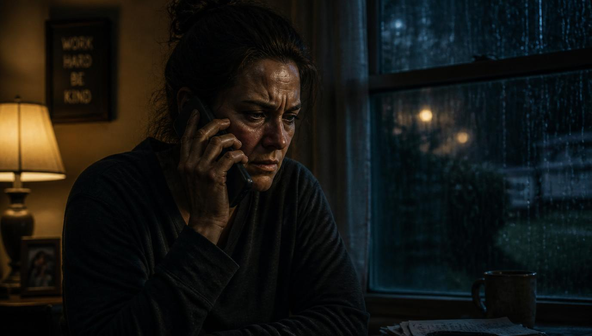
“Mom and Dad are expecting an answer when they call you tonight,” Vanessa continued. “They’re going to want to know if their daughter cares more about money than family loyalty.”
The threat was clear—cooperate or face coordinated family pressure designed to paint me as selfish and greedy. They were prepared to weaponize guilt and obligation to get what they wanted.
“I’ll talk to them tonight,” I agreed. “And I’ll have an answer for everyone by Sunday.”
The Preparation Time

After hanging up, I sat in my kitchen staring at the evidence spread across my table. Vanessa’s fear during our conversation had confirmed my suspicions about her level of knowledge.
She might not understand the technical details of Grant’s fraud, but she knew enough to be worried about legal consequences. That made her either a victim or an accomplice, depending on how much she’d actively participated.
By Sunday, I’d need to decide which one she was and how much protection she deserved from the consequences of Grant’s crimes.
The Marcus Update
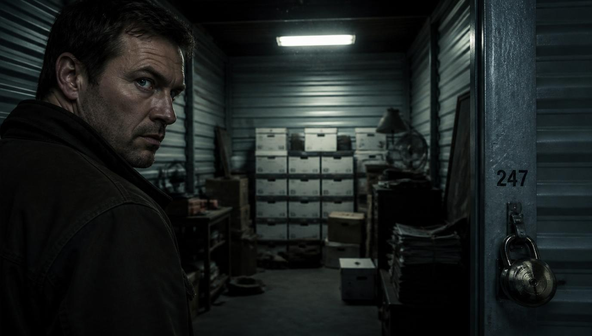
I called Marcus to update him on storage unit activities from the past week. His contacts had been monitoring Grant’s access to the facilities he’d been using.
“He was at the main unit yesterday,” Marcus reported. “Spent about two hours inside, came out with several boxes.”
Grant was still moving evidence, which meant he was either destroying documentation or relocating it to somewhere more secure. Neither option suggested innocent behavior.
“Any idea what was in the boxes?” I asked.
The Escalation

“Heavy enough to be files,” Marcus said. “But he’s also been asking questions about other units, like he’s planning to consolidate everything into one location.”
This was new information that suggested Grant was preparing for something—either a more complete disappearance or getting ready for investigators to start looking more closely at his activities.
“Keep monitoring,” I said. “And let me know if he tries to access any other facilities.”
The situation was escalating faster than I’d anticipated, which meant my timeline for making decisions was shorter than I’d hoped.
The Attorney Meeting
I called Diane’s office and scheduled an emergency consultation for Saturday morning. If Grant was moving evidence and my family was demanding answers by Monday, I needed professional advice about protecting myself.
The evidence I’d gathered was valuable enough to interest federal investigators, but I had to handle it correctly to avoid becoming a target myself.
“Bring everything,” Diane instructed when I explained the urgency. “We need to discuss your options before this gets any more complicated.”
The Parent Preparation
That evening, I sat down to prepare for my parents’ call. They would be expecting either compliance with their demands or a detailed explanation of my refusal to help.
Instead, I was going to have to explain that their golden daughter’s husband was a federal criminal and that their intervention had been an attempt to make me an accessory to fraud.
The conversation would destroy their understanding of our family dynamics and force them to choose between protecting Vanessa and accepting the truth about Grant’s crimes.
The Sunday Deadline
Two days to decide how much of my family I was willing to sacrifice to ensure justice for Grant’s victims. Two days to determine whether Vanessa deserved protection or consequences.
My family had always underestimated my capabilities, treating my caution and expertise as character flaws rather than strengths.
Now those same capabilities had uncovered crimes that could destroy them all, and they were still demanding that I solve their problems without asking uncomfortable questions about how those problems had been created.
The Saturday Morning Truth
Diane’s office felt smaller with the weight of evidence spread across her conference table. Financial records, storage receipts, and photographs of Grant’s hidden assets created a timeline that told a clear story of calculated fraud.
“This isn’t a business collapse,” Diane said, reviewing the documents. “This is asset concealment on a federal level.”
Her fingers traced the paper trail showing systematic transfers over eight months. Grant had been planning his exit long before any investors pulled out.
The Legal Reality
“Your family’s request makes you an accessory if you comply,” Diane explained bluntly. “They’re asking you to help complete a criminal conspiracy.”
The words hit me like cold water. My parents’ emotional manipulation wasn’t just hurtful—it was an invitation to federal charges.
“What about Vanessa?” I asked. “How much trouble is she in?”
Diane’s expression was grim as she pulled out specific transaction records.
The Complicity Question
“These sales required her signature,” Diane said, pointing to estate jewelry transactions. “She either signed documents she didn’t read, or she knew exactly what was happening.”
The evidence suggested Vanessa had authorized the sale of family heirlooms that officially belonged to her. The money had disappeared into accounts she claimed not to know about.
“Either way, she’s legally responsible,” Diane continued. “Willful ignorance isn’t a defense in federal court.”
The Protection Strategy
“We need to get this information to investigators before Grant destroys more evidence,” Diane advised. “But we structure it to minimize your exposure and protect your legitimate interests.”
She outlined a plan that would satisfy my legal obligations while keeping me clear of the criminal investigation. The key was timing and documentation.
“You cooperate fully but on your terms,” she said. “No family meetings, no private negotiations with Grant.”
The Phone Strategy

My parents called that evening as promised, their voices carrying the weight of orchestrated disappointment. They’d clearly rehearsed their approach with Vanessa coaching their emotional appeals.
“We raised you to put family first,” Mom said, her voice trembling with practiced hurt. “I don’t understand how you can abandon us now.”
Dad’s voice was heavier when he added, “Your sister’s children could lose everything, Natalie.”
The Prepared Response

“I understand the situation is serious,” I replied carefully. “That’s why I’ve been doing research to make sure any help I provide is legal and effective.”
The silence that followed was heavy with unspoken communication between my parents. They hadn’t expected me to mention legal considerations.
“Legal?” Mom’s voice sharpened. “What legal issues? Grant said this was just a temporary cash flow problem.”
The Uncomfortable Revelation
“Grant’s situation involves federal banking regulations and creditor fraud,” I said, letting the words settle. “Anyone who helps hide assets could face criminal charges.”
Dad cleared his throat nervously. “Natalie, you’re making this sound more complicated than it needs to be.”
Their discomfort was palpable through the phone. They wanted simple family loyalty, not complex legal realities.
The Documentation Request
“I’d be happy to help once I see proper documentation of the bankruptcy proceedings,” I continued. “Court filings, creditor agreements, the official asset disclosure statements.”
Mom’s breathing became audible. “Why do you need all that paperwork? Can’t you just trust your family?”
The question revealed how completely they’d accepted Grant’s version of events without asking for any verification.
The Trust Explanation
“Trust and due diligence aren’t mutually exclusive,” I said gently. “If Grant’s been completely honest, the paperwork will confirm that and we can move forward.”
The pause stretched long enough that I wondered if they were conferring silently with someone else in the room.
When Dad spoke again, his voice carried a new tension. “We’ll ask Grant about getting you that information.”
The Vanessa Interruption
Sunday morning brought Vanessa to my front door, her appearance more disheveled than I’d seen since high school. Her usual perfect styling was replaced by hastily applied makeup and clothes that looked like they’d been slept in.
“We need to talk,” she said, pushing past me without invitation. “Without lawyers or parents or anyone else.”
Her presence in my kitchen felt like an invasion, but it also represented an opportunity for truth.
The Desperate Honesty
“I know you think Grant and I are criminals,” Vanessa said, slumping into a chair at my table. “Maybe you’re right about him, but I never understood what he was doing.”
Her admission hung between us like a confession. The perfect wife facade was finally cracking under pressure.
“But you signed documents,” I said quietly. “Sales authorizations for jewelry, antiques, personal property.”
The Willful Blindness
“He said they were insurance papers,” Vanessa replied, her voice small. “Protection against creditors seizing everything if the business had problems.”
The explanation was plausible enough to provide legal cover while being naive enough to suggest genuine ignorance. She’d chosen not to ask uncomfortable questions about her husband’s activities.
“Did you keep copies of what you signed?” I asked.
Her head shake was answer enough.
The Children Card

“My kids don’t know anything about this,” Vanessa said, her voice breaking slightly. “They just know Daddy’s business is having problems and we might have to move.”
The mention of my nephews was calculated but also genuine. Vanessa’s fear for her children was real, even if her methods were manipulative.
“They won’t have to suffer for Grant’s choices if he cooperates with investigators,” I said carefully.
The Bargaining Phase

“What if Grant makes everything right?” Vanessa asked desperately. “Returns the money, pays back the creditors, takes responsibility for the mistakes?”
Her hope was touching and completely unrealistic. Grant wasn’t going to voluntarily surrender hidden assets or admit to federal crimes without facing serious consequences.
“That would require him to admit to criminal activity,” I explained. “Which means prison time regardless of restitution.”
The Final Choice
Vanessa’s face crumpled as she finally understood the scope of Grant’s crimes and their consequences. There was no solution that preserved her life as she’d known it.
“Will you help me figure out what to do?” she asked quietly. “Not Grant. Not the money. Just help me protect my children.”
The question represented everything our relationship had never been—honest, vulnerable, and focused on what actually mattered rather than appearances.
The Sister I Never Knew

“Yes,” I said quietly. “I’ll help you protect your children.”
Vanessa’s shoulders sagged with relief, but I could see the fear still etched in her face. This wasn’t the sister who had mocked my career for years.
“But we do this the right way,” I continued. “Through proper legal channels, with full cooperation, no matter how much it hurts.”
Her nod was barely perceptible, but it felt like the first honest communication we’d shared in decades.
The Uncomfortable Alliance
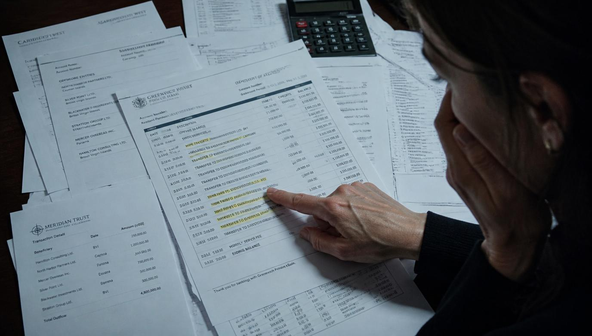
Over the next week, Vanessa and I worked together in a way that felt surreal after years of hostility. She provided access to Grant’s home office and personal records while he was traveling.
The evidence we uncovered was worse than I’d imagined. Hidden bank statements, forged documents, and correspondence with offshore account managers painted a picture of systematic fraud spanning three years.
“I feel so stupid,” Vanessa whispered, staring at bank records showing money she’d never known existed. “How did I not see any of this?”
The Mother’s Rage

When Mom learned that I was helping investigators rather than funding a family bailout, her reaction was volcanic. She arrived at my house with Dad in tow, her face flushed with an anger I hadn’t seen since childhood.
“You’re destroying your sister’s life,” she shouted from my doorway. “Those children will grow up knowing their aunt chose strangers over family.”
Dad stood behind her, uncomfortable but supportive of her fury. Their united front felt familiar and exhausting.
“I’m protecting those children from having a criminal for a mother,” I replied calmly.
The Loyalty Test
“Grant said you’ve always been jealous of Vanessa,” Mom continued, her voice sharp with accusation. “That you’re using this crisis to finally tear her down.”
The words stung because they contained a grain of truth. Part of me did feel satisfaction watching Vanessa’s perfect life crumble.
But the larger truth was simpler and more painful. “I’m not destroying anything, Mom. I’m just refusing to help hide the destruction that already happened.”
The Grant Confrontation
Grant returned from his business trip to find federal investigators waiting at his house. He called me that evening, his voice tight with controlled fury.
“You have no idea what you’ve done,” he said without preamble. “This affects more than just my family.”
His threat was barely concealed beneath a veneer of disappointment. The charming public Grant had been replaced by something colder and more desperate.
“I know exactly what I’ve done,” I replied. “I’ve stopped pretending your crimes are my family’s emergency.”
The Arrest Day
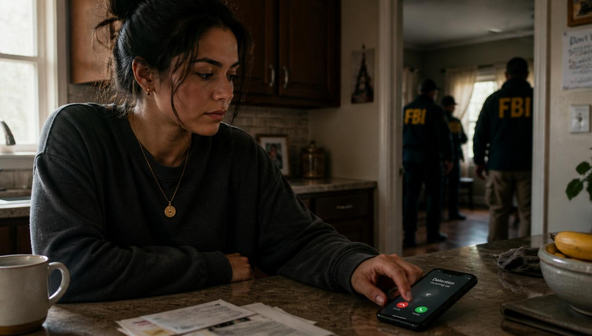
The morning of Grant’s arrest, I sat with Vanessa in her kitchen while federal agents searched the house. Her children were at school, spared from witnessing their father’s downfall.
“He keeps calling me from jail,” she said quietly. “Telling me this is all a misunderstanding that we can fix together.”
Her phone buzzed with another call from the detention center. She declined it without looking.
“I’m done fixing things I didn’t break,” she added, her voice stronger than I expected.
The Asset Recovery

Felix Okafor proved invaluable in tracking down the items Grant had sold through auction houses and private dealers. The antique mirror was recovered from a collector in Denver, along with several other family pieces.
“Your brother-in-law was smart,” Felix told me, reviewing the paper trail. “But he wasn’t as smart as he thought he was.”
The recovered assets wouldn’t restore everything Grant’s victims had lost, but they provided substantial compensation for the largest creditors.
Most importantly, they proved the scope of Grant’s deception to anyone still inclined to see him as a victim.
The Family Reckoning
Three months after Grant’s arrest, my parents finally acknowledged what they’d asked me to do. Dad called on a Thursday evening, his voice heavy with shame.
“We didn’t understand,” he said quietly. “About the legal problems, about what Grant had done. We just saw Vanessa in crisis and wanted to help.”
Mom’s voice came from the background, tearful but clear. “We’re sorry, Natalie. We should have trusted your judgment instead of pressuring you.”
The apology felt genuine but incomplete, like they were sorry for the tactics without fully understanding the deeper damage.
The Vanessa Transformation
Watching Vanessa rebuild her life was like meeting a person I’d never known existed. Without Grant’s money and expectations, she discovered capabilities that had been dormant for years.
She found work as a receptionist at a medical office, enrolled in night classes for medical billing, and moved with her children into a modest apartment across town.
“I forgot I was actually good at things,” she told me over coffee one afternoon. “Before Grant, before the house and the parties, I had plans.”
Her voice carried a mixture of grief for lost time and excitement for recovered possibilities.
The Children’s Adaptation
My nephews adjusted to their new circumstances with the resilience that children often show in crisis. The older one, David, asked me direct questions about his father that Vanessa struggled to answer.
“Is Dad a bad person?” he asked during a visit to my house. His eight-year-old face was serious, seeking honesty rather than comfort.
“Your dad made some very bad choices,” I told him carefully. “But that doesn’t change how much he loves you.”
The distinction between actions and identity felt important, even if I wasn’t sure I believed it entirely myself.
The Business Evolution
The investigation and recovery work had connected me with a network of attorneys, investigators, and financial professionals dealing with complex asset fraud cases. My phone rang regularly with referrals for similar situations.
“You should formalize this,” Diane advised during one of our meetings. “Asset recovery consulting is a growing field, and you’re already doing the work.”
The suggestion felt like recognition of something I’d been building without realizing it. My unglamorous auction expertise had evolved into something uniquely valuable.
The Grant Sentencing
Grant’s sentencing hearing was surprisingly well-attended. His victims filled the courtroom, some traveling from other states to make impact statements about their losses.
Vanessa attended but sat in the back, her presence a statement of closure rather than support. She didn’t speak to Grant or acknowledge him when he turned to look at her during the proceedings.
His seven-year federal sentence felt both significant and insufficient given the scope of his crimes.
The New Normal
Two years after Grant’s arrest, my family gatherings had taken on a completely different character. We met at my parents’ house for smaller, quieter celebrations focused on actual connection rather than performance.
Vanessa arrived with her children and a grocery store cake, her contributions measured in presence rather than presentation. She looked tired but genuinely peaceful in a way I’d never seen during her marriage.
“Thank you,” she said quietly as we cleaned up after dinner. “For not letting me destroy myself trying to save something that was already gone.”
The Reflection Point
Standing in my workshop that evening, surrounded by the organized chaos of my work, I finally understood what had changed. The mirror that had started everything sat propped against one wall, waiting to be returned to my parents’ house.
In its aged surface, I saw myself clearly for perhaps the first time. Not the family disappointment or the successful businesswoman, but simply someone who had chosen integrity over acceptance.
The reflection showed a woman who had finally learned the difference between being alone and being independent.
The Unexpected Gift
The real surprise was how much I enjoyed my relationship with Vanessa once it was built on honesty instead of hierarchy. She had a sharp sense of humor and a practical intelligence that had been buried under years of performative femininity.
“I owe you more than an apology,” she said during one of our regular coffee meetings. “I owe you the truth about why I was so awful to you.”
Her admission opened a conversation about fear, insecurity, and the ways we’d both been trapped by our family’s expectations.
The Resolution
Five years later, Vanessa graduated from her medical billing program and found a full-time position with benefits and advancement potential. Her children were thriving in their schools, and she’d started dating a teacher who appreciated her intelligence and independence.
My consulting practice had grown into something I’d never imagined, helping families navigate the aftermath of financial fraud and asset concealment. The work was challenging and meaningful in ways my original business had never been.
Most importantly, I’d learned that being seen and valued for who I actually was required first knowing who that person was myself.
The family that emerged from the crisis was smaller, more honest, and infinitely more real than what we’d lost.


