
The Story Starts Below!

The House Before Everything
My grandmother Eloise called it “the good bones house.”
She meant it literally. Frank had poured the foundation himself, mixed concrete in July heat until his hands cracked and bled.
The house on Garner Street was not beautiful the way magazines made houses beautiful.
It was something better than that.
What Frank Built
He started construction in 1981 with borrowed equipment and careful math scratched onto graph paper.
Every beam measured twice. Every joint fitted by hand.
By the time my mother was born, the house already smelled like the people who loved it.
That smell never entirely left.
Eloise’s Rooms
My grandmother filled the spaces Frank built with the quietest kind of care.
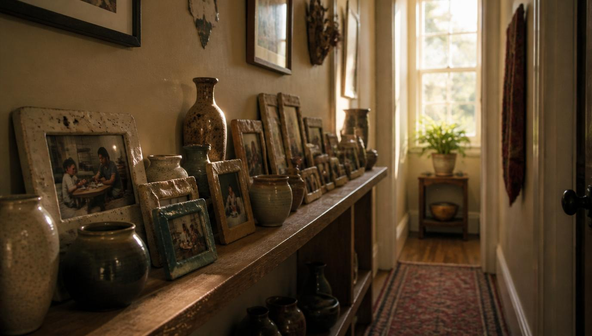
Ceramic pieces lined the hallway shelf. Handmade frames held photographs of ordinary Tuesdays.
She understood that beauty was not decoration.
It was attention, repeated over years until it became a place.
My Mother’s Ghost
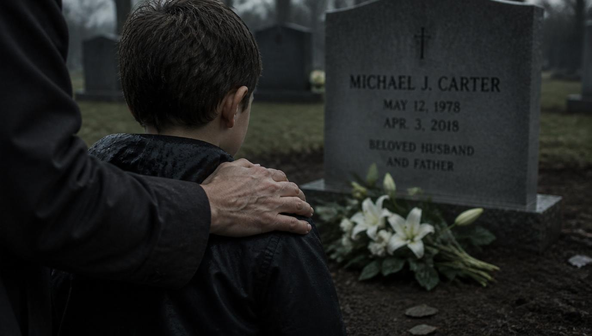
She died in April, when I was nine. Her name was Caroline.
I remember very little about the weeks after.
What I remember clearly is Frank’s hand on my shoulder at the graveside, steady as anything I have ever felt.
He did not let go for a long time.
What Raymond Was
My father loved my mother genuinely. I have always believed that.
But love did not make him capable of the things her absence required.
He moved through the house after she died like a man uncertain whether the furniture would hold his weight.
Frank and Eloise held mine instead.
The Architecture of Grief

I grew up inside my grandparents’ particular grammar of care.
Saturday mornings in Frank’s garage workshop, learning the names of tools I would eventually inherit.
Evenings with Eloise at the kitchen table, her hands always occupied with something useful while she listened to everything I needed to say.
I did not know then that I was being prepared.
When They Left
Eloise had her stroke on a Wednesday in October.
She was gone by Thursday morning. Frank lasted fourteen months after that.
He did not have a dramatic decline. He simply became quieter each week, as though he were slowly turning down the volume on himself, until one morning in December there was nothing left to turn down.
The First Year After
Raymond had already been seeing Denise for two years by the time Frank died.
I was eighteen and working part-time and still learning how to carry the weight of two absences at once.
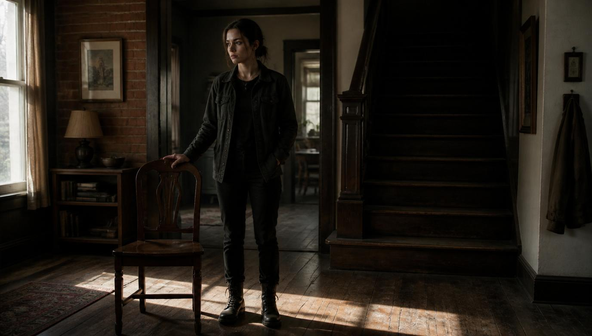
Denise moved in six months after the funeral, which felt fast to me then.
I was too tired to name what I felt about it.
What Changed Slowly
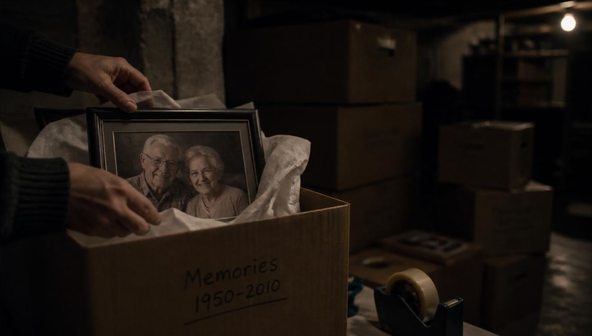
The photographs came down first. My grandparents’ faces, moved to the basement storage room.
Denise called it a fresher feel. Raymond called it adjusting.
I carried the boxes downstairs myself because I did not trust what might happen to them if I left the task to someone else.
That was the first thing I learned to protect quietly.
Marcus and Cole Arrive

Within a year of the wedding, Denise’s sons occupied both guest rooms.
Marcus at twenty-eight with his work boots and his easy certainty. Cole at twenty-six with his styled hair and his watch and his smile that never quite connected to his eyes.
They moved through Frank’s house like men who had already decided it was theirs.
I was twenty-three and watching.
The Spare Key
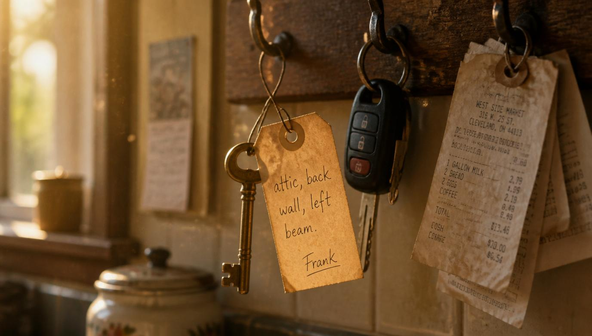
I noticed Cole taking my car key from the kitchen hook the first time on a Tuesday night.
He came back at two in the morning. The seat was adjusted. The tank was lower.
I mentioned it once. He laughed.
I mentioned it again and Raymond suggested I leave a note.
The Garage
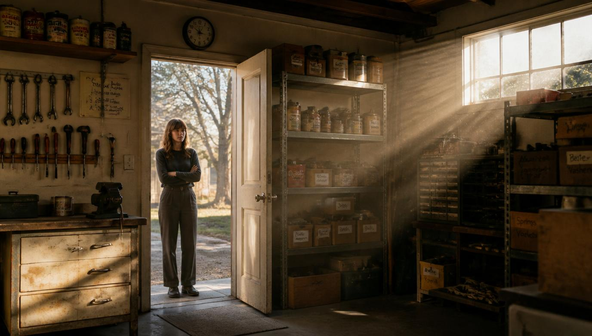
Frank’s workshop had always been organized in a language only he and I could fully read.
Labeled bins along the back wall. Tools hung on specific hooks. A logic that looked like clutter to people who hadn’t learned it.
Marcus started spending time out there after his first month in the house.
I started losing things I had not yet thought to move.
What Denise Deflected

Whenever the house came up in conversation, specifically its history, its structure, its ownership, Denise changed the subject.
Not awkwardly. Skillfully.
The way someone deflects who has practiced the motion enough times that it no longer looks like deflection.
It looks like listening.
My Twenty-Fourth Birthday
The rental agreement appeared at the breakfast table on a Tuesday morning in March.
Denise presented it the way she presented everything she had already decided: as a practical matter, reasonable, obvious.
Eight hundred dollars per month. Cash only. No receipt system.
Raymond said nothing. Marcus reached for the coffee pot.
The Stillness

I did not argue. I did not cry.
I went very still in a way that must have looked, to Denise, like defeat.
It was not defeat.
It was the particular kind of quiet that happens when something you have been feeling without words finally finds its shape, and the shape is harder and more purposeful than anything you expected to find inside yourself.
The First Payment
I paid on a Friday.
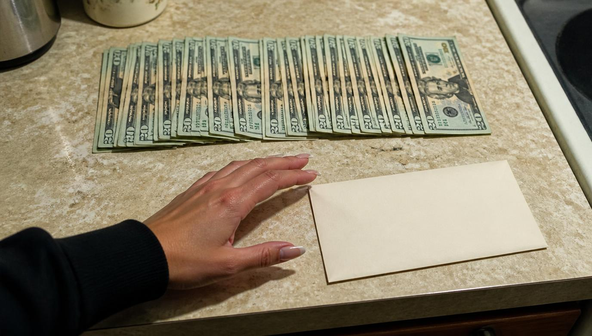
Eight hundred dollars in twenties, counted out on the kitchen counter while Denise watched with her head tilted at that particular angle she used when she had already won.
I did not ask for a receipt. I already knew she would not provide one.
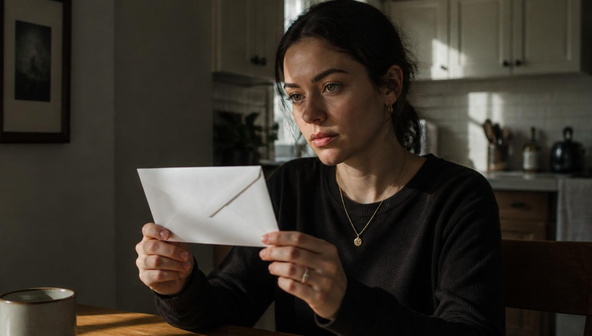
She tucked the bills into a plain white envelope without writing a single thing on the outside.
No date. No amount. No signature.
What That Envelope Told Me

I have managed invoices at my job for three years.
I know what documentation avoidance looks like from across a room.
It does not look like carelessness. It looks like precisely what Denise was doing: the deliberate absence of a paper trail, practiced until it appears casual.
I said nothing. I went to work.
I sat at my desk and stared at my billing software for ten minutes before I could concentrate on anything else.
The Mail Question
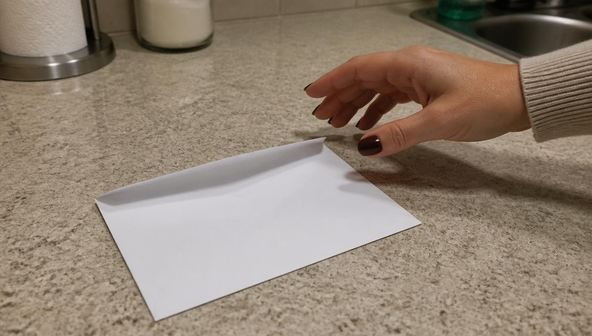
The first county envelope arrived on a Thursday.
I came home to find Denise at the kitchen counter sorting mail with the unhurried confidence of someone who considered that task entirely hers.
By the time I reached the pile, the envelope from the county assessor’s office was already gone.
I noticed the second time because I was watching for it.
The third time, I was home before she was.
The Name on the Envelope
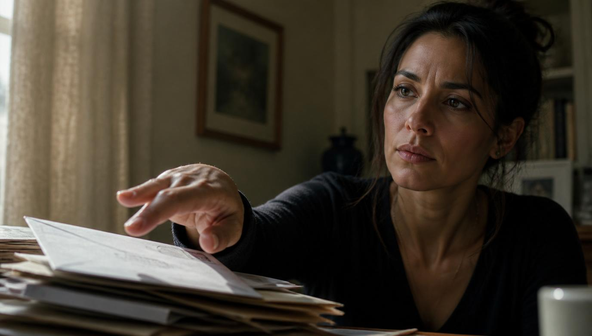
It was addressed to the Estate of Frank Hartwell, in care of Raymond Hartwell.
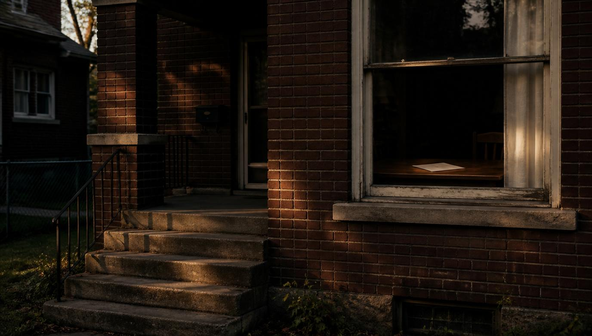
The address was the house on Garner Street.
I set it down before Denise came through the door, back in the mail pile, exactly where it had been.
She picked it up without pausing. Put it in the pocket of her blazer.
I watched her do it and kept my face completely still.
The Desk
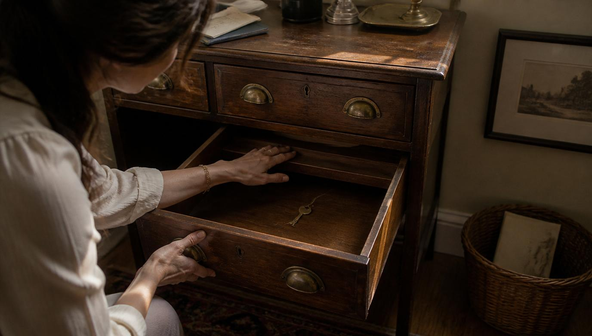
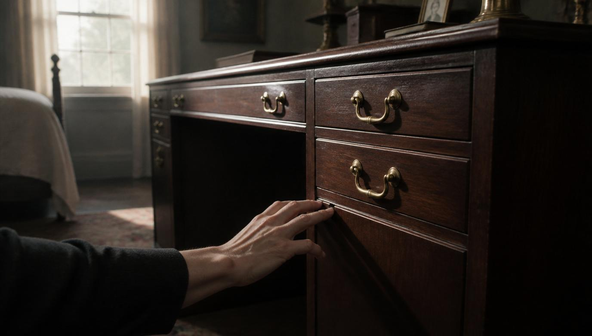
Frank’s desk had lived in my bedroom since the year Denise moved in.
She had never directly asked me to move it, and I had never volunteered to.
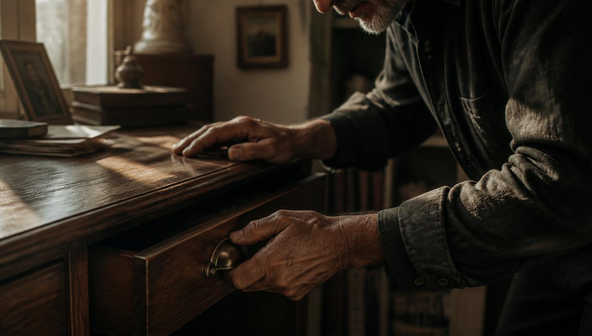
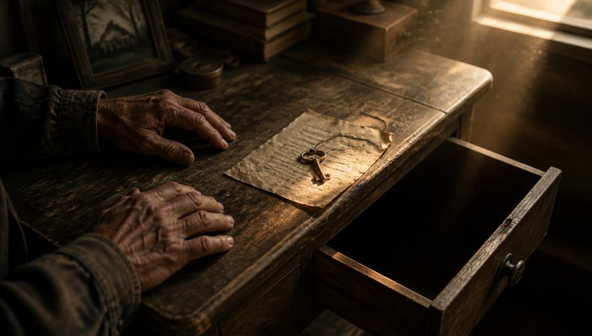
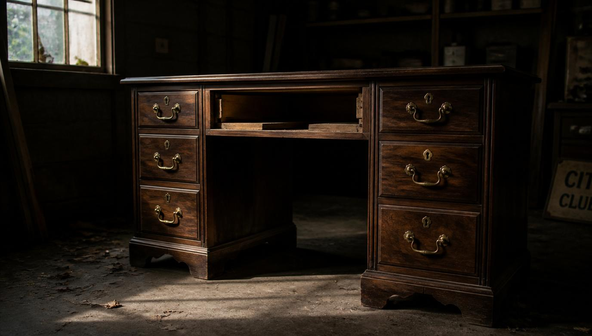
It sat against the east wall, dark walnut wood, brass pulls worn soft by decades of use.
I had not opened the bottom drawer in years.
I was not yet thinking about the bottom drawer. But something was beginning to move toward it.
Missing Things
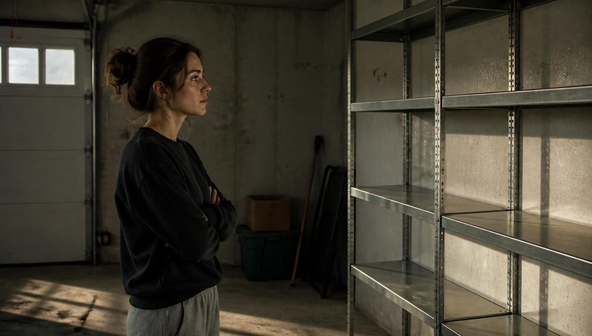
I went to the garage on a Sunday looking for a labeled bin of my grandmother’s books.
The bin was gone.
In the space where it had been, there was new wire shelving, clearly purchased rather than inherited, and the particular neatness of a space recently reorganized to conceal what had been displaced.
I stood there for a moment looking at the new shelves.
Then I went back inside and made coffee and did not say anything to anyone.
What Instinct Does Before Theory
I did not have a complete picture yet.
What I had was a collection of small wrongnesses that had been accumulating for long enough to produce a physical sensation, something like pressure behind the sternum, that I had learned to take seriously.
Denise intercepting county mail addressed to Frank’s estate.
Her practiced deflection whenever the house itself came up. Things disappearing from the garage.
The cash-only rent with no documentation. Each fact orbited the others without yet connecting.
Frank’s Desk, Revisited
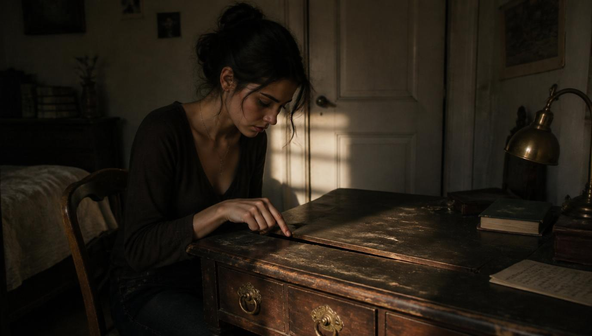
I went back to the desk that night.
Not with a theory. With the particular kind of attention that grief produces in people who loved someone carefully.
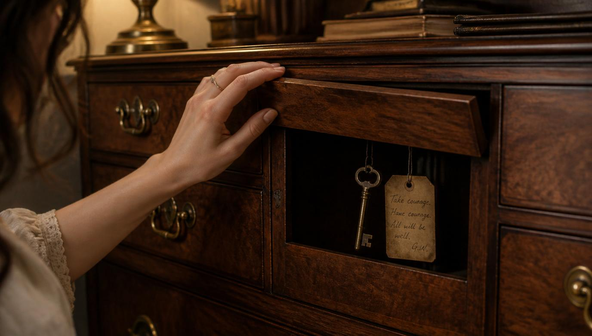
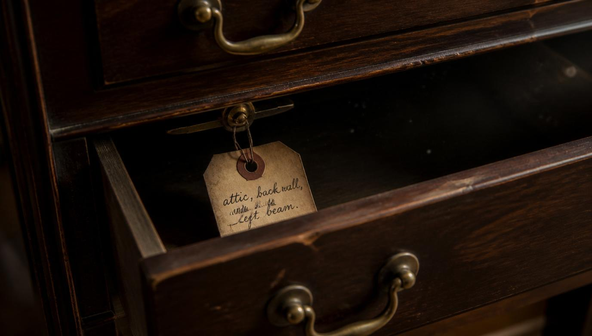
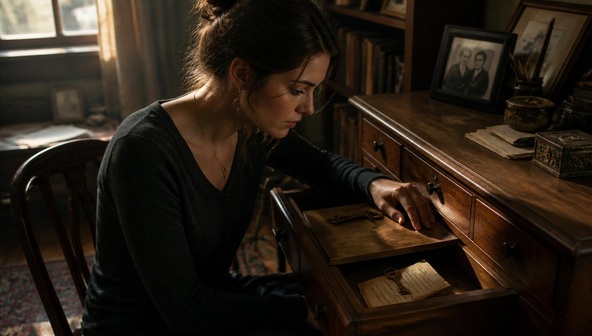
I opened the bottom drawer.
I looked at the interior wall the way Frank had shown me once, when I was eleven years old, when he said: *some things are worth knowing how to keep.*
I pressed the specific point. The panel released.
The Key
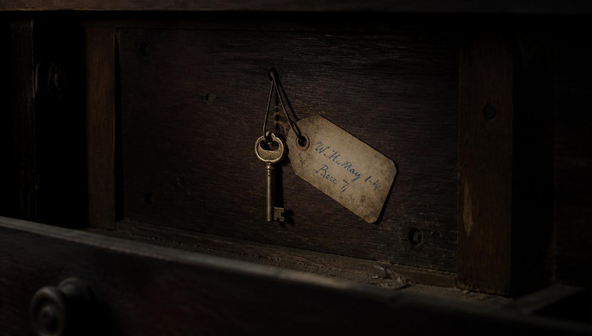
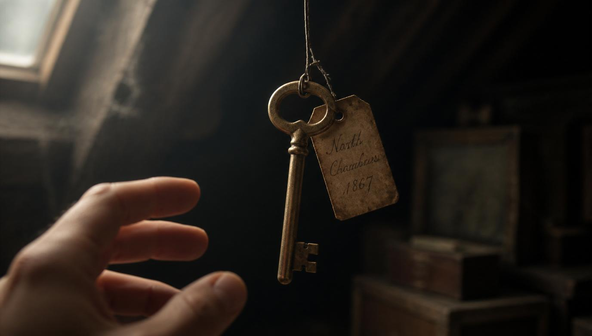
It was smaller than I remembered keys being.
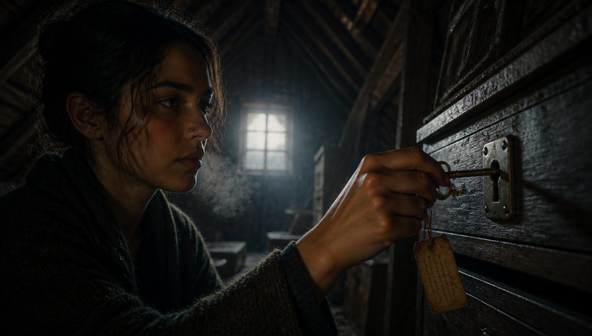
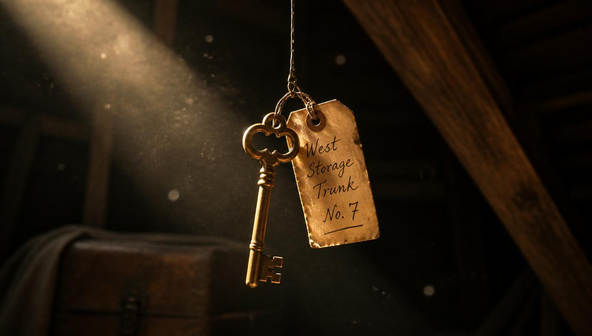
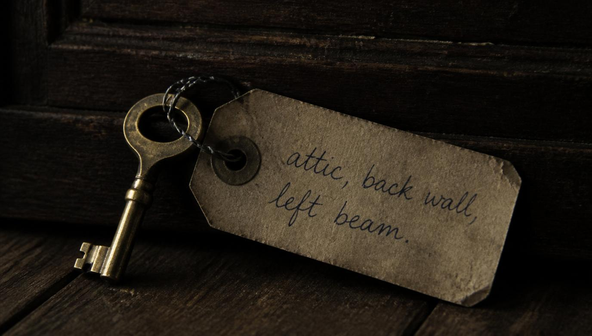
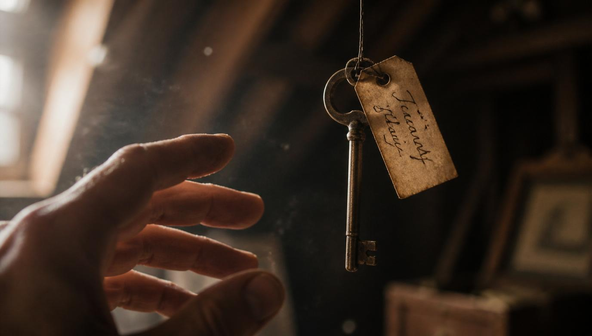
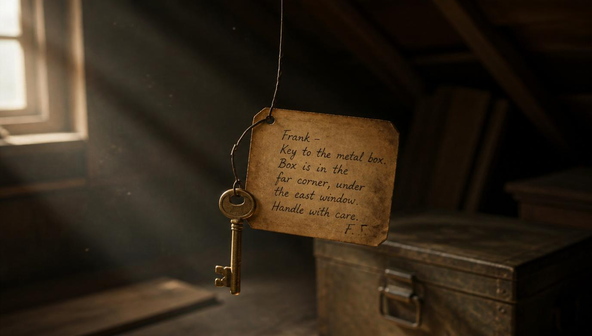
Aged brass, looped on a thin wire, with a paper tag yellowed at the edges.
Frank’s handwriting, blue ballpoint, unhurried: *attic, back wall, left beam.*
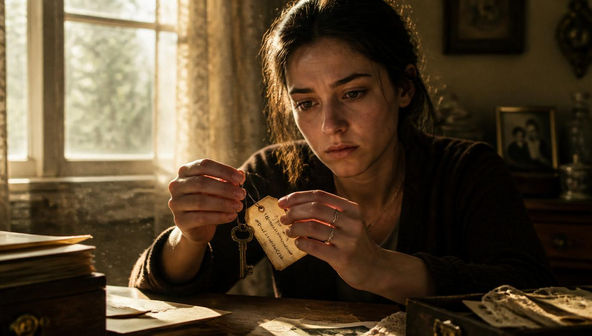
I sat on the floor of my bedroom for a long time holding that key in my palm.
I was thinking about the fact that he had hidden it here. That he had known to hide it.
The Attic
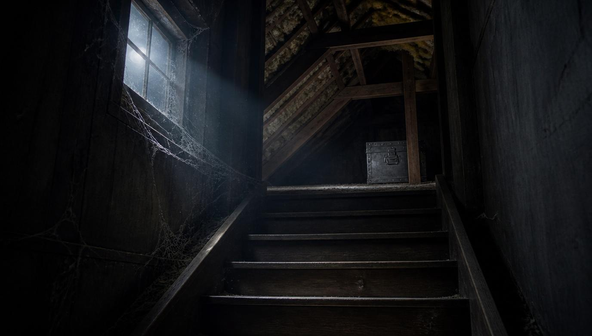
I went up after midnight, when the house was quiet.
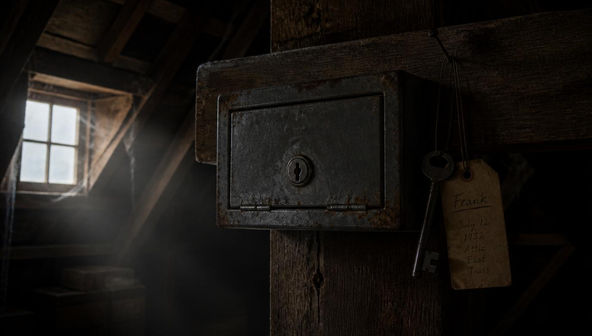
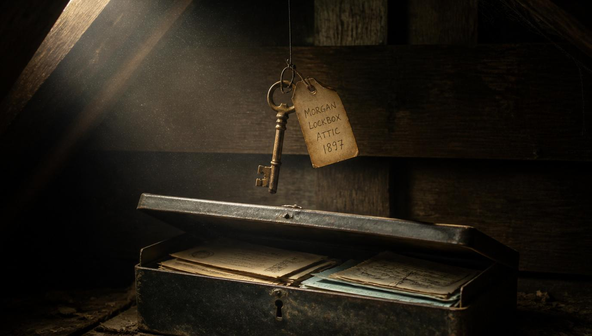
The lockbox was mounted exactly where the tag described, bolted to the structural beam in a way that looked, from any casual angle, like part of the building itself.
The key fit without resistance.
It opened like something that had been waiting with patience.
I brought the contents downstairs wrapped in my arms and spread them across my bedroom floor.
What He Left

The documents were organized in layers, the way Frank organized everything: by order of importance, the most foundational things at the bottom.
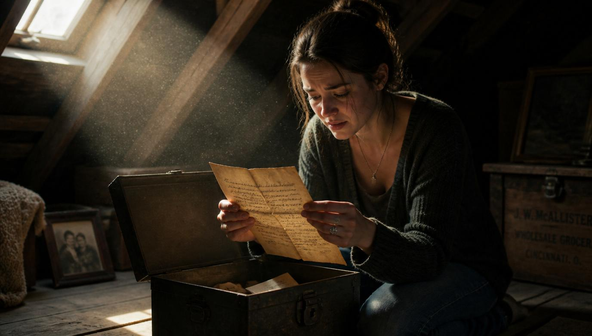
Property tax histories going back twenty years. A letter to his attorney. The will, with a handwritten codicil clipped to the final page.
And three letters, folded, addressed to me by name, never stamped.
I read the codicil first because I recognized the word *beneficiary* in the first line and my hands had already started to shake.
The Trust
Frank had not left the house to Raymond.
He had placed it in a conditional trust with my name as the sole beneficiary, contingent on my occupying it as a primary residence by my twenty-fifth birthday.
The trust had been filed with a county notary. The receipt was in the box.
I read it three times.
Then I read it a fourth time, slowly, because I needed to be certain I understood what Frank had understood about the people who would be in this house after he was gone.
What the Letters Sounded Like
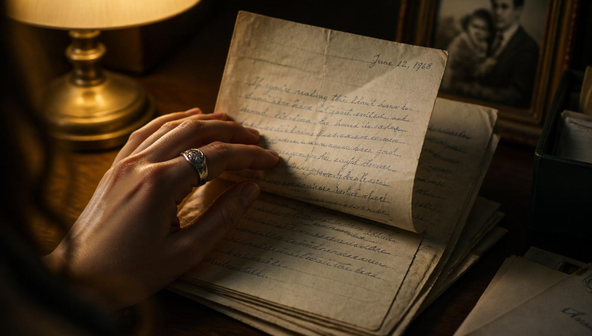
I read the unmailed letters last.
His voice was exactly what I remembered: plain and direct, without decoration, the voice of a man who had spent his life saying what he meant.
He wrote that he was sorry he could not simply hand me the house outright.
He wrote that he trusted me to find this, if I needed to.
He wrote: *you knew the desk well enough to look.*
The Cost of Knowing
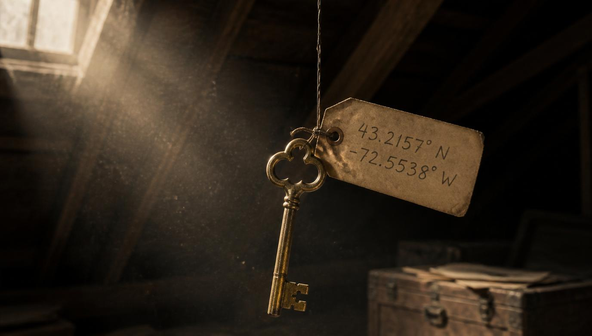
I turned the lockbox key over in my fingers for a long time after I finished reading.
The relief was real. The house was mine, or would be, if I held my position for four more months.
But relief and the knowledge underneath it were two different things, and the knowledge underneath it was this: Frank had seen something in the years before he died that made him take these specific precautions.
He had not been surprised by what was coming.
He had simply tried to make sure I would not be either.
What I Did Not Do
I did not confront anyone that night.
I did not text my father or go downstairs or give any of what I now knew a single visible surface.
I photographed every document with my phone. I put the originals back in the lockbox. I returned the lockbox to the attic beam and locked it.
Then I went back to my room and lay on top of the covers in the dark.
The house around me was quiet, and somewhere in its walls, the shape of everything that would happen next was already waiting to begin.
What Morning Looked Like

I made coffee before anyone else was awake.
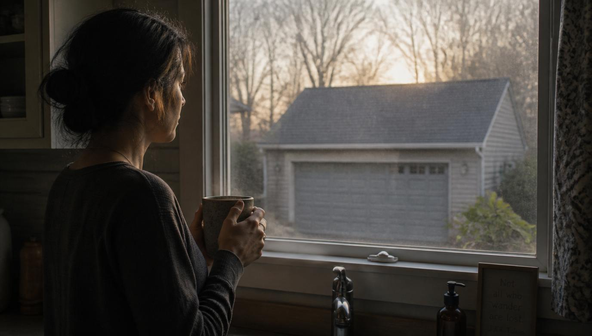
I stood at the kitchen window watching the light change over the neighbor’s fence, and I looked like a person who had slept.
That was the performance now. Not anger. Not urgency. Just the ordinary surface of a woman who paid her rent and went to work and did not know anything useful.
Denise came downstairs at seven-fifteen with her hair already done.
The Attorney’s Name
I found it in the documents: Gerald Parris, licensed to practice in this county, Frank’s family attorney for eleven years before his death.
The letterhead was old but the address was local.
I searched the name during my lunch break at work, door closed, phone low on the desk.
The practice still existed. The listing showed a second name now: Claire Parris, Attorney at Law.
I wrote the number on a notepad and tore the page out and put it in my coat pocket.
How I Asked for the Meeting
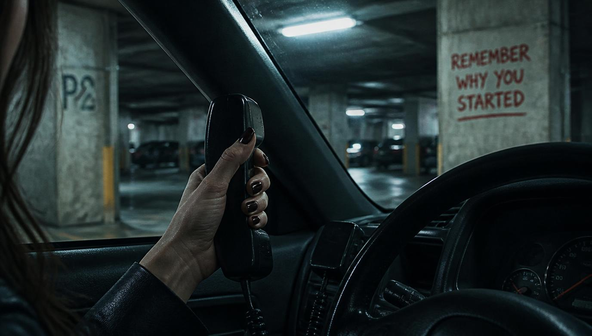
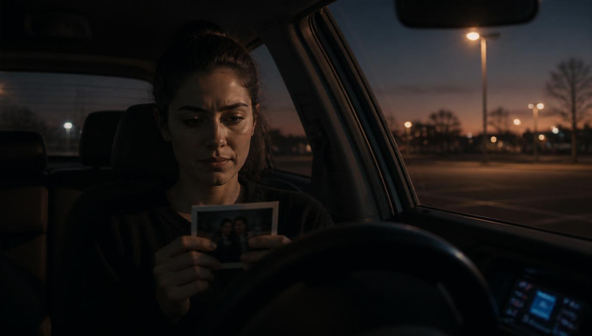
I called from my car in the parking garage before I drove home.
I said I was Lila Hartwell, that Gerald Parris had handled legal matters for my grandfather Frank, and that I had recently found documents that required professional review.
There was a pause. Not the pause of someone who did not recognize the name.
The pause of someone who did.
Claire Parris said she could see me Thursday at four.
A Thing Cole Said at Dinner
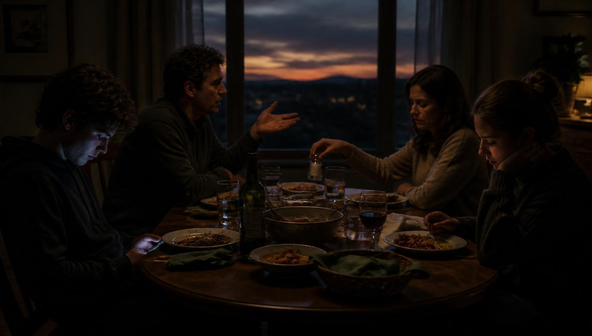
Marcus was eating with his elbows on the table, scrolling through something on his phone with the ease of a man who has never considered whether he belongs somewhere.
Cole said, without looking up from his own plate: *She’s not going to be in that room forever anyway.*
Meaning me. He meant me, sitting four feet from him.
I passed the salt to Raymond and said nothing.
What Raymond Did
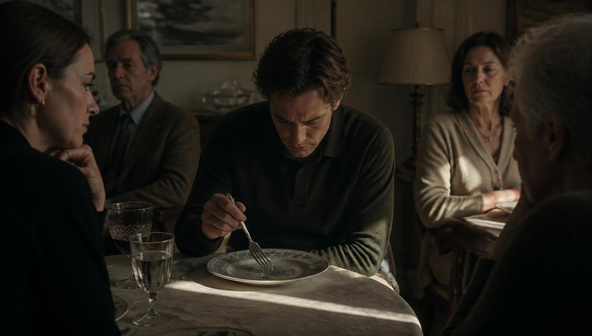
He looked at his plate when Cole said it.
That was all. He looked at his plate and adjusted his fork and did not correct anyone.
I used to tell myself that his silence meant he disagreed but lacked the courage to say so.
Sitting there that night, watching him study the pattern on his plate like it required concentration, I felt that story become slightly less believable.
The Third Envelope

It came on a Tuesday. I was not home.
Denise texted me in the afternoon: *mail came, nothing for you.* A casual text, easy, the kind you send when you have already handled the thing you are referencing.
I checked the mail pile when I got home. There was no county envelope in it.
I wrote the date in the notes app on my phone under a folder I had labeled, simply, *work.*
Claire Parris
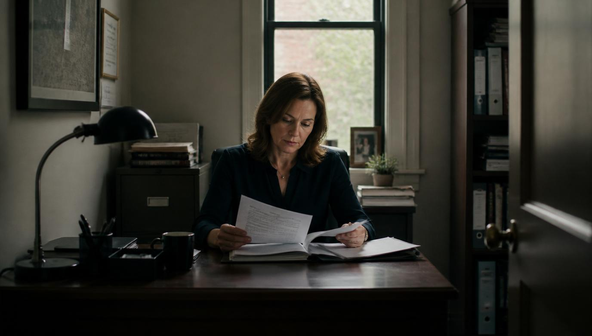
Her office was on a side street downtown, second floor of a narrow building that had once been something else.
She read through the copies I had made before she spoke a single word about them, which was exactly what I needed to see.
When she finally looked up, she said: *Your grandfather was thorough.*
She said it like a compliment and a warning at the same time.
What She Confirmed
The trust was valid. The codicil was properly filed.
The county’s notarized receipt matched the documentation exactly. She pulled the original filing herself, right there in the office, on her computer, while I watched.
She turned the screen toward me.
Frank’s name. The trust terms. My name under *designated beneficiary.* It was simply there, on file, the way a foundation is simply there beneath a house.
The Reclassification Problem

She found the Denise filing herself. I had not mentioned it yet.
She said: *Someone submitted a reclassification request on this property six months ago under Raymond Hartwell’s name alone, attempting to remove the trust notation.*
She looked at me over the rim of her reading glasses.
*It’s been on hold. Incomplete documentation.* A pause. *Which means someone has been waiting for it to clear without realizing it was flagged.*
The Tenant Argument

This was the part that required me to sit very still.
Claire explained it slowly and clearly, the way her father had apparently explained things: the rent payments, the cash, the lack of documentation, the formal structure Denise had created.
If Lila was paying rent, Lila could be argued to be a *tenant.*
A tenant was not the same, legally, as a resident-beneficiary. The distinction was small enough to exploit and large enough to matter.
What Denise Had Actually Been Building
It came together in the drive home.
The cash. The unsigned envelopes. The county mail intercepted before I could see it. The rent increase as a next step.
Denise was not simply taking money from me. She was constructing a record in which I had voluntarily accepted the role of tenant, which would make my occupancy conditional, which would crack the trust’s residency requirement.
She had been patient. I had to be more patient.
The Folder Begins
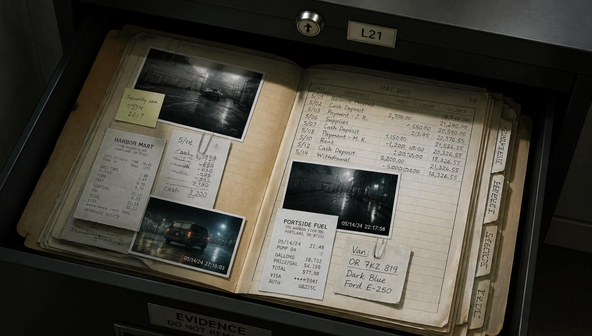
I kept a manila folder in the locked drawer of my desk at work.
That week I put the first documents in it: my own payment ledger, reconstructed from memory and bank withdrawal records, dated and organized.
It looked like my billing work. It looked like something I did every day.
That was intentional.
The Tax Records
I submitted a public records request to the county that same week.
Property tax payment histories on the Garner Street address, going back five years. I requested them in my professional capacity as a records inquiry, the kind of language that moved through county offices without attracting attention.
When the results came back, I sat with them for a long time.
The pattern was there. Every time I paid Denise cash rent, a tax payment appeared in the property account within two weeks.
What She Was Using My Money For
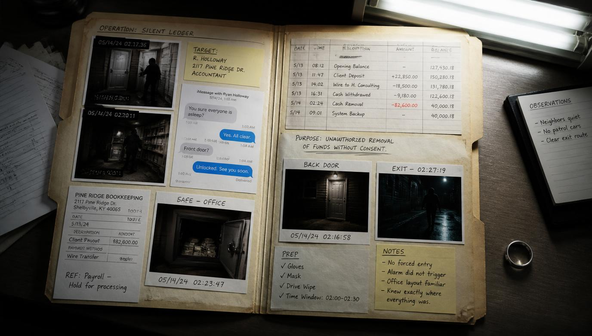
The property taxes had fallen into arrears after Frank died.
Raymond had not managed the estate. The taxes had accumulated until someone began catching them up in partial payments, irregular amounts, cash-adjacent transactions with no clean origination trail.
My rent money. Paying the taxes on a house that legally belonged to me.
I added the tax records to the folder. The folder was beginning to have weight.
The Night I Read His Letters Again
I went back to the attic before bed and unlocked the box and took out the unmailed letters.
I read the second one this time, the one I had set aside the first night because I was not ready for it.
Frank wrote: *I don’t think you’ll be surprised by any of this when it comes. You were always the one who paid attention.*
I folded the letter back along its original creases and returned it to the box.
He had been right. And I was paying attention now.
The Mirror, Before

I started keeping my camera roll organized by date the same week I opened the folder.
The photograph of the driver’s side mirror was taken on a Wednesday morning before work.
Clear glass. Intact housing. The paint along the edge still clean where it met the door panel.
I texted it to myself with the timestamp visible, then uploaded it to a cloud folder I had named something unremarkable. The name did not matter. The date did.
Cole’s Schedule
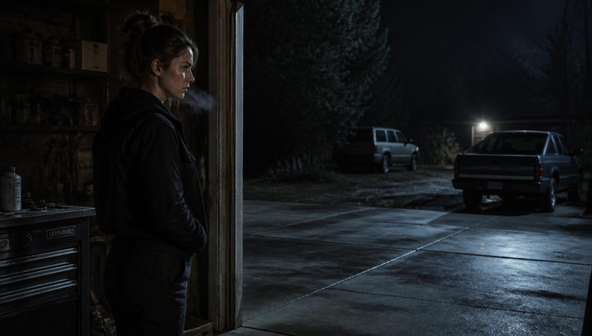
He moved through the house like someone who had nowhere to be, which was accurate.
Thursday nights he was usually gone by ten. Sometimes he took his own car. Sometimes he did not.
I began tracking which vehicle was missing from the driveway when I got up for water at two in the morning.
I noted it the same way I noted everything now: date, time, which car, how long.
It was not difficult. It only required me to stay awake a little longer than I already was.
What Patience Actually Costs

I want to be clear about something.
This was not comfortable. None of it was.
I sat at dinners where Cole talked over me and Marcus reached across my plate and Denise arranged the conversation like furniture she owned.
Every night I absorbed it and every night I drove the calculation forward: not yet, not yet, not enough.
That kind of patience has a physical weight. It sits behind the sternum and does not move.
The Online Listings
I found them by accident, which is how the most useful things tend to arrive.
I had searched the model number of a lamp from Frank’s workshop to find a replacement bulb.
The listing appeared in the third row of results.
Same lamp. Same crack along the base of the shade that I had always known was there. Pickup location listed as the Garner Street address.
I did not click to contact the seller. I screenshot the page, captured the URL, and closed the tab.
A Second Listing
Three days later a second one appeared when I searched a different object.
The hand-carved picture frames Eloise made in the 1990s, four of them, listed as a set.
The description used the word *handmade* and called them *vintage folk art.* The asking price was sixty dollars.
I thought about Eloise’s hands making them. Then I thought about the screenshot.
I took it and added it to the folder and did not allow myself to feel it until I was in my car.
What Marcus Did on Saturdays
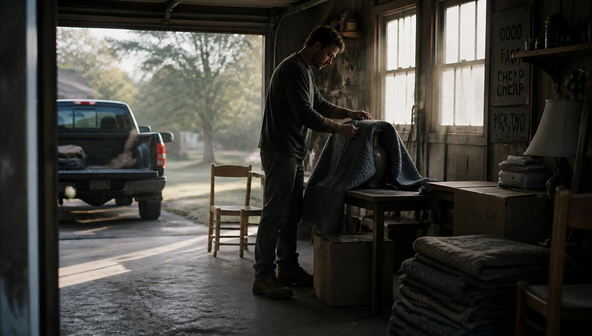
He loaded things into his truck.
Not dramatically. He was not careless about it.
He moved boxes and wrapped items in old moving blankets and drove away and came back empty.
I watched this from the kitchen window on three consecutive Saturdays, noting the time of departure and return in the same notes folder I used for everything else.
I did not follow him. I did not need to. The listings told me where things went.
The Text Message
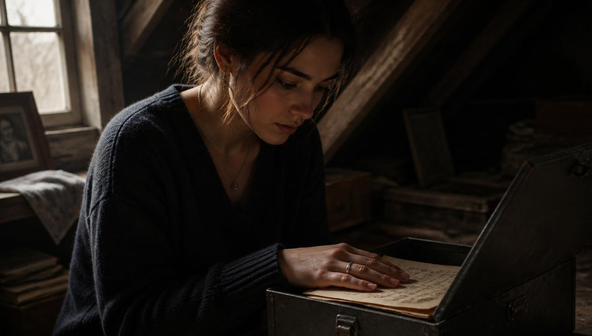
I sent it on a Thursday night after dinner, casual in every word.
*Hey, do you know where Denise keeps the lease agreement she gave me? County housing office is asking about residency documentation.*
I kept it vague. The word *residency* was deliberate.
Cole responded in eleven minutes, which told me he was not thinking carefully.
What Cole Wrote Back
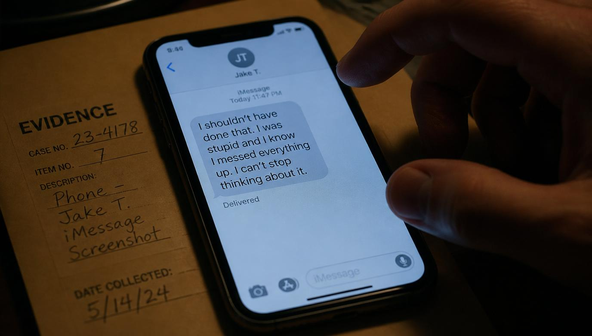
He said Denise handled all of that and not to stress about it.
Then he added: *anyway that whole property thing is basically getting sorted so it probably won’t matter much longer lol.*
Eleven words and a laugh abbreviation.
I read it four times to make sure I had not invented the meaning.
Then I printed it at work the following morning on the office printer and dated the printout by hand and added it to the folder.
The Weight of the Folder Now
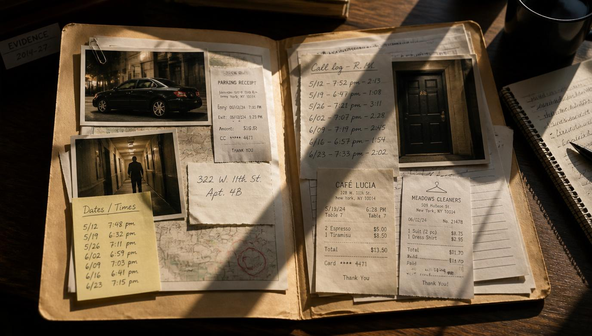
It had become something I thought about between tasks at work.
Not obsessively. The way you think about a door you have locked, a file you have saved, a foundation you have checked.
Each item in it was a fact. Facts did not require emotion to function.
I had Denise’s rent pattern. The tax records. The listings. Cole’s text. The mirror photograph, still waiting for its companion.
Friday Morning
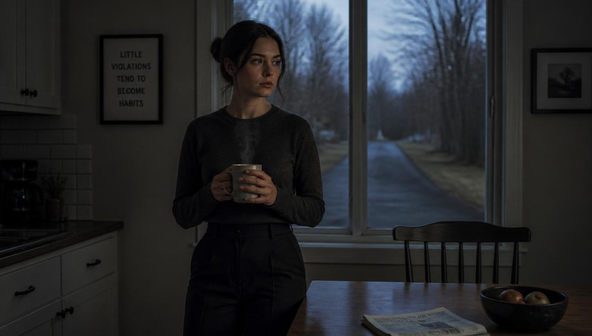
I came downstairs at six-fifteen and the spare key hook was empty.
My car was gone from the driveway.
I made coffee and sat at the kitchen table with my hands around the mug and waited.
Cole pulled in at seven forty with the easy unhurry of someone who does not think about consequences.
He came inside without acknowledging me at the table.
The Mirror, After
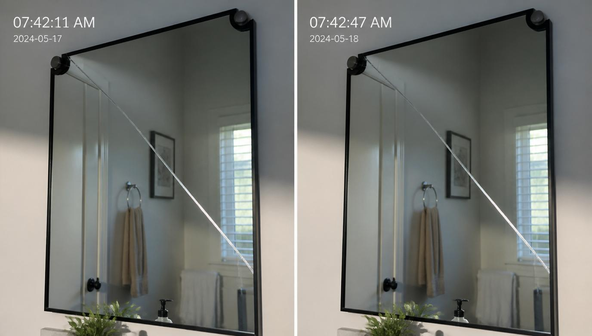
I walked out to the car before I drove to work.
The driver’s side mirror housing had a crack running from the upper mounting point down through the glass itself, a clean diagonal break.
I took the photograph from the same angle as the first one, same light, same distance.
The timestamp was automatic. The crack was undeniable.
I added the photograph to the cloud folder and drove to work and did not say a single word about the mirror to anyone in the house.
What Raymond Noticed
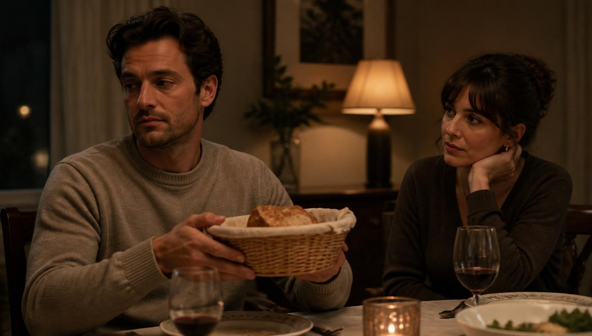
He saw me come in that evening and glance toward the driveway.
He knew. I could see it in the slight adjustment of his posture, the way he found something to look at in another direction.
He did not say anything about the mirror. He did not ask Cole about it at dinner.
He passed the bread and talked about something on television.
I watched him choose this, consciously, in real time, and added it to a different kind of record.
Denise at the Mail
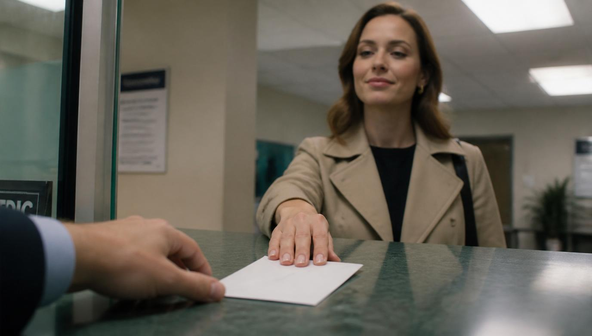
She got there first on a Tuesday.
I saw her through the front window before I reached the door. She was already sorting, already moving her hand through the pile with practiced efficiency.
She set something aside, away from the stack. She saw me come through the door.
She smiled and handed me two pieces of mail: a store circular and a bill in my name.
The envelope she had set aside was not in the pile when I checked later.
Claire Parris, Second Call

I called from my car again, same parking structure, same late afternoon light striping through the concrete.
I told her about Cole’s text. I read it to her verbatim.
There was a pause of the same quality as the first one, the pause of someone reading a situation carefully before they respond.
She said: *That changes the timeline. We should talk about when to move.*
What I Said
I told her not yet.
She did not argue. She asked how much longer.
I said I was not sure but that I would know when the shape of it was complete, when every piece Denise had built was visible and documented and could not be explained away as a misunderstanding.
Claire said: *Your grandfather wrote about patience in the letter to me too.*
She said it quietly, like something she had been holding for the right moment.
I sat with that for the rest of the drive home.
What Claire Said About Timing
She had used the word *decisive* twice in our last conversation.
Not aggressive. Not rushed. Decisive, meaning the kind of move that leaves no room for reinterpretation.
I had written it down afterward, not because I would forget it, but because writing things down was how I made them real.
She meant that when I acted, it had to be complete. No partial measures. No warning shots that gave Denise time to adapt.
The Letter That Arrived
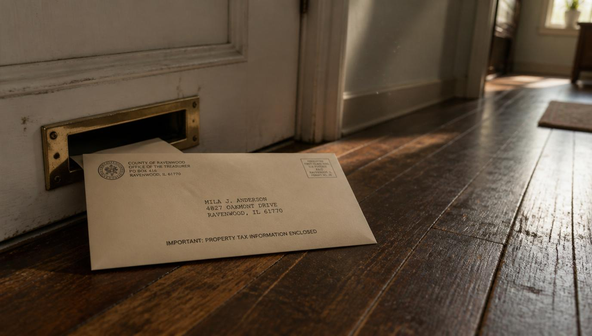
It came on a Thursday in a county envelope, thin and official.
Addressed to the Estate of Frank Hartwell, care of Raymond Hartwell, Garner Street.
I was at the door when it came through the mail slot.
Denise was in the kitchen and I heard her chair move when she heard the slot open.
I had the envelope in my hand before she reached the hallway. She stopped when she saw it. Her expression did something very small and very controlled and then went back to pleasant.
What Her Face Did
I have thought about that moment many times since.
It was not surprise exactly. It was recalculation.
She looked at the envelope in my hand the way someone looks at a chess piece moved to a square they did not anticipate.
The pleasantness that followed was too smooth, assembled too quickly.
She said it was probably nothing, just routine estate correspondence.
She said it the way you say something you know is not nothing.
The Letter’s Contents
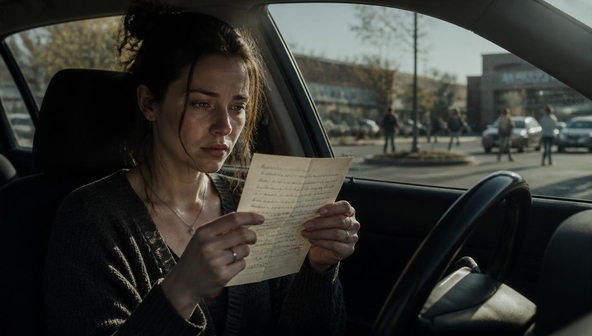
I read it in my car.
The county assessor had flagged Denise’s reclassification filing as incomplete. The original trust record remained active in county files.
Additional documentation would be required before any status change could be processed.
The hold had been there for six months, automatic and unremarkable to everyone except the person who had filed the request and was hoping no one would notice.
I texted Claire from the parking lot. She responded in four minutes: *Good. This is better than I expected.*
What Denise Did That Evening

She was quiet at dinner in a way she almost never was.
Not sad. Thinking.
She spoke once, about a neighbor, and her voice had the careful flatness of someone running calculations behind their words.
Cole and Marcus filled the silence with noise the way they always did.
Raymond ate with his eyes on his plate.
I watched all of it and ate my food and said two polite sentences and excused myself before dessert.
The Conversation Through the Wall
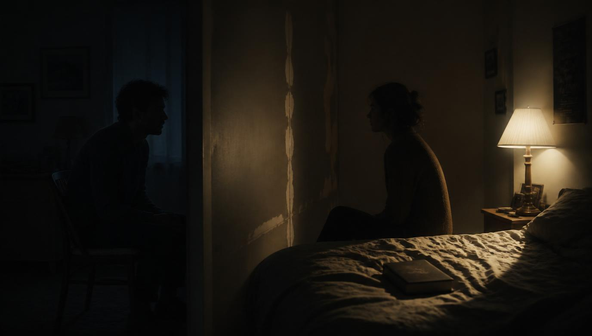
My bedroom shares a wall with the hallway that connects to the master bedroom.
I had known since childhood that sound traveled through it in a particular way.
I was not eavesdropping deliberately. I was reading in bed with the lamp on when I heard Denise’s voice, low and continuous, and then Raymond’s, shorter and less certain.
I set my book down and did not move.
What Raymond Said
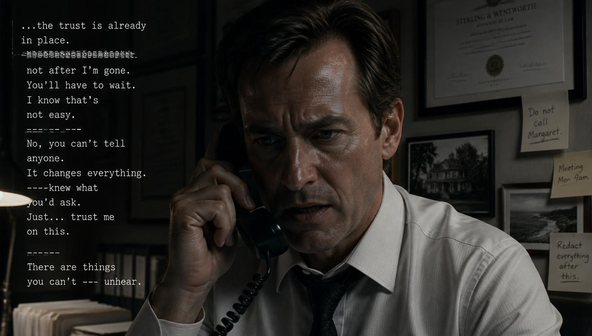
The words came through imperfect, some missing, some arriving whole.
He said the name of his attorney. He said *the filing* and *if it doesn’t clear.*
Then he said something I had not expected, something that landed with the specific weight of a thing you cannot unhear.
He said: *I’ve known about the trust since the second year. She can’t be allowed to just wait it out.*
He said it with the quiet exhaustion of a man confirming something he had long since accepted.
The Thing About Stillness
My mother died when I was nine, and I learned then that some pain does not announce itself immediately.
It arrives fully only when your body has decided it is safe enough to feel.
I lay in bed in the dark and felt the architecture of a belief I had maintained for years come apart without sound.
My father had known. He had known and he had passed bread at dinner and looked at the television and chosen, every single day, the easier version of himself.
What I Did With It
I did not cry that night, not then.
I moved it somewhere interior, the way I had moved everything difficult since I was nine years old.
I noted it in the only way that mattered: I stopped building my strategy around protecting him.
He had made his position clear and I had the obligation to hear it.
The grief would come when there was time for grief. There was not yet time.
Morning, The Next Day

I called Claire from the parking structure before I went inside.
I told her what I had heard. I told her the exact words, as accurately as I could reconstruct them.
She was quiet for longer than usual.
Then she said: *This changes what we need to prepare for. Raymond isn’t a bystander we’re working around. He’s a named participant. That affects how we file.*
What That Meant
It meant the formal notice of beneficiary claim would need to account for Raymond’s knowledge.
It meant his silence at every dinner table was not absence of intent. It was documented, in my notes, across months of observation.
Claire said she would revise the preparation.
She said: *Your grandfather named you as beneficiary specifically because he understood this possibility. He prepared for Raymond too.*
Frank’s Third Letter
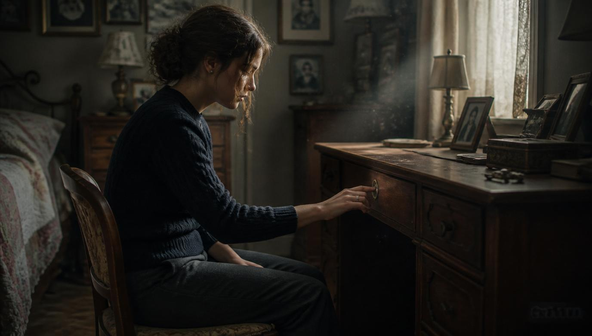
I had read all three unmailed letters the night I found the lockbox.
But I went back to the third one after Claire’s call.
Frank had written it in the last months of his life. His handwriting was slightly different, smaller, as if he was conserving something.
He wrote: *I know Raymond loves you in the way available to him. I am not angry at the limits of that love. But I could not leave you to it.*
The Desk
Marcus had been in the garage again on Tuesday.
I had seen him through the window carrying something wrapped in a moving blanket to his truck.
On Wednesday I checked the estate inventory I had photographed from the lockbox documents and cross-referenced what I knew to still be in the garage.
The walnut writing desk, Frank’s desk, the one from my bedroom that I had not been able to prevent Marcus from eventually moving to storage, the one from the inventory, was gone from the list of what remained.
What I Reported
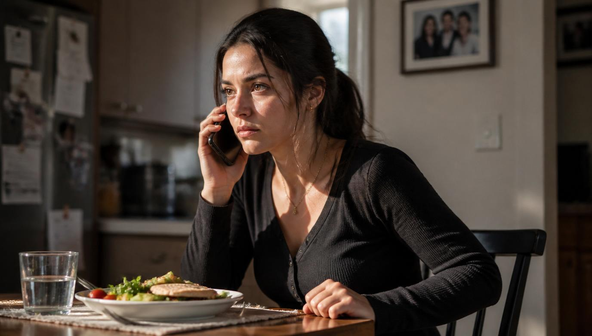
I called Claire during my lunch break.
I told her the desk was gone. I told her it was item fourteen on the estate inventory, described in Frank’s own hand with measurements and provenance.
She said: *That’s no longer just a domestic dispute. Removal of a trust-attached estate asset is a separate exposure for Marcus. Document everything you have on the garage activity and send it to me this week.*
The Shape of It
I sat in the parking structure after the call and understood for the first time that the shape was almost complete.
Not finished. But complete enough to see the whole of it.
Denise had built a structure she believed was invisible. Marcus had helped her dismantle what they thought was the past.
Cole had confirmed it in eleven careless words.
And Raymond had spoken a quiet sentence through a wall he forgot was thin, to a daughter he had decided to write off, in a house that was never going to be theirs.
Sunday Morning

I dressed carefully that morning.
Not to perform confidence, but because Eloise had always said that how you carry yourself into a room tells the room what to expect from you.
I wore dark slacks and a plain white blouse. I put my hair up. I wore her ring, as I always did, and I touched it once before I went downstairs.
The folder was in my bag.
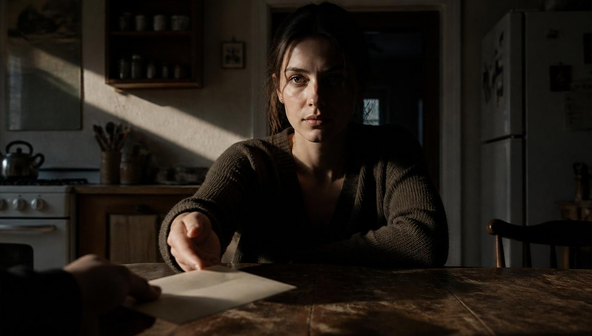
The Table
Denise had set it deliberately.
Her chair at the head. Her sons flanking either side. Raymond to the left, slightly back, as if he had already decided he was a witness rather than a participant.
There was coffee no one had offered me. There were papers already on the table in front of Denise, face down, as if this were a presentation she had rehearsed.
She had, I realized. She had rehearsed this.
What She Said First

She opened with the word *practical.*
She said this was a practical conversation, that the household needed to move forward, that it was no one’s fault things had become complicated.
Her sons said nothing. Raymond looked at the window.
She slid the document across the table toward me with one manicured hand, the gesture smooth and final, the gesture of someone who believes the outcome is already decided.
What the Document Was
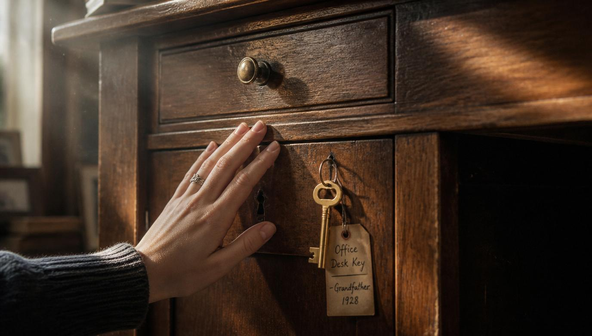
I looked at it without picking it up.
Mutual separation agreement. Voluntary relinquishment of residential claim. Waiver of future property interests.
It was not attorney-drafted. The language was close but imprecise in the specific places precision mattered.
Denise had gone to some effort. Just not enough effort, and not to the right people.
What I Did Instead
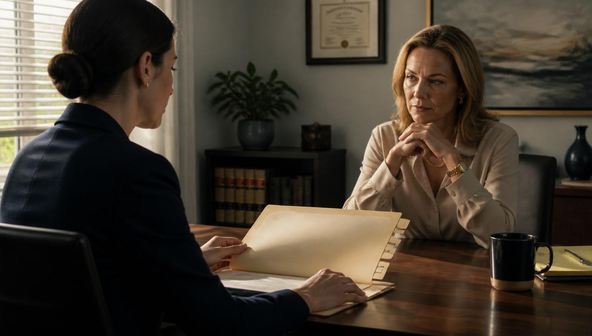
I set my bag on the table and opened it.
I did not apologize for the time it took. I placed the folder in front of me and opened it to the first tabbed section.
Denise watched my hands.
Something shifted in her expression, not much, but I had been watching her face for over a year and I knew the difference between her impatience and her recalculation. This was recalculation.
The Trust
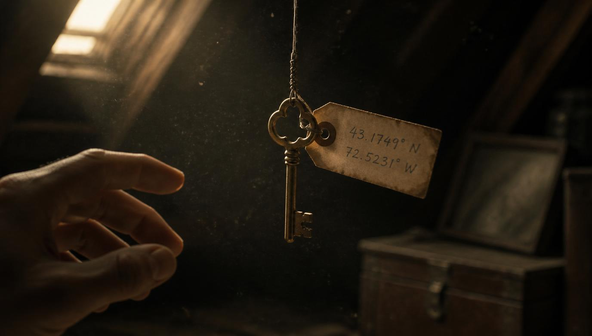
I said the words plainly.
The trust was filed with the county notary during the final year of Frank Hartwell’s life. It named me as sole beneficiary, contingent on continuous primary residence at this address by my twenty-fifth birthday.
I placed the filing receipt on the table. Then the codicil copy. Then the county confirmation of the active record.
I said: the hold on the reclassification request is still in place. This is on file.
The Rent
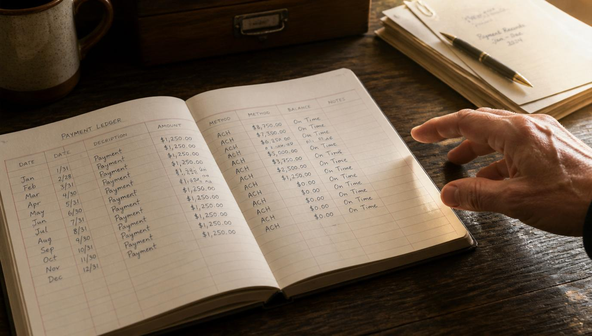
Denise began to speak. I continued.
I placed the payment ledger on the table, twelve months of dated entries, each amount recorded, each corresponding to a property tax payment I had pulled from public county records.
I said: every dollar I paid you in cash moved through this household to cover overdue taxes on a property held in trust for me.
Marcus shifted in his chair. Cole looked at the ledger as if he could make it mean something different.
The Reclassification
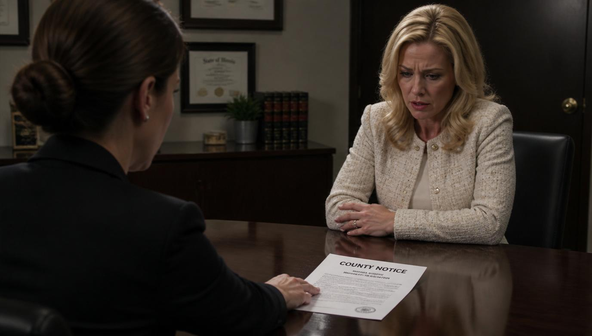
I said her name once, clearly, before I continued.
I said: six months ago you filed a quiet reclassification request with the assessor’s office attempting to register this property under Raymond’s name alone, without trust notation, without beneficiary consent.
I placed the county notice on the table, the one she had tried to intercept.
I said: it was flagged as incomplete. The original trust notation remains active.
Cole’s Text

I placed it in front of him directly.
Printed, dated, his number visible at the top. The message where he had referenced the reclassification as if it were already finished, as if I were already gone in every way that mattered.
He looked at it. He did not say it was fabricated. He did not say anything. He picked up his coffee cup and set it back down and looked at the wall.
That silence was worth more than any denial.
The Garage
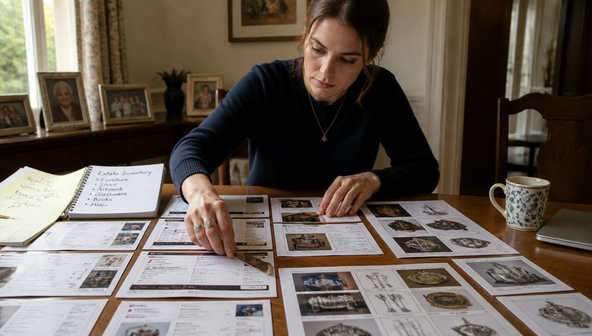
Marcus said my name with the rising inflection of someone about to explain.
I placed the marketplace screenshots on the table before he could continue. Listings with the Garner Street pickup address. The ceramic lamp. Eloise’s carved frames. Item descriptions matching estate inventory entries word for word.
Then I placed the estate inventory page beside them.
I said: item fourteen is the walnut desk. Frank built it himself. It is documented, photographed, and its removal from trust-attached property is a matter I have reported separately.
What Raymond Did
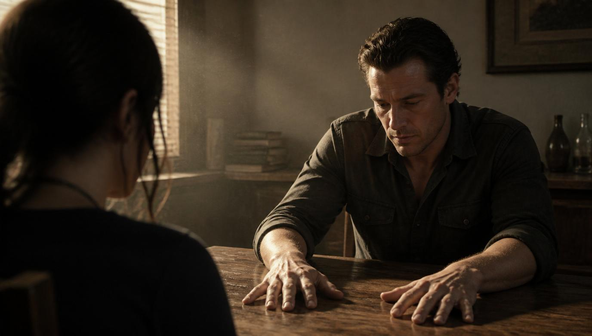
He had not spoken.
I looked at him directly for the first time since sitting down, and he met my eyes for approximately three seconds before looking at the table.
His hands were flat on the wood in front of him, very still. The same stillness I had inherited from somewhere that turned out not to be him.
I thought of Frank’s letter. *I am not angry at the limits of that love.* I held that thought and kept going.
Denise’s Argument
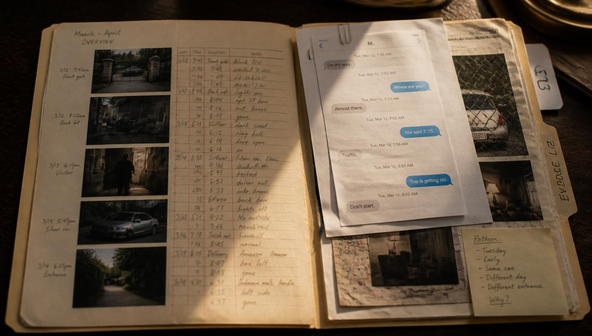
She found her voice after a long pause.
She said the trust was invalid because Frank had no right to separate the property from Raymond’s estate claim without Raymond’s consent, that the house was marital property.
I turned to the final tab in the folder.
I said: the house on Garner Street was built and paid for entirely by Frank and Eloise Hartwell before Raymond entered this family. It was never part of a shared marital estate. Claire prepared a fourteen-page written response to this exact argument. I have it here.
When She Left

Denise stood before I had finished setting the last document down.
She did not leave loudly. She gathered the unsigned separation agreement from the table, picked up her coffee cup with both hands, and walked out of the room with her back very straight.
Marcus followed without looking at me. Cole followed Marcus.
The sound of the hallway door closing was very ordinary.
What Raymond Said
He sat at the table after they left.
For a long time neither of us spoke. The folder was still spread in front of me, every tab visible, every piece of paper in its place.
He said, quietly: I thought it would be cleaner.
I said: I know you did.
I did not say anything else. He had told me, through a wall he forgot was thin, everything I needed to understand about what he had chosen. The rest was not mine to carry.
What Remained
I gathered the documents back into the folder in the same order I had removed them.
I closed the clasp. I put the folder in my bag. I stood up from the table in the house Frank built and walked to the kitchen and made myself a cup of coffee with steady hands.
Through the window the garage roof was visible, gray in the morning light, still standing, still holding whatever was left.
Four months was nothing. I had been waiting my entire life to belong here properly, and now I simply had to wait a little longer.
The Days After
The house was quieter than it had ever been.
Not the quiet of absence, exactly. Denise and her sons were still there, still moving through the rooms, still occupying their corners of the property.
But something had shifted in the atmospheric pressure of the place. The way sound carried down the hall changed. Even the kitchen felt different in the mornings, as if every surface had been returned to a neutral state, waiting.
Denise’s Silence
She did not speak to me for four days.
Not in hostility. In something more deliberate, a managed distance, the silence of someone reorganizing their position before deciding what to say next.
I did not fill it. I went to work and came home and made my meals and moved through the house with the same economy I had always used.
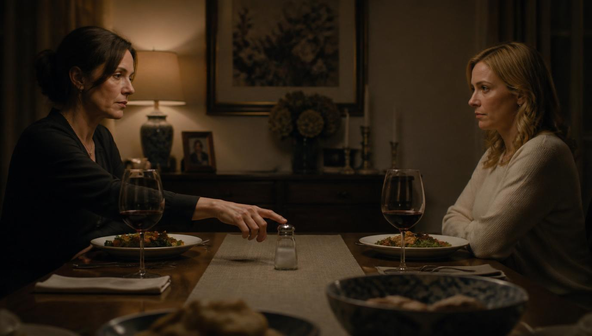
On the fifth day she asked me to pass the salt at dinner. I passed it. That was the full extent of the conversation.
Claire’s Call
My attorney called on Tuesday morning, before I left for work.
The county had processed the additional documentation she submitted. The reclassification filing Denise initiated had been formally closed, marked incomplete and without standing.
Claire said it in her clean, factual way, the way she read every document, completely and without performance.
She said the trust notation on the property record was now annotated with a protective flag that would require beneficiary consent before any future filing could be processed. We had closed the gap.
What Marcus Took
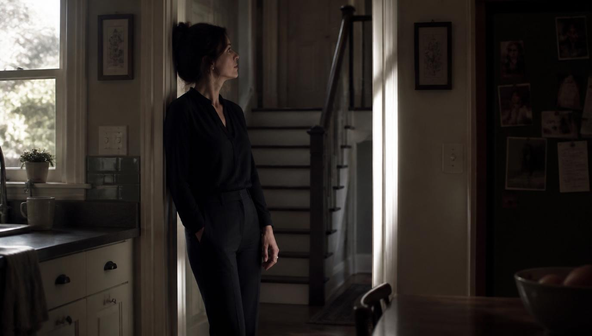
The civil notice was served on a Wednesday.
Marcus received it at the door. I was in the kitchen and I heard the brief exchange, the paper accepted, the door closed again with no particular force.
He did not look at me when he came back inside. He went directly upstairs and I heard his door close, also with no particular force.
People like Marcus did not rattle. They simply recalculated, the same as their mother. I had expected as much.
Cole and the Car
Cole’s small claims notice arrived a week later, addressed to him specifically.
He found it on the kitchen table where I had placed it, next to his keys, because I wanted the juxtaposition to be visible.
He picked it up and read it standing there.
He said, without turning around: you’re really doing all of this.
I said: I documented it carefully. That seemed like the fair thing to do.
Raymond’s Apartment

My father found an apartment twelve minutes away, on the third floor of a building near the park.
He told me on a Sunday evening, not at the table but standing in the hallway near the front door, holding his keys in one hand the way he always did when he wasn’t sure whether to stay or leave.
He said it had a good window in the main room. He said that as if it mattered. I think to him it did.
I said I was glad he had found something. I meant it without warmth, which is its own kind of honesty.
The Moving
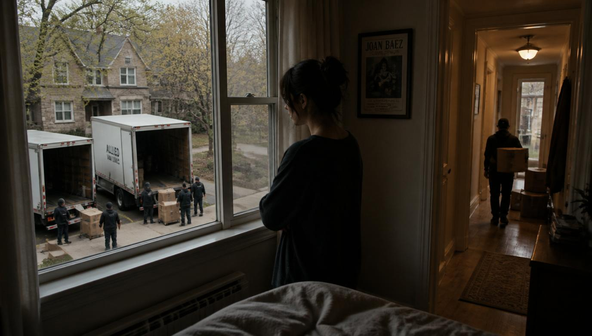
Denise arranged the moving company herself.
She did it efficiently and without spectacle, which I respected in a distant way. Two trucks on a Saturday morning, her sons directing the loading, Raymond’s things already boxed in the hallway.
I stayed in my room until they were finished.
Not to avoid watching, but because the house needed me to be still inside it while the leaving happened around it.
The Last Moment

Denise stood in the doorway of the living room before she went to the car.
She did not look at me with rage or with grief. She looked at me the way someone looks at a calculation that came out differently than they expected.
She said nothing. I said nothing.
She left. The door closed behind her with the ordinary sound that endings always make, smaller than you imagine when you have been bracing for them.
What the Rooms Said
I walked through the house alone for the first time in years.
Not inspecting it. Not cataloguing what was missing. Just walking.
The living room held the shape of furniture that had been removed. The guest rooms were bare and clean and smelled like open windows.
The garage still had Marcus’s shelving along one wall, which I would deal with in time, in my own time, at my own pace.
The Photographs
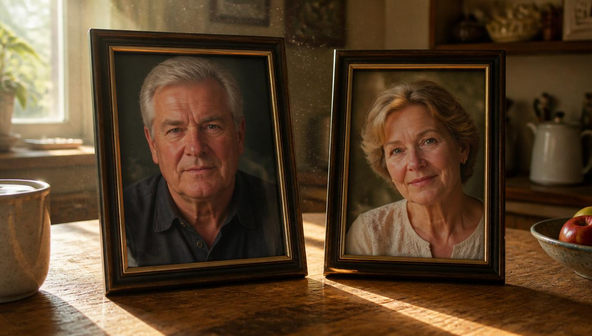
I brought the box up from the basement storage myself.
Frank and Eloise, in the frames I had always known, the ones Denise had called dated, the ones I had never stopped seeing as the correct faces for these walls.
I set them on the kitchen table while I decided where they would go. Looking at Frank’s face, squared toward the camera without performance, I understood again what I had known since the attic.
He had made the preparation. I had simply been ready enough to use it.
The Letters
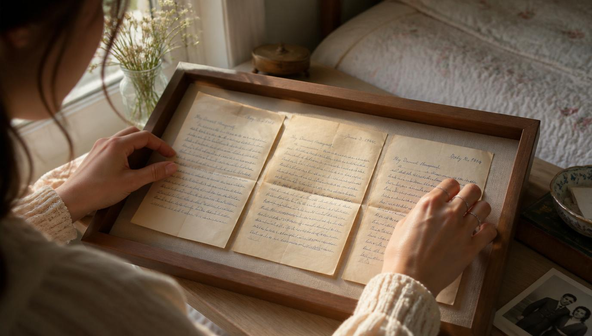
I framed them on a Saturday afternoon, three weeks after Denise left.
Not for display. For my bedroom, where no one would arrange them and no one would move them.
Frank’s handwriting across the fold lines, his plain blue ink, the sentences of a man who had written to her knowing he might not be there when she needed the words.
I hung them at eye level on the wall beside the window where the light was good in the morning.
The Transfer

The legal transfer completed on the day before my twenty-fifth birthday.
Claire called at quarter past nine to confirm it. She said congratulations in a professional tone, and then, after a brief pause, said it again in a different tone entirely.
I sat at Frank’s desk, the replacement desk we had sourced from the estate recovery, close enough to the original that the room accepted it.
I put the phone down and sat with my hands flat on the wood and breathed for a long time.
Raymond’s Visit
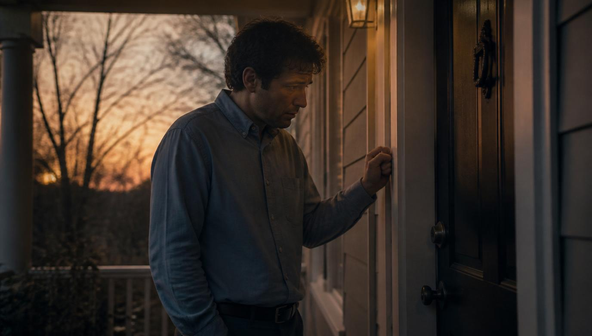
He came the following week, on a Thursday evening.
He stood on the porch and I let him in and we sat in the kitchen the way we had when I was a child and the house had been uncomplicated.
He did not fully explain himself. He offered fragments, the feeling of being secondary in a house built by someone else, the version of ownership Denise had offered him, the small dishonesty of convincing himself that Lila was young and would build something new somewhere.
None of it was an excuse. He knew that. I let him say it anyway.
What We Negotiated
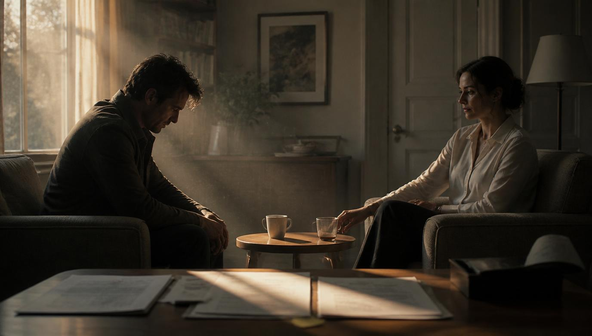
We talked for two hours without resolving anything and without needing to.
He said he was sorry in the plain way of someone who understood that sorry was a beginning at most, not a destination.
I said I knew. I said I needed time, and that I was not closing the door, but that the door was different now.
He nodded. He finished his coffee. He drove back to his apartment twelve minutes away and I stood at the window and watched his car go.
What Remained

That night I sat in the house alone with all of it quiet around me.
The photographs were back on the walls. The letters were in their frames. Eloise’s ring was on my right hand where it had always been.
I thought about what Frank had written in the third letter, the plainest sentence of all: *I trust you to know what this place is worth, not the price of it. The worth of it.*
I understood now that those were not the same thing, and that he had always known I would.


