

Walking is one of the best activities and most accessible activities for improving both physical and mental health. Yet many people stop because it feels too easy compared with going to the gym and intense workouts. The truth is that walking is at least as effective for our mental and physical health as any other activity. Walking does not have to be boring and when it is done right it can become a powerful tool to boost your immune system, and helps you feel more balanced overall. Let’s explore how you can make walking both more enjoyable and effective.
Why walking deserves more credit
Research shows that walking just 30 minutes a day can reduce the risk of heart disease by up to 19%. This was studied by Harvard health. It is also linked to lower stress levels, improved mood and even better sleep quality. Unlike running or intense workouts walking is gentle on the joints making it suitable for almost everyone. The thing is that walking feels like a chore and you will probably stop the activity. That it why it is worth learning a few tricks to keep it fun and engaging.
Add variety to your route
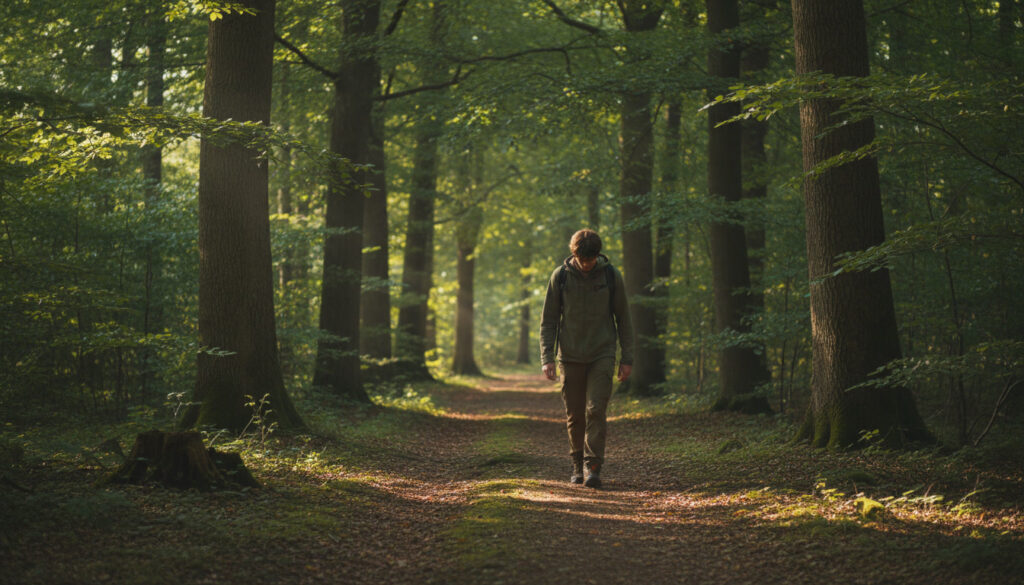
Walking the same route every time can get very boring. Try to add different things to your current route so you make the walk more unique every time which makes it much more fun to do. Try one of the following things:
- Explore more nature trails: Studies show that walking in green spaces boosts mental health more than urban routes. This is why it is very popular to walk in forests and little city gardens. Even in the biggest cities there are options to find some green rather than just boring neighborhood walks.
- City walks: Turn it in to a mini adventure by exploring a new neighborhood or spotting local architecture. There are numerous blogs on the internet for people that discover cities. In this way you can enjoy new things and expand your knowledge even in your own city.
- Interval walking: Alternate between a slow stroll and a brisk pace. Maybe even a running session in between can make a lot of difference. This not only keeps things interesting but also increase calorie burn over time.
Example: A friend of mine started taking different routes to pick up her kids from school. She said it felt like a mini holiday every day because she discovered hidden gardens and even a new coffee corner along the way. This makes everything a lot more interesting compared when you are just walking on a thread mil for example in the gym.
Make it social
Walking does not have to be a solo activity. It can be a perfect time to invite a friend so you can have a good conversation with him. You can also invite a coworker to discuss some work related stuff while you are burning calories. In this way you do not even notice that you are moving. Research shows that people are more likely to stick with exercise routines when they do it with others. If schedules do not align consider walking meetings. Some companies even encourage ‘walk and talk’ catch ups because it is proven that movement sparks fresh thinking
Turn walking in quality time (with yourself)
If you prefer walking alone see it as a change to recharge:
- Listen to podcasts or audiobooks. A 30 minute walk can double as learning time. You are compounding knowledge with movement which is a perfect combination for growth.
- Meditative walking. Focus on your breath and steps. Do not put any music in, but really try to focus on your feelings. This will help you reduce stress and improves mindfulness which will help you during the whole day.
- Music boost: A nice playlist can transform a slow walk into a mood boosting activity. Feel the music, try some new songs and walk for a good hour. This will also boost your mood a lot.
A small study from Stanford University found that walking increases creative thinking by up to 60%. If you are stuck on a problem take a walk, you might return with a fresh idea.
Make walking a social activity
Walking does not have to be a solo activity. Invite a friend, family member or even a coworker. Research shows that people are more likely to meet with each other when you ask them for a walk instead of a drink for example. But what happens when you invite others along?
A walk can turn in to laughter, deep conversations and shared goals. Research confirms that people are far more likely to stick with healthy routines when they do them socially. Walking does not just move the body but it also moves relationships forward too.
Why social walking works well
One of the biggest challenges in building a fitness habit is that it needs consistency. We all start motivated but after a few weeks excuses creep in and you tend to go less often. You need accountability once this kicks in. When you know a friend is waiting for you at the park you are much less likely to cancel. A study published in the Journal of Behavioral Medicine found that people who walked with a partner exercised more often than those who walk alone. Even more interesting is that participants enjoyed their workouts more when it is shared. Social walking works on multiple levels:
- Motivation
- Enjoyment
- Connection
- Consistency
Walking is not just about health, but also about community.
Walking with friends
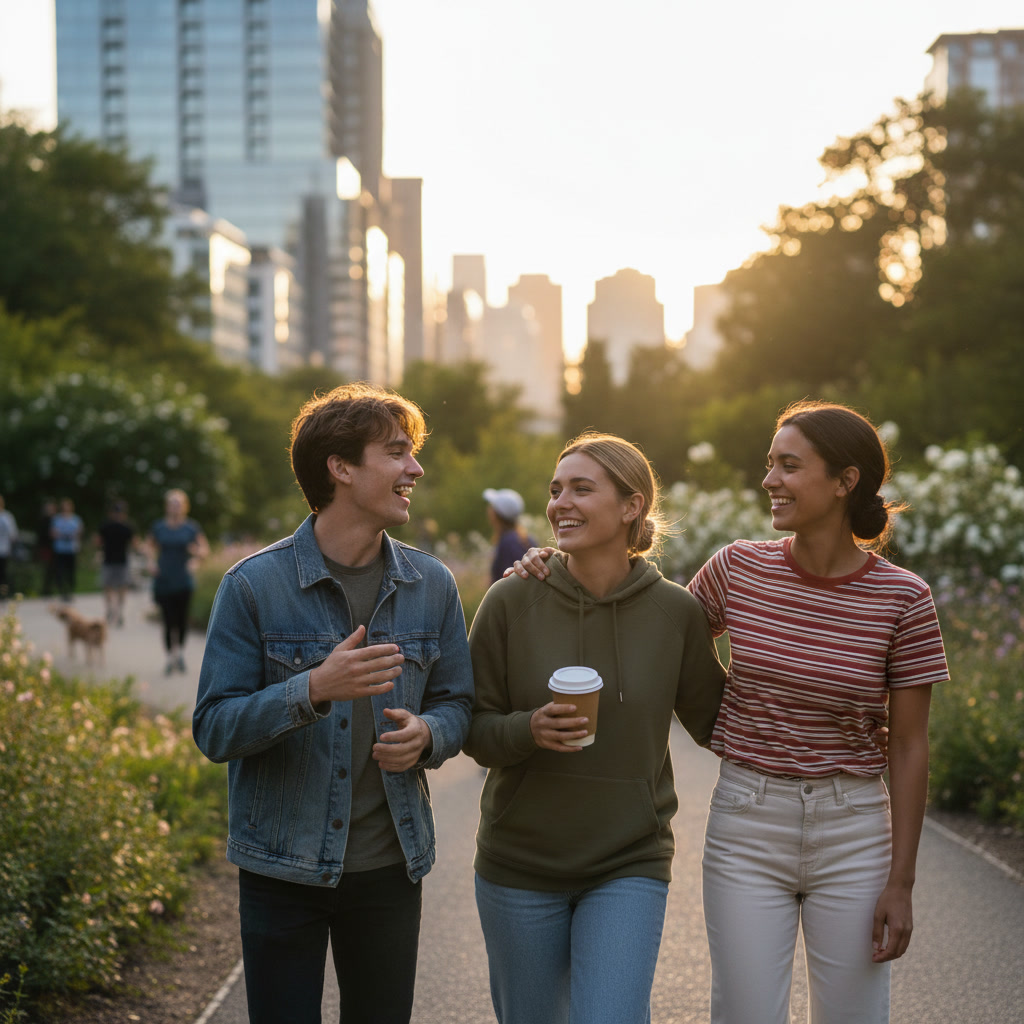
Friends make walking playful and lighthearted. Instead of meeting for coffee or drinks you can also meet in the park so you can walk for a few miles. Walking side by side makes conversation easier and most of the time a lot less intense than sitting across a table. Psychologists note that walking shoulder to shoulder often encourages people to open up more naturally.
Think about it: many of our most meaningful talks happen during a walk whether it is a walk to school with a childhood friend or a late night stroll during college days. Recreating that as adults can bring back the same sense of being close to each other.
Walking with family
Walking as a family builds connection across generations. For parents it is a great way to get kids off screens and moving without it is feeling like exercise. For couples it is quality time that combines movement and conversation with each other and often leads to great conversations. In Japan family walks are a common tradition. There are not only about health but about reconnecting with your family after a long day. Similarly researchers at the University of Cambridge found that families who walked together spent 30% more time talking to each other than families who only sat together at home.
Some families even create “walking challenges” together by tracking the steps from each other in a small competition to make fitness a family project.
Walking meetings at work
One of the most underrated ways to add walking in to your day is through walking meetings. Imagine that you walk while you do a phone call every time. Do the math by yourself to see how many hours per week you would walk. Instead of sitting in a conference room or staring at a Zoom screen some companies encourage employees to step outside and walk while discussing projects.
Why does this all work so well?
- Movement stimulates creativity. A Stanford study found walking boosts creative thinking by up to 60% which is a big number.
- Walking side by side reduces hierarchy. A manager who needs to speak with an employee can use this setup well. An employee would not feel himself lower as the manager so they can speak up to each other the best possible.
- Fresh air clears mental clutter making problem solving skills better. Imagine how many times you had a problem and you came up with the solution by just walking and thinking.
Walking with pets
If you own a dog you already know that this is the truth: No one is more excited about walks than your four legged hairy friend. Dogs are not just friends, they are motivators in a certain way depending how you look at it. A study in BMC Public Health found that dog owners walked 23 minutes more per day on average compared to non dog owners. Beyond exercise walking with pets provides stress relief. The rhythmic schedule that you have to walk every day combined with your dog’s joy make a walk a lot more attractive for a human being compared with walking alone.
Community and group walks
For those who crave larger social circles community walking groups are a powerful option. There are multiple walking groups that you can find by just simply opening social media and look around for walking groups. Many cities also have organized walking clubs where neighbors meet at a set time each week. Not only do these build consistency but they also create a sense of belonging.
Examples of this are:
- Mall walkers: Popular among older adults who want a safe space
- Charity walks: Fundraising events that have a purpose with some physical activity
- Neighborhood walking groups: Groups in your neighborhood to meet for evening or weekend strolls
Apps like Meetup or Facebook groups often list local walking clubs. Joining one can turn exercise into a social anchor point in your week which is perfect if you need some extra consistency in your week.
The Ripple effect
When walking becomes a shared habit its impact spreads further than just health. Couples who walk together often report stronger emotional connection. Parents who walk with kids instill lifelong fitness habits. Friends who walk together stay more bonded and tend to have different kind of conversations than they are just sitting down for a drink. Coworkers who walk in meetings often spark ideas that would not have happened in a boardroom.
It is a ripple effect: Better health, deeper relationships and richer conversations.
A simple habit that brings people closer
Walking may seem like one of the simplest activities, but when you look at its full potential, it becomes clear that it is one of the most powerful tools for improving both health and happiness. On the surface, walking is just a way to get from one place to another, a gentle form of exercise, or a short break from the desk. But when you shift your perspective and invite others to join, walking turns into a lifestyle habit that strengthens the body, sparks ideas, and even heals relationships in ways that are often underestimated.
Think about the last time you shared a walk with someone. Maybe it was a casual stroll with a friend that ended in laughter until your sides hurt. Or a quiet walk with a family member where the conversation unexpectedly went deep. Perhaps it was simply taking the dog outside, yet you still felt more present afterward. These moments may seem small, but when they stack up over weeks and months, they shape your well-being in meaningful ways.
The beauty of walking together is how accessible it is. You do not need an expensive gym membership or special equipment. A good pair of shoes and a bit of willingness to step outside are enough. Whether you are young or old, athletic or just starting out, walking meets you where you are and gently moves you forward.
Walking also creates connection in a natural way. Sitting across from someone at a café can sometimes feel formal, but walking side by side removes that pressure. There is no hierarchy, just shared movement. The rhythm of your steps, the steady pace, and the changing scenery help create a relaxed space where conversations flow more easily.
That is why so many people say their most meaningful talks happen during walks.
So the next time you lace up your shoes, ask yourself who you could invite along. A friend who needs fresh air, a family member you want to reconnect with, or simply your dog waiting by the door. Walking is more than movement. It is a shared experience, and often a quiet bridge between people.







You must be logged in to post a comment.