
The Story Starts Below!
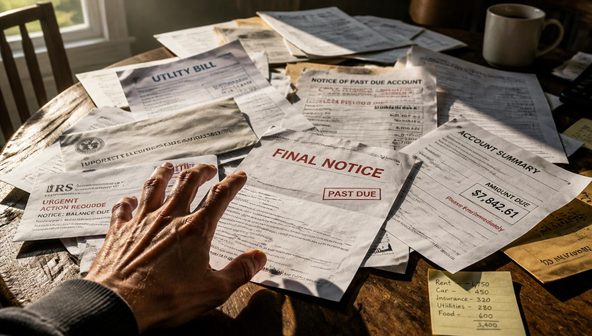
The Loan I Should Have Gotten
I needed a new car. Nothing fancy. Just something that started reliably and didn’t smell like burning plastic every time I ran the heat.
I’d been putting it off for months. But after my third roadside breakdown in six weeks, I finally sat down at my kitchen table and applied for a small personal loan.
The denial came back in under a minute.
I stared at the screen. I hadn’t missed payments on anything. I didn’t carry debt. I was careful with money in the quiet, boring way that people who grew up in uncertain households tend to be.
I requested my full credit report. I told myself it was probably a system error.
It was not a system error.
What I Found In My Own Name
The report was eleven pages long. I had to keep scrolling just to get through it.
Six credit cards. Two personal loans. A home equity line of credit. A business line of credit. A leased commercial property in a town called Harwick that I had never once visited or even heard of mentioned at a dinner table.
Total liability: $340,000.
My name was spelled correctly on every single account. My Social Security number matched. My childhood address, the house where I grew up, was listed as the originating residence.
I read it twice. Then a third time. My thumb pressed hard into my opposite palm the way it always does when I’m trying to think.
The accounts went back eleven years. I was eighteen when the first one opened.
I Drove To My Parents’ House
I was staying there already. I’d moved back six weeks earlier when my mom called and told me my dad was having what she called “a rough patch” with his health.
I’d packed a bag for six weeks. That was my plan. Six weeks, help out, go home.
I printed the credit report at the library on my way over. I put it in my canvas tote bag. I drove the twenty minutes to the sage green house on Mercer Street without turning on the radio.
I kept telling myself there was a simple explanation.
I was a paralegal. I’d seen financial messes before. People made mistakes. Systems made mistakes. There were processes for fixing things like this.
I told myself that all the way up the front porch steps.
My Mom Was In The Kitchen
She was making tea. The house smelled like coffee and the floral cleaner she’d used my entire life.
She looked up when I came in. She smiled. She asked if I’d eaten.
I put the credit report on the kitchen table. I smoothed it flat. I said, “Mom, I need you to look at this.”
She came over slowly. She set her mug down. She looked at the top page for maybe ten seconds.
Then she laughed. It was a short laugh. Quiet. Like something had mildly amused her.
“Family shares everything,” she said.
That Laugh Stayed With Me
I didn’t say anything right away. I just watched her face.
She was already moving on. Already explaining. Her voice was calm and even and she spoke the way she always did when she was managing something, smooth and unhurried.
She said it was a misunderstanding from years ago. She said my dad had needed to put some things in my name for business reasons. Back when I was in college. Back when everything was complicated.
“It was just temporary,” she said. “Roy will explain it. It’s already being handled.”
She picked her mug back up. She asked again if I’d eaten.
I hadn’t. But I wasn’t thinking about that.
Finding My Dad
Roy Houseman was in his bedroom on the ground floor. He’d moved down there two years ago. The stairs had gotten hard for him.
I found him sitting in the chair by the window. He was in a flannel shirt the color of pine trees. His big, slow hands were folded in his lap.
I sat on the edge of his bed. I handed him the credit report.
He looked at it without speaking for a long time. He didn’t seem shocked. That was the first thing I noticed.
He didn’t seem shocked at all.
What My Dad Said
“Some of those accounts are real,” he said. He still wasn’t looking at me. His eyes stayed on the paper.
I asked him to explain what that meant.
He said it was a complicated time for the business. He said they meant to transfer everything back. He said the words slowly, like he was reading them off something inside his own head.
Then he said, “I’m sorry, Anna.”
He said it to the window.
I sat there for a moment. I listened to the sound of my mom moving around in the kitchen above us, the small ordinary sounds of cabinet doors and running water.
What I Decided To Believe
I left his room and stood in the hallway. The wood paneling was cold when I leaned against it.
I told myself I understood what had happened. My dad’s lumber business had struggled for years. I knew that. Everyone in the family knew that.
I decided he was the one who had set this up. My mom had always let him handle money. She’d deferred to him their whole marriage. It made sense that this was his doing.
She was covering for him. That’s what the laugh was. That’s what “family shares everything” meant.
I was almost certain I had it figured out.
The Number Wouldn’t Leave Me Alone
I went upstairs to my old bedroom. The furniture was the same as when I was sixteen. Same narrow bed. Same desk with the wobbly left leg.
I sat at that desk and went through the credit report line by line. I wrote dates in the margin of my legal notepad. I circled account numbers.
The total number kept surfacing. $340,000. It didn’t feel real. It felt like a number from someone else’s nightmare.
I pressed my thumb into my palm until it left a mark.
I thought about calling a lawyer right then. I had the number of a woman I’d worked with on two cases. She was sharp and she was fast and she wouldn’t waste my time.
But I didn’t call her. Not yet.
Why I Waited
I told myself it was because I needed more information first. I told myself I wanted to protect my parents if there was any way to do that.
Those things were partly true.
The fuller truth, the one I didn’t say out loud even to myself, was that I was scared. Not of the money. Not of the debt.
I was scared of what a real investigation would show me. I’d spent my whole life reading the mood of that house. Learning to sense what was wrong without being told.
I was scared I already knew something I wasn’t ready to name yet.
The First Account
I went back through the report and found the oldest account. One credit card. Opened eleven years ago.
I was eighteen that year. I had just left for college. I’d been gone maybe three weeks when the account opened.
The address on file was my parents’ house. The phone number was the home landline.
I wrote that down. September. Eleven years ago. Three weeks after I left.
My mom would have been home alone then. My dad traveled for work. I remembered that. He was often gone for stretches of five or six days.
I circled the date again. I didn’t know yet why it mattered. I just felt that it did.
I Couldn’t Sleep
I lay in my old bed and stared at the ceiling. The house made its settling sounds. The heat clicked on twice.
At some point I heard my mom’s light go off down the hall. Then everything was quiet.
I thought about the way she’d laughed. Easy and short and completely unworried.
I thought about my dad not meeting my eyes when he apologized.
I thought about $340,000 sitting somewhere in the world with my name on it, borrowed in my name, spent on something I hadn’t been told about, and the two people who could explain it had given me exactly nothing useful.
I didn’t feel angry yet. That surprised me.
What I Am
I’m a paralegal. I’ve worked fraud cases. I’ve helped lawyers build timelines out of documents that looked like noise until you knew what order to put them in.
I know how to find what’s real. I know how to trace money. I know that financial stories always have a logic to them, even when they look like chaos.
I kept thinking about that first account. September. Three weeks after I left home.
I kept thinking about why someone would wait until a teenager moved out before opening a credit line in that teenager’s name.
I didn’t have the answer yet. But I knew how to find it.
What I Told Myself That Night
I was going to find out exactly what the money was spent on. Before I called anyone. Before I filed anything.
If this was my dad’s doing, I needed to know the full shape of it. If there was any way to handle this quietly and protect him from legal consequences, I wanted to know that first.
That’s what I told myself.
I pressed my thumb into my palm one more time and held it there.
Then I closed my eyes and waited for morning.
Morning In The House
My mom was up before me. She had coffee made and eggs on the stove.
She asked how I slept. I said fine. She nodded and slid a plate toward me.
We sat at the kitchen table. The same table where I’d laid out the credit report the night before. She’d wiped it clean. There was no sign the papers had ever been there.
She talked about the weather. She talked about a neighbor’s new fence. She was warm and present and completely normal.
I ate my eggs. I watched her hands move.
And I started, quietly and carefully, to plan.
I Started With What I Could See
I pulled every account number from the credit report. I wrote them in a column on my legal notepad.
Then I started calling. Not as Anna Houseman, worried daughter. As Anna Houseman, paralegal, requesting account history.
Some of them asked for verification. I had all of it. My own Social Security number. My own date of birth. My own old address. It was my identity. I just hadn’t known it was being used.
The Spending Didn’t Add Up
The first card had eleven years of transactions. I requested a full statement history.
When the faxed pages came through at the library, I sat down and read every line.
I expected to see lumber suppliers. Hardware stores. Business expenses that matched my dad’s company.
I didn’t see any of that. I saw a storage facility billed monthly. A PO box in a city four hours north. And cash withdrawals. Dozens of them. All in the same city.
My Dad’s Business Was Nowhere
I went through every account. All six cards. Both loans. The home equity line.
A little money had moved through the business accounts. Maybe forty thousand dollars total across eleven years.
The rest of it didn’t go to the lumber yard. It didn’t go to suppliers or employees or equipment.
It went north. To that same city. Over and over. Month after month. In careful, steady amounts.
I Recognized The Pattern
I’d seen this kind of thing in fraud cases. Not chaos. Not desperation.
This was a schedule. Someone had decided on an amount and moved it on a rhythm.
Whoever did this wasn’t panicking. They were building something. Something that took time and patience and required nobody to look too closely at my name.
I pressed my thumb into my palm. I looked at the city name again. Kelton. Four hours north.
I Drove There On A Wednesday
I told my mom I had a work errand. She didn’t ask for details.
I put the storage unit address into my phone. I’d found it in the billing records. Unit 14. A place called Northgate Storage just off the highway exit.
I drove four hours with the radio off. I kept both hands on the wheel. I kept telling myself this would explain something clean. A property. A second business location. Something my dad had tried and abandoned.
The Unit Was Still Active
The woman at the front desk looked up my account. She typed for a moment.
“Houseman?” she said.
“Yes,” I said.
She handed me a key card. She said the account was current. Paid through the end of the year.
I walked down the orange corridor to unit 14. My canvas tote bag was on my shoulder. My hands were steady. I was good at keeping my hands steady.
I lifted the roll-up door.
What Was Inside
The unit was organized. That was the first thing I noticed.
Not stuffed or thrown together. Organized. Boxes labeled in small, even handwriting. A metal shelf unit against the back wall. A clear plastic bin with a lid snapped down tight.
I recognized the handwriting on the boxes immediately. I’d seen it my whole life on grocery lists and birthday cards.
It was my mother’s handwriting.
I Opened The Plastic Bin First
Inside the bin: twelve years of prepaid debit card statements. Bundled by year and held with rubber bands.
Below those: two sets of documents. Driver’s license. Social security card. A library card. All in the name Sandra Voss.
And below those: a passport.
I picked up the passport. I opened it to the photo page. I looked at the face inside.
It was my mother. Same eyes. Same jaw. Same posture, even in a small photograph.
I Stood There For A Long Time
I didn’t move. I just held the passport and looked at it.
The name said Sandra Voss. The face said Diane Houseman.
My brain kept trying to make it mean something else. A prop. An old joke. Something from a play she’d been in once.
But the passport was real. The stamps inside were real. And the face was my mother’s face.
There Was A Ledger Too
It was a small black notebook on the bottom shelf. No label on the outside.
I opened it. Every page was filled with the same even handwriting. Dates in the left column. Dollar amounts moving in and out.
The entries went back twelve years. The most recent one was dated six weeks ago. Six weeks before I’d pulled my credit report and had my life rearranged.
The account receiving the money wasn’t one I recognized. It wasn’t my dad’s business. It wasn’t anything with our family name attached.
I Photographed Everything
I used my phone. Every page of the ledger. Every document in the bin. The passport, open and closed. The boxes and their labels.
My hands were still steady. I was grateful for that.
I had done this kind of work before. Document a scene. Don’t disturb it. Take the images and think later.
I put everything back exactly as I found it. I snapped the bin lid shut. I lowered the roll-up door. I handed the key card back to the woman at the front desk and walked to my car.
I Called Marcus Before I Drove
Marcus was my dad’s nephew. He’d worked in the lumber business for a few years, a decade ago, and then left without much explanation.
He didn’t answer. I left no voicemail. I wasn’t sure what I would even say.
A few minutes later, my phone buzzed. A text. Three words.
“Don’t go home.”
I stared at it. My car was still in the storage facility parking lot. The engine was off.
He Called An Hour Later
I’d been sitting on the side of the highway with my hazard lights on.
Marcus’s voice was careful when he spoke. Like he was choosing each word before he said it.
He told me my dad had been seriously ill for seven years. Not a rough patch. A degenerative condition. Progressive.
He’d found out by accident. He’d walked in on a medical conversation he wasn’t meant to hear. He left the business because staying felt like being part of the silence.
What He Said About Me
He said he’d felt guilty about me ever since. He said he’d thought about calling a hundred times.
I asked him why he didn’t.
He said he didn’t know what it would change. He said he kept hoping it wasn’t as bad as he thought.
He went quiet for a moment. Then he said he was sorry. He said it like he meant it, not like it was a thing to say.
I didn’t answer him right away. I looked out at the highway traffic going past.
I Sat With It
The cars moved by. The hazard lights ticked.
I held my phone in my lap. I held the storage unit key in my other hand, the one they let me keep by mistake.
My mom wasn’t covering for my dad. My dad didn’t build this. My dad was sick, had been sick for years, and someone in that house had been planning to leave him while he got worse.
I had been so sure I understood what happened. I had been completely wrong.
The Drive Home Felt Different
I merged back onto the highway. The hazard lights went off. The car moved.
But everything else felt still. Like the world had shifted one degree and hadn’t told me yet.
My mother had a passport in another name. My father had been sick for seven years. I had been living four hours away thinking my parents were just getting older.
I pressed my thumb into my palm and kept driving.
I Kept Thinking About The Timing
The first card was opened eleven years ago. My dad got his diagnosis seven years ago.
But the card came before the diagnosis. That was the part that kept snagging in my mind.
She hadn’t started planning because he got sick. She had already been moving when the diagnosis arrived. The illness just gave her a reason to move faster.
I didn’t know what to do with that yet.
Sandra Voss Had A Life
I’d photographed the documents. On the drive I kept replaying what I’d seen.
Not just a name and a face. A full life on paper. A library card. A social security card. A real passport with real stamps in it.
Someone had built that over years. Piece by piece. The same way you’d build anything meant to last.
My mother was meticulous. I’d always known that. I just never knew what she was being meticulous about.
I Pulled Up Outside The House
The porch light was on. My mom’s car was in the driveway.
I sat in my car for a few minutes. The canvas tote was on the passenger seat. My phone was in my hand. I had pictures of everything.
I thought about walking in and putting the passport photo on the kitchen table right then. I thought about watching her face.
I didn’t go inside yet.
I Needed To Know More First
I was a paralegal. I knew better than to move before I understood the full picture.
A confrontation with half the information is just a fight. You say what you know. The other person fills the gaps with whatever helps them.
I needed to know where the money went. How much was left. Whether there was a timeline already moving.
I opened the ledger photos on my phone and started reading in the dark.
The Numbers Told A Story
The transfers were consistent. Small enough not to draw attention. Large enough to add up fast over twelve years.
I ran the math in my notes app. The total that had moved into Sandra Voss’s account was somewhere close to two hundred and eighty thousand dollars.
That wasn’t money someone was hiding out of fear. That was money someone was saving toward something specific. A destination. A life that was already waiting.
I Thought About My Dad Inside
He was probably asleep. He went to bed early most nights now.
He didn’t know any of this. Or he knew something small and wrong, the way Marcus said. He believed the version he could live with.
And somewhere in that house, my mother was going about her evening. Washing a dish. Folding something. Acting like a person who was exactly where she was supposed to be.
I finally got out of the car.
I Went Straight To My Room
I said goodnight from the hallway. My mom called back from the living room. Normal voice. Normal word.
I closed my bedroom door. I sat on the edge of the old bed and took my cardigan off and then put it back on.
I opened my laptop. I needed to find out more about Sandra Voss before I did anything else. Name, identity structure, any accounts I could trace without access.
I worked until two in the morning.
The Identity Was Real, Not Rushed
Sandra Voss had a clean credit history. A modest one. An apartment lease in a coastal city. A bank account I couldn’t open but could confirm existed.
Two social media profiles. Both quiet. Both full of the kind of ordinary posts that make a person look like a person.
This wasn’t thrown together. This was maintained. Someone was tending to Sandra Voss the way you tend to a garden. Regularly. Carefully. With the long view in mind.
I Found The Apartment City
The lease documents I’d photographed showed an address. A city on the coast about nine hours from here.
I looked it up. Small enough to disappear into. Big enough that a new face wouldn’t cause comment.
The most recent ledger entry was six weeks old. Which meant this wasn’t over. This was ongoing. My mother wasn’t reflecting on a plan she’d abandoned.
She was still in it.
I Had To Talk To My Dad
Not about everything. Not yet. But I needed to understand what he actually knew.
Marcus had said Roy might know the accounts were in my name and believe Diane’s explanation. That felt true to me. It felt like something my dad would do.
He trusted her. He’d spent their whole marriage trusting her to manage things he didn’t look at closely. That trust was still operating, even now.
I needed to see how far it went.
I Found Him The Next Morning
He was at the kitchen table. Coffee in front of him. Both hands wrapped around the mug.
He looked tired in the way he always looked tired now. Not from a bad night. From something that didn’t go away with sleep.
I sat across from him. I didn’t put any documents on the table. I just sat.
I asked him if he knew that some accounts had been opened in my name.
He Didn’t Look At Me
He looked at the mug. His big hands moved slightly around it.
He said yes. He said it quietly. Not like a confession. Like something he’d been waiting to confirm.
He said Diane had explained it was for the business. Temporary. That it was being taken care of. He said he was sorry. He said it once, without looking up.
I believed that he was sorry. I believed he had believed her.
I Told Him About The Passport
I said it plainly. I said I’d found a storage unit. I said there were documents inside with her photo and a different name.
He went very still. The mug stopped moving.
He didn’t ask me to repeat it. He didn’t say I must be wrong. He just sat with it.
Then he cried. Once, quietly. Not for long. Just once.
It wasn’t grief about the money or the debt. It was the passport. The photograph with her face on someone else’s name. That was the thing that broke through.
I Understood What I Was Holding
I drove away that afternoon with the full picture.
My dad knew part of it and had chosen to believe the safest version. My mom knew all of it and had kept building anyway.
And I was the only person in that house who could see every piece at once. The accounts. The ledger. The passport. The timeline still moving.
The most recent ledger entry was six weeks old. Whatever came next for Sandra Voss, it was still being planned.
I had to decide what to do before my mother did.
I Needed A Plan Before A Confrontation
I drove around for an hour before going back to the house. I needed to think clearly.
I kept coming back to one problem. If I walked in and dropped everything on the table, my mother would have a chance to spin it. She was smart. She’d had twelve years of practice at this.
I needed to come in with the full picture. Not just what I’d found. What it meant. Where the money was. And what she planned to do next.
I Started Printing Things
I used the library two towns over. I didn’t want to use the printer at the house.
I printed the ledger photos. The account summaries. The lease for the storage unit. The passport photo, enlarged.
I laid them out on the library table in order. Not by how upsetting they were. By date. Chronological. The way I’d learned to build a case file.
This was a case now. I had to treat it like one.
I Called Marcus That Afternoon
He picked up on the second ring. I told him I was going to confront her.
He was quiet for a moment. Then he said to be careful. He said Diane didn’t panic the way most people did. He said she got very calm and very precise when she felt cornered.
I knew he was right. I’d seen that version of her before. When I was a teenager and made the mistake of pushing back on something she’d decided.
She didn’t raise her voice. She just waited you out.
I Went Home And Watched Her
She made dinner like nothing was different. Soup from a can, bread from a bag, plates set at three places.
I watched her hands while she worked. They moved the way Marcus had said she moved when she was managing something. Efficient. No wasted motion.
She asked me if I’d had a good day. I said it was fine.
My dad ate slowly. He didn’t look at either of us much. He’d been quieter since our conversation that morning. I wondered if he was putting pieces together on his own.
The Next Morning I Was Ready
I waited until my dad was resting. He usually slept for an hour after breakfast.
I got the folder from my room. I brought it to the kitchen. I set it on the table without opening it yet.
My mother was at the counter with her coffee. She turned when she heard me sit down.
I said I needed to talk to her. She looked at the folder. Something in her face shifted just slightly. Then she brought her coffee to the table and sat down.
I Laid The Photos Out One By One
I didn’t say anything while I did it. I just placed them in order.
The first card statement. The storage unit lease. The ledger pages. The passport photo last.
She looked at each one as I set it down. She didn’t flinch. She didn’t look away. She was doing the thing Marcus had warned me about. Going calm.
When I was done, she wrapped both hands around her mug. She looked at the passport photo for a long moment. Then she said: Roy asked me to do this.
I Didn’t Expect That
I’d prepared for denial. I’d prepared for anger. I hadn’t prepared for that.
I asked her what she meant.
She said when Roy got his diagnosis, he told her to make arrangements for herself. He told her not to sacrifice her life. She said he made her promise. She said the storage unit, the identity, all of it, was something he knew about and then chose not to think about anymore because it hurt him too much.
She said it quietly. Without drama. Like she was reporting something factual.
I Pressed Her On The Money
I could feel my chest getting tight. But I kept my voice even.
I said even if that was true, why was it in my name. Marital money would have left a trail, she said. Roy’s accounts were already under scrutiny from medical creditors. Mine were clean. Unused.
She said it like it was a practical problem she had solved. Not like it was something she had done to me.
She said I was young. She said I could recover. She said it was the least disruptive option available.
I Asked Her Where The Money Went
She already knew I knew. I could see that in the way she paused.
She said she saved it. She said it was safe.
She didn’t say where. She didn’t say how much. She just looked at me with those steady gray-blue eyes and waited to see what I’d do next.
I asked her to say it plainly. I wanted to hear her say she took nearly three hundred thousand dollars borrowed against my name and moved it into a life she was building without us.
She didn’t say it.
She Went To Her Room
She stood up. She said she needed a moment. She said we could continue the conversation later.
And she walked out of the kitchen. Quietly. No slamming. No tears. Just gone.
I sat there with the photos spread across the table. The soup bowls from last night were still draining on the rack beside the sink. Everything looked completely ordinary.
I pressed my thumb hard into my palm and held it there.
I Called A Lawyer That Night
I found her through the paralegal network I’d used before. She called me back within the hour.
I explained everything as clearly as I could. The accounts. The debt total. The ledger. The passport. What my mother had said at the table.
She listened without interrupting. When I finished she said identity theft within families was very hard to prosecute. She said my best move right now was to document everything and start disputing accounts. She also said something that made my stomach drop.
The Lawyer Told Me About The Clock
She said if Diane moved assets before any legal action was filed, those assets could become unreachable.
I asked her what that meant in plain terms.
She said if the money left Sandra Voss’s account before we could act on it, it might be gone for good. Foreign accounts. Cash. Other names. There were ways.
I thought about the ledger. Six weeks since the last entry. I thought about how organized my mother was. How patient. How long she had been doing this.
I asked the lawyer how fast we needed to move.
I Didn’t Sleep Much
I lay in my childhood bed and stared at the ceiling.
The confrontation hadn’t gone the way I’d planned. My mother hadn’t confessed or collapsed. She’d given me a version of events that I couldn’t immediately break apart. Roy asked me to. Roy knew.
Did he? I thought about his face that morning. The way he cried at the passport. That wasn’t the face of someone remembering something he’d agreed to.
But grief does strange things to memory. And my mother knew that too.
I Checked On My Dad In The Morning
He was awake. Sitting up in bed with the lamp on. He had a book open but he wasn’t reading it.
I sat in the chair by the window. I asked him if he’d ever told my mom to make arrangements for herself. To build something separate in case he got worse.
He looked at me for a long time. He said he might have said something like that once. In the beginning. When he was scared.
He said he didn’t mean like this.
The Race Had Already Started
I went back to my room and called the lawyer again.
I told her what my dad said. She said it complicated things but it didn’t stop us. She said to keep documenting. She said to watch for any movement in the accounts I had access to.
I hung up and sat with the folder in my lap. The photos. The ledger. The passport.
My mother was in the next room. She was still here for now. But the ledger was six weeks old. Her plan had a timeline. And I had just told her I knew everything.
She Was Still In The House
I spent most of that day listening for her movements. A door opening. Water running. The sound of her car in the driveway.
She was still here. That mattered.
Every hour she stayed was an hour the money stayed where it was. I knew that logic was thin. She could make transfers from her phone. She could do it sitting in her bedroom right now. But I held onto the fact of her presence anyway. It was the only thing I could measure.
Marcus Called Me At Noon
I told him how the confrontation had gone. He didn’t seem surprised.
He said Diane would never give ground in a direct fight. He said she’d been managing difficult conversations her whole life by simply reframing them.
I told him what she said about Roy asking her to do it. He went quiet. Then he said that even if Roy had said something like that once, there was no version of Roy that would have meant this. He said that like he was certain. I needed someone to be certain right then.
I Watched The Accounts
The lawyer had helped me identify which accounts I could monitor. I checked them twice that afternoon. Nothing had moved.
Sandra Voss’s account wasn’t something I could see directly. But two of the transfer accounts were tied to cards still in my name. Those I could watch.
I sat at the kitchen table with my laptop open. My dad’s television was low in the next room. I could hear it through the wall. Some afternoon news program. The sound made the house feel almost normal.
She Came Out Around Three
Diane walked into the kitchen and made herself tea. She didn’t look at my laptop. She didn’t ask what I was doing.
She moved around the kitchen like it was any other afternoon.
I watched her hands. They were steady. She wasn’t panicking. That scared me more than if she had been. A panicked person makes mistakes. My mother didn’t look like she was making any.
I Asked Her Directly
I closed the laptop. I said I needed to know her timeline.
She turned from the counter. She looked at me for a moment. Then she said she didn’t know what I meant.
I said I thought she did. I said I wanted to know how long she planned to stay. She set her cup down slowly. She said she wasn’t going anywhere right now. She said Roy needed consistency. She said it like that was still her first priority.
That Word Made Me Angry
Consistency. Like she was describing a care plan. Like she hadn’t spent twelve years building a door out of this house.
I didn’t raise my voice. I’d promised myself I wouldn’t.
I said I wanted to believe her. She looked at me like she was deciding something. Then she picked her tea back up and said she knew I did. She walked out of the kitchen again. I sat there with my hands flat on the table and breathed slowly until the tightness in my chest eased.
My Dad Had A Hard Night
He was up twice. I heard him from my room and got up both times to check on him.
The second time he was sitting on the edge of his bed. He said he was fine. He said he just couldn’t get comfortable.
I sat with him for a while. He didn’t bring up our conversation from the morning. But when I stood up to go back to bed he said my name. He said he was sorry I was carrying this. I didn’t know what to say so I just said I know, Dad. I think that was the right thing.
Nine Days Went By Like That
I monitored. I documented. I checked on my dad. I watched my mother move through the house like a person who had already made her peace with something.
Marcus drove through town three times that week. He texted me each time. Her car’s there. Still there. Still there.
I worked remotely when I could. I lost focus constantly. One client emailed twice about a late filing and I apologized and finished it at midnight with my cardigan pulled around me and the house quiet. I told myself I just needed to hold on a little longer.
On The Tenth Day The Car Was Gone
I woke up and something felt different before I even got out of bed.
I looked out the window. The driveway was empty.
I stood there for a second. Then I moved fast. I went downstairs. My dad’s door was closed. I went to the kitchen and that’s when I saw the note on the counter.
The Note Wasn’t For Me
It was folded once. Roy’s name on the front. Her handwriting, small and neat.
I stood there a long time before I opened it. I don’t know what I was waiting for.
It said she loved him. It said she was sorry. It said she needed him to understand she couldn’t do it by just staying in the house and waiting. That was all. No address. No plan. My name was not in it anywhere.
I Called Everyone I Could
Marcus first. He picked up and said he was already driving.
I called the lawyer. She said again that a woman leaving her home wasn’t a crime. She said to start the documentation process now. She said if the money moved today we might still have options. Might.
I called the bank connected to Sandra Voss’s account. They wouldn’t talk to me. I knew they wouldn’t. I called anyway because I needed to be doing something with my hands.
I Didn’t Wake My Dad
I thought about it. I stood outside his door with my hand near the frame.
He would ask where she was. I didn’t have a real answer. I had a note with his name on it that said she was sorry and I wasn’t going to give that to him while he was still half-asleep and alone.
I stepped back from the door. I went to my room. I pulled up the address from the storage unit lease documents. The coastal city. Six hours. I’d had it memorized for days without letting myself think about why.
I Got In The Car
I left Marcus a voicemail telling him where I was going and why.
I texted the lawyer the same information. She texted back immediately. She said to call her before I did anything. I said I would.
I didn’t know what I was going to do when I got there. I just knew my mother had a six-hour head start and a rolling suitcase and twelve years of planning behind her. And I knew if I waited for an institution to handle this, the money would be gone before any paperwork caught up.
The Drive Took Every Hour It Promised
I stopped once for gas and coffee. I didn’t turn the radio on.
I thought about what Marcus said. She goes calm and precise when she’s cornered. I thought about the note on the counter with Roy’s name on it and mine nowhere.
I thought about my dad waking up and finding the house quiet. I’d asked a neighbor to check in. I’d texted her before I left. It wasn’t enough but it was what I had.
I Found The Building
The lease documents had an address. A street I’d looked at on a map but never seen.
I parked across the street and sat there. The building was ordinary. Four stories. A row of buzzers by the front door.
I waited three hours. I watched people go in and out. I was starting to think I’d gotten it wrong. Then a car pulled up and she stepped out. She had the rolling suitcase. She had her coat on. She walked toward the front door without looking around.
I got out of my car. I crossed the street. I went inside before the door could close.
I Took The Stairs
The elevator was right there but I didn’t want to be trapped in a small box. I needed to move.
I found the apartment number from the lease document. Third floor. I climbed and my legs felt strange, like they weren’t fully mine.
I stood in the hallway for a moment. The carpet was beige. The lights were fluorescent. It smelled like other people’s cooking. I pressed my thumb into my palm and walked to her door.
I Knocked Once
I heard movement inside. Then nothing for a few seconds.
Then the door opened and there she was. Still in her coat. The suitcase was behind her, not yet unpacked.
She looked at me. She didn’t look shocked. She looked like something she’d been carrying had just been set down. She stepped back and let me in without saying a word.
The Apartment Was Small
One main room. A window facing another building. A small kitchen against the wall.
There was almost nothing personal in it. A folded blanket on the couch. A box on the counter. It looked less like a home and more like a room someone had been slowly preparing to inhabit.
She finally took off her coat. She sat down. She gestured toward the other chair. I sat.
She Didn’t Start With Excuses
She talked about Roy first. She talked about watching him get worse one small piece at a time.
She said it happened slowly enough that each change seemed manageable. But then you’d look back six months and realize how far things had moved. She said no one outside the house could see it the way she could.
She said she stopped sleeping through the night about four years ago.
She Talked About Herself
She said there was a version of this she used to believe in. That love was enough. That you showed up because that’s what you promised.
She said she believed it right up until she stopped being able to find herself in any of it.
She wasn’t crying. Her voice was steady. She spoke like someone who had thought about this so many times that the words came out smooth and flat now.
I Asked About The Money
I kept my voice even. I said I needed her to understand what the debt had done.
I told her about the loan denial. I told her about pulling the report. I told her what it felt like to see my name on six credit cards and two loans and a commercial lease for a building in a city I’d never been to.
She listened without looking away. She didn’t try to minimize it.
She Said She Thought About It
She said she had thought about what it would do to me. She said that more than once.
She said she decided I could recover from it. That I was young enough and capable enough and that the damage was fixable if I had the right documents.
She said Roy didn’t have a recoverable timeline. She did not say she was sorry.
I Told Her What I Needed
I said three things. I said them slowly so there was no confusion.
First: two hundred and eighty thousand dollars transferred to an account in my name within thirty days. Second: a signed document saying the debt was hers. That she opened those accounts without my knowledge. That I had nothing to do with it.
Third: I told her I never wanted to sit across from her again while she held Dad’s hand and pretended she was staying.
She Agreed To The First Two
She didn’t negotiate. She didn’t ask for time to think.
She said yes to the transfer. She said yes to the document. She said her lawyer would contact mine within the week.
She didn’t say anything about the third condition. She just looked at the window. I didn’t push her. I think I already knew that one wasn’t mine to control.
I Told Her About Dad
I said his condition had gotten worse in the past ten days. This was true. His doctor had called two days before I found the note.
I told her that someone needed to be named on his care decisions within the next thirty to sixty days. I said if she was gone, that responsibility became mine alone. I said I wasn’t telling her that to pull her back. I was telling her because it was real and she was still his next of kin on every document.
She Asked What I Wanted From Her
Not about the money. About him. She asked how I thought this should go.
I said I didn’t know. I said I hadn’t planned past finding her in this room.
She nodded. She looked older than she had in the family house. Or maybe I was just seeing her differently now. She said she’d call the hospice intake line in the morning and provide whatever authorizations they needed. She said she would do it in writing.
I Drove Home That Night
I didn’t stay. There was nothing left to say that night and I didn’t want to sleep in that apartment.
I called Marcus from the road. I told him what happened. He was quiet for a long time. Then he said I did good. I didn’t feel like I had done good. I felt like I had done what needed doing, which is a different thing.
The road was dark and nearly empty. I had six hours to sit with all of it.
Dad Was Awake When I Got Home
It was past midnight. His light was on. I knocked softly and he said come in.
He asked where I’d been. I sat on the edge of his bed. I told him Diane was getting herself sorted out. That I would explain everything soon. That she was safe.
He looked at me for a moment. He adjusted his hearing aid. Then he said okay and lay back down and I stayed until his breathing slowed.
The Transfer Came Through
Twenty-six days later. Diane’s lawyer contacted mine on a Tuesday morning.
The documentation arrived the same day. Two pages. Signed in Diane’s full legal name. It said clearly that the accounts were opened by her. That I had no knowledge of them. That I was not responsible.
I sat at the kitchen table with both documents in front of me. I read them twice. Then I put them in the canvas tote next to my laptop and went to check on my dad.
It Didn’t Feel Like Winning
I had thought it would feel like something lifting. Like a pressure I’d been holding against for months finally releasing.
It didn’t feel like that. It felt like finishing a task that should never have been mine. The documents were real. The path forward was clearer. But the thing that had been done to me was still done.
I put the kettle on. I listened to my dad’s television through the wall. I told myself that clearer was enough for today. It would have to be.
The Days After The Transfer
The documents sat in my canvas tote for two days before I moved them.
I kept reaching in for other things and feeling the edge of the folder. I’d pull my hand back. I wasn’t ready to file them yet. Filing them felt too final and not final enough at the same time.
On the third day I put them in a proper folder and set them on the table. I looked at them for a minute. Then I started making calls about Dad’s care schedule instead.
His Condition Was Moving Faster Now
His doctor had said thirty to sixty days. It was already closer to thirty.
He slept more. He ate less. His hands shook in the mornings before his medication settled in. He didn’t complain about any of it. He just moved more slowly through each day.
I learned his schedule. What time he woke up. What he could eat without trouble. When the pain was worst. I wrote it all down in a notebook I kept on the kitchen counter.
The Hospice Coordinator Came On A Wednesday
Her name was Denise. She had long locs pinned back and a worn planner she carried everywhere.
She sat at the kitchen table and asked questions in a calm, even voice. Not rushed. Not clinical. She asked about Dad’s preferences, his routines, what mattered to him.
When she was done with her questions she looked at me and asked how I was managing. Not how the situation was going. How I was managing. I didn’t know what to say at first.
I Told Her The Honest Version
I said I hadn’t planned to be here this long. I said I’d lost two clients. I said I was tired.
She didn’t flinch. She wrote something in her planner. Then she told me that what I was doing had a name and that name was caregiving and that it was one of the hardest things a person could do without training.
She said that mattered. She said I should let it matter instead of just pushing through. I thought about that for a long time after she left.
Marcus Drove Down For A Weekend
He stayed in the guest room. He sat with Dad while I slept past eight for the first time in weeks.
He and Dad talked for a long time one afternoon. I could hear low voices through the wall. I didn’t go in. Whatever they were saying felt like it belonged to them.
That evening Marcus made dinner. We ate at the kitchen table. Dad ate more than he had in days. I think having someone new in the house helped. Something about the routine shifting.
Dad Asked About Diane Once
He waited until Marcus had gone to bed. He asked quietly. He said he just wanted to know she was all right.
I told him she was. I said she was in a place she’d found for herself and that she was okay.
He was quiet for a moment. He said he knew she had a hard time toward the end. He said it like he was explaining something to himself more than to me.
I didn’t push on it. Some things he needed to hold the way he needed to hold them.
I Found The Burner Phone In April
I was cleaning out the car. The one I’d been driving from the storage unit trips.
It was in the side pocket of the backseat. Black plastic. Older model. I held it and knew right away what it was.
I pressed the power button and it turned on. The battery was at eleven percent. There were no text messages. There were seventeen voicemails, all from the same number. I recognized the last four digits. It was my dad’s cell phone.
I Listened To The First One
His voice was younger in it. Steadier. He said her name. He said he was just calling to hear her voice and that she didn’t have to call back.
That was all. Forty seconds.
I sat in the car with the phone in my hand for a long time. I thought about what it meant that he had this number. That he’d called it. That there were sixteen more. I decided I didn’t need to know what was in them. I deleted them without listening. I powered the phone off and put it in the bag for donations.
Roy Died On A Tuesday
It was early spring. The light through his window was pale and thin.
I was in the house. Marcus had driven down the day before. He was in the kitchen when it happened. The hospice nurse, a quiet man named Gerald, was with Dad.
Marcus and I stood in the hallway together afterward. He put his arm around my shoulders and didn’t say anything. I didn’t need him to.
I Called Diane That Evening
I didn’t owe her the call. I knew that.
But I kept thinking about what Dad would have wanted. He would have wanted her to know. Not for her sake. Because it was the kind of man he was.
She answered on the second ring. She said his name when I told her. Just once. Quietly. Then she was silent for a long time. She said thank you and hung up. That was all.
She Didn’t Come To The Memorial
It was small. Marcus. A neighbor couple who had known my parents for twenty years. Denise from hospice came.
Three days later a flower arrangement arrived. White and pale green. Simple. The card had only my dad’s name written on it in her handwriting.
I set the flowers on the counter. I looked at them for a while. Then I went back to the paperwork, because there was always more paperwork.
The Estate Took Weeks To Sort
The house needed to be sold. Dad’s medical bills were significant. I worked through it with a checklist.
There wasn’t much left after everything settled. A small amount came to me. I put it directly toward the debt resolution. My lawyer had already begun the formal dispute process using the signed documentation from Diane.
She told me it would take about fourteen months total. She said the path was clear. I said okay. Clear was what I had and I was keeping it.
Diane’s Lawyer Called In Late May
He said he had a letter for me. He said his client had instructed him to deliver it after Roy’s death.
He mailed it. I got it four days later. Cream envelope. My name on the front in her handwriting.
I stood at the kitchen counter and opened it. I read it standing up. Then I read it again sitting down.
What The Letter Said
She wrote that she had been diagnosed with early cognitive decline. Eighteen months before I found the credit report.
She wrote that she could see a window of clarity and that it was closing. She said she didn’t want to become a second person in that house who needed care. She said she chose to be the one who left rather than wait until leaving wasn’t something she could choose anymore.
She said she didn’t know if it was right. She said she knew it was what she was able to do. She signed it with her full legal name.
I Filed It With The Other Documents
Not because I forgave her. Not because I didn’t.
Because it was real. It belonged with the other real things. The credit report. The signed acknowledgment. The final resolution letter.
I put the folder in my bag. I drove back to my apartment two weeks later. I stood in the middle of it and let it be quiet around me. I made coffee. I sat at my own kitchen table with the last resolution letter in front of me. The number at the bottom of the page read zero. I folded the letter and put it away. Then I began.


