
The Story Starts Below!

The Hierarchy Nobody Named

I never called it a hierarchy when I was living inside it.
That would have required stepping outside the logic of it, and when you are born into a system, you do not see the system. You see Tuesday. You see dinner. You see the way your mother’s face moves when your cousin Tyler walks into a room, and you file that away under the category of things that are simply true about the world.
I was twenty-eight years old before the category broke open.
—
What Tyler’s Entrance Looked Like

He did not have to do anything dramatic to command a room.
That was the thing about Tyler. He walked in and the room reorganized itself around him the way a solar system organizes around mass. My mother’s posture would change first.
Her shoulders would drop. Her smile would arrive early.
I used to stand just outside that gravitational pull and tell myself I did not want to be inside it anyway.
—
The Story I Told Myself

I was realistic. That was the word I used. Not overlooked. Not lesser. Realistic.
My parents were not cruel people. They were ordinary people with a finite amount of emotional investment and they had made, as I understood it, a series of practical choices about where that investment would go.
Tyler was the practical choice.
He was older. He had the easy confidence. He had the face that photographed well at family gatherings, which sounds shallow until you understand how much of family love is conducted as performance.
—
A Specific Tuesday in October
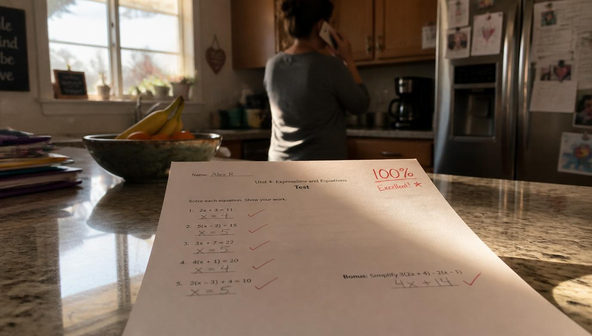
I am eleven years old and I have gotten a perfect score on a science test.
I put it on the kitchen counter where my mother will see it. This is a calculated move, the kind of thing that makes me ashamed now, because I was already that child. Already running the calculation of what might work.
She sees it.
She says, good job, honey, and turns back to the phone call she is on, which is a call with my aunt about Tyler’s travel baseball team and whether the spring schedule will conflict with family vacation.
—
The Calibration of Expectations
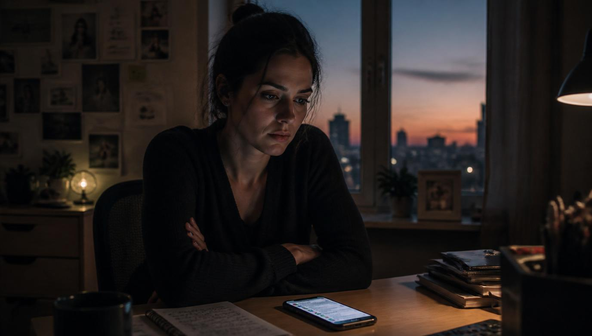
I learned very young to want things quietly.
Not to not want them. That would have required a different kind of surgery entirely. I still wanted everything, the attention, the warmth, the moment of being seen without having to engineer it.
I just stopped advertising the wanting.
By the time I was in high school I had developed a specific skill: I could experience disappointment in real time without my face showing anything. I thought of this as maturity. I understand now it was a survival adaptation dressed up as a personality trait.
—
My Grandfather’s Hands

Grandpa Walter had large, unhurried hands and a way of being in a room that never demanded anything from anyone.
He was my mother’s father, which always struck me as strange, because my mother’s whole life was organized around demanding things from rooms without technically asking. He watched her the way you watch weather. With a kind of patient, private knowledge.
He watched me differently.
He watched me the way you watch something you are genuinely curious about. It was the most unusual feeling. I did not know what to do with it when I was a child. I mostly changed the subject.
—
What He Said Once
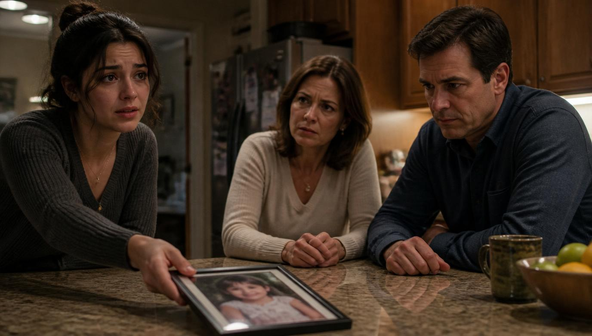
I was sixteen and doing poorly in a way I could not explain to anyone.
Not failing. Never failing. I had learned by then that failing would only confirm what I feared everyone suspected. I was managing. Maintaining. Running on the specific fuel of not giving anyone a reason to write me off.
Grandpa Walter sat down next to me at the kitchen table.
He said, you know that the people who underestimate you are giving you something, even when they don’t mean to. I didn’t know what that meant. I told him thank you and went upstairs.
—
The Architecture of Two Jobs
By my junior year of college I was working nights at a restaurant and days at the university library, and I had told approximately no one how close to the edge I was running.
The financial scaffolding of my education was precarious in ways I had not fully mapped. I had loans. I had a small grant. I had whatever I could generate myself between closing shifts and opening shifts.
I did not ask my parents for money.
I told myself this was pride. It was pride. It was also the accumulated evidence of years spent learning not to make requests that would go unanswered, because unanswered requests leave a mark that pride does not.
—
The Semester I Almost Left
Spring semester, junior year. I ran the numbers and the numbers did not work.
I called home. My father answered, which was lucky or unlucky depending on how you measure these things, because my father was the one who could sound genuinely sorry while delivering bad news.
He said they simply did not have the resources.
I believed him. I took out a second loan. I picked up a third shift on weekends and I told myself that this was the cost of doing things without a net, and that doing things without a net was simply who I was. I did not examine this belief for several years.
—
What I Was Building and Why
I want to be honest about the graduation, which means I have to be honest about what I thought it represented.
I was not simply finishing a degree. I was completing an argument. The degree was evidence in a case I had been constructing since I was eleven years old and watching my mother not look up from a phone call.
The case was: I am worth looking at.
I understood this about myself only partially. I knew I cared more than was reasonable about my parents attending the ceremony. I told myself this was normal. It is normal to want your parents at your graduation. What was less normal, what I could not yet see, was that I had assigned to this single event the weight of an entire decade of accumulated proof.
—
The Confirmations

My mother confirmed she would attend in February. Then again in March.
My father confirmed in April, in the specific way he had of confirming things: carefully, with qualifications, but still a yes. I did not count the confirmations at the time. I understand now that I absolutely counted them. I just refused to acknowledge that I was counting.
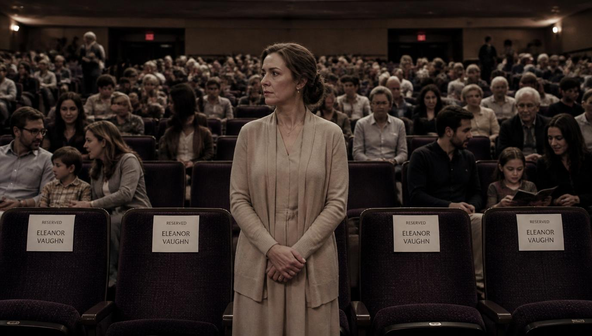
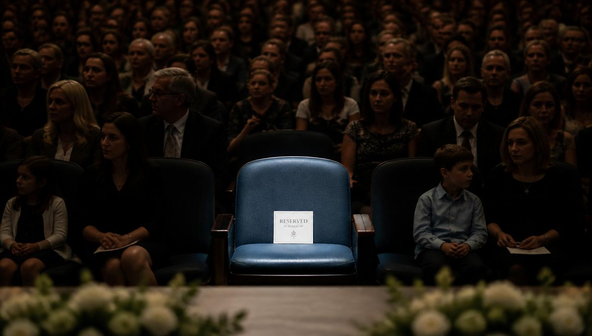
I saved two seats.
This was the detail that would later feel the most nakedly hopeful to me, in the way that hope, when it is exposed and unfulfilled, curdles into something close to embarrassment. I arrived early. I put my jacket on one chair and my bag on another. I watched the auditorium fill.
—
The Texture of Waiting
The ceremony started at two in the afternoon and my parents’ seats were still empty at one fifty-five.
I told myself traffic. I told myself parking, which was genuinely difficult in that part of the city. I told myself they would slip in after things began and find me by text afterward.
My phone showed no messages.
The processional music began and I walked in with my row and I found my seat on the stage side of the auditorium and I could see, from the angle I was sitting, exactly where I had left my jacket and my bag. The jacket and the bag were still the only things in those seats. The seats stayed empty for the entire ceremony.
—
The Photograph I Saw First

I found out the way you find out things you were not supposed to find out yet.
Social media. My aunt had posted a photograph forty minutes into my graduation ceremony. The whole family at a restaurant I recognized immediately, a place my parents had described as too expensive for ordinary occasions, a place with cloth napkins and a bar that made cocktails with names on the menu.
Tyler stood at the center of the image.
He was holding a placard. His promotion. His name on something official and framed and worth celebrating on a Thursday afternoon in May while I sat in a rented robe in an auditorium two miles away, watching two empty seats not become occupied.
—
The Phone Call
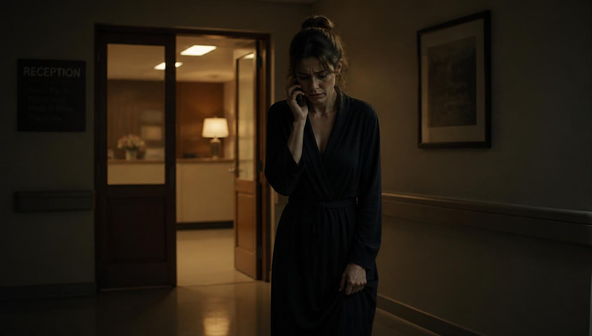
I stepped out of the post-ceremony reception to call. I was still in the robe.
My mother answered in the warm, slightly elevated register of someone who had been drinking celebratory wine. She was happy. Genuinely happy. That specific and uncomplicated happiness, it turned out, was the thing I was least prepared for.
I said: you didn’t come.
There was a pause. Not a guilty pause. A recalibrating pause, the kind that precedes an explanation that the speaker genuinely believes is sufficient. She said, oh honey. We already have one success story in the family. I think she meant it as a compliment to Tyler. I know she did not register what it was also saying about me.
—
The Thing That Actually Broke
It was not the cruelty that broke me. There was no cruelty.
That is the part that took me the longest to understand. If she had been cruel I could have filed it under meanness, under intention, under something I could argue against. What she offered instead was casual. Offhand. The tone of someone explaining the weather.
I stood in a parking lot in a graduation robe.
I held the phone against my ear for another thirty seconds after she stopped talking, and I listened to the ambient sound of a restaurant where my entire family was celebrating someone else, and I made a decision I did not fully understand yet, which was simply: not anymore. Not like this. Not one more time in the same way.
What the Decision Actually Was
I did not call it a decision that night.
I stood in the parking lot until the robe became embarrassing, and then I took it off and folded it over my arm and walked to my car.
I drove home in the specific silence of someone who has just absorbed something they cannot yet process.
The decision was not a statement. It was more like a door closing from the inside, quietly, without announcement.
—
The Two Things I Did Not Know I Was Doing
The first thing was visible, at least from the outside.
I stopped calling home as often. Then less than that. Then occasionally, then almost never, with a consistency that I told myself was simply the natural thinning that happens when your life gets busy.
The second thing was invisible even to me.
I took the enormous energy I had been burning in the direction of my parents and I redirected it with a precision I did not understand was precision. I pointed it at my career like a lens focuses light.
—
The Shape of Controlled Burning
I had a job already. An entry-level position at a mid-sized logistics firm, the kind of company that sounds unremarkable until you understand how much complexity runs underneath it.
I was good at systems. I had always been good at systems.
Growing up in a household organized around a hierarchy you are not allowed to name teaches you, among other things, to read a room’s invisible architecture before you say a single word.
—
What Marcus Noticed First
Marcus had been at the company eight months longer than me.
He was the kind of person who watches before he speaks, which meant when he finally spoke, it landed differently than most things people said.
He noticed me the way you notice someone who is working harder than the job requires.
He did not ask about it. Not at first. He just made room, in that specific way of his, where the room was clearly there if I needed it.
—
The Distance I Maintained
I had friends. I want to be clear about that, because the version of this story where I became a hollow workaholic is not quite accurate.
I went to dinners. I laughed at the right moments.
But there was a glass pane I kept in place, and I had installed it so carefully over so many years that I no longer noticed the slight distortion it produced in every room I walked into.
—
What Home Gatherings Became
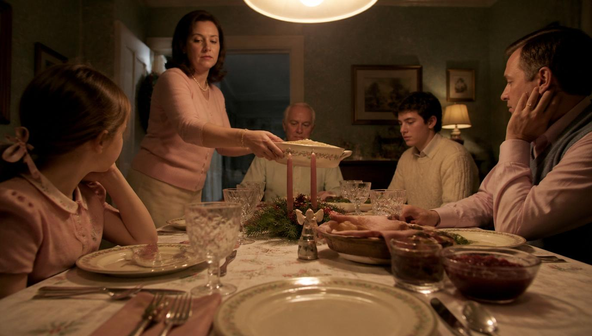
Thanksgiving that year, I went.
I sat at my aunt’s table and I watched my parents move through the room and I noticed something I had perhaps always known but was seeing cleanly now: they were not aware of having done anything.
There was no awkwardness from their side. No adjusted posture.
My mother passed me the sweet potatoes and asked about my job and the question had the quality of asking someone you are meeting for the first time at a party.
—
The Specific Mercy of Being Busy
I worked the holiday weekend.
I told no one I had requested those shifts. I simply arrived at the office on Friday and the office was quiet and I could hear myself think in a way that my aunt’s house had not permitted.
The work expanded to fill the space I gave it.
I was not unhappy. That is the part that confused me for a long time. I was not unhappy. I was operating at high capacity on four hours of sleep and a specific kind of forward momentum that felt, from the inside, exactly like purpose.
—
What I Heard Through the Ambient Noise

I was not tracking Tyler.
I want to be precise about this, because the alternative reads like obsession, and it was not obsession. It was simply that information arrived the way weather arrives, through channels you did not request.
A cousin mentioned, off-handedly, that Tyler’s first business venture had not worked out.
She said it the way you say a thing you expect will be temporary, with the tone of a slight inconvenience that the universe would shortly correct.
—
How the Family Spoke About Him
The language around Tyler’s situation had not changed, which was itself a form of information.
Temporary setback. Finding his footing. Tremendous potential, just a matter of timing.
I had heard this grammar before, applied to him throughout my childhood, and I had understood even then that it was not the grammar of accurate assessment.
It was the grammar of investment protection. You do not admit the stock is failing when you have staked your identity on the portfolio.
—
Celeste
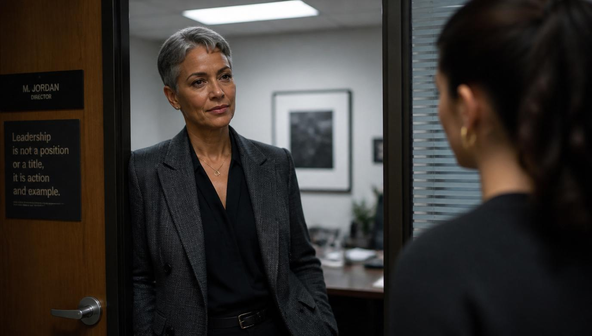
My supervisor at the time was a woman named Celeste, and within two months of working under her I understood that she was the most competent person in any room she entered, and that she had spent years making herself invisible enough that other people would not feel threatened by this.
I recognized the technique. I had been practicing a version of it my whole life.
She saw this in me and did not comment on it directly. She simply began giving me more.
—
What More Looked Like

More was harder projects. More was being included in meetings where I was the youngest person by a decade.
More was Celeste pausing in the doorway of my office one evening, when everyone else had gone, and asking how I was doing, not in the performative way, but in the way of someone who wants an honest answer and is willing to wait for it.
I gave her the professional version.
She accepted it without expression, which meant she accepted it as the incomplete thing it was.
—
The Box from Grandmother’s House
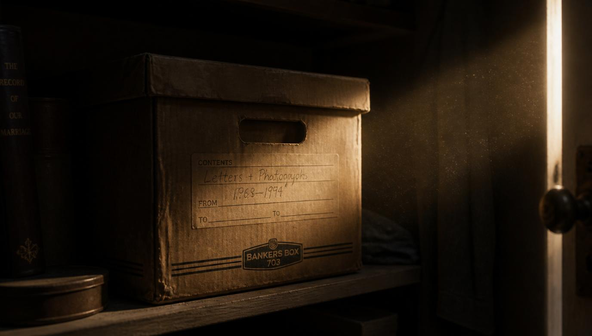
Two months after Grandpa Walter died, I had driven three hours to help my grandmother sort through things.
There was a box she pressed into my hands at the end of the weekend, old papers, she said, his papers. He would have wanted you to have these.
I had driven home with it in my backseat and stacked it in my closet because grief is not a thing you can schedule.
The box sat there for two years, corners softening, collecting the dust of my avoidance.
—
The Night I Almost Opened It
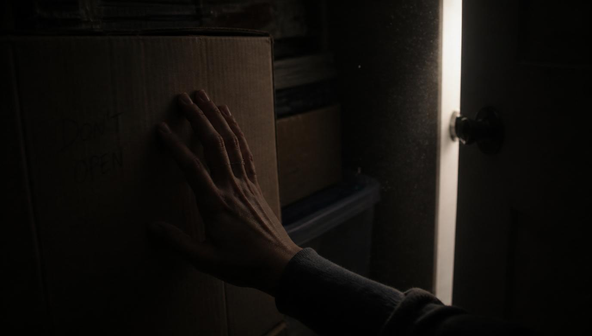
A Thursday in November. The heat in my apartment was behaving strangely and I was in the closet looking for an extra blanket.
My hands touched the box before I thought about it.
I stood there for a moment with one palm flat against its side.
Then I found the blanket. I left the box where it was. I told myself I would come back to it when I had time, which was the same thing I had been telling myself for two years, and which we both knew was not about time.
—
The Expansion Announcement
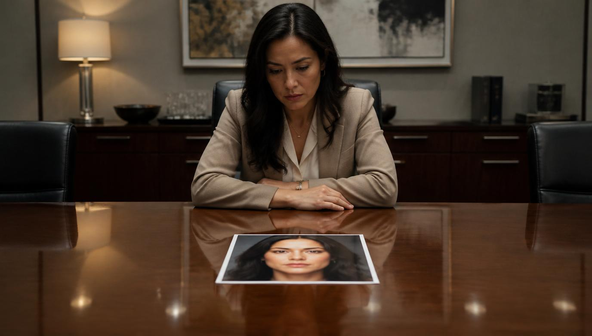
The company announced an internal search for a new leadership position in March, tied to a significant planned expansion.
I read the internal memo on a Tuesday morning and I sat with it for a moment before anyone could see my face.
Then I made myself calm.
I did not tell Marcus. I did not tell Celeste, though she would find out through the formal process. I had learned to want things quietly, a long time ago, and this was not the moment to change that.
—
What the Wanting Felt Like Now

This wanting was different from the wanting I had carried for a decade.
That wanting had always had a direction: toward my parents, toward the moment of being seen, toward the event that would finally make the case I had been building since I was eleven years old.
This wanting pointed somewhere else entirely.
I did not know yet what to call the direction it pointed in. I only knew that when I sat with the memo and felt the wanting rise in me, there was no face I was imagining when I imagined succeeding. That was new. That was the first new thing in a long time.
What the Process Required
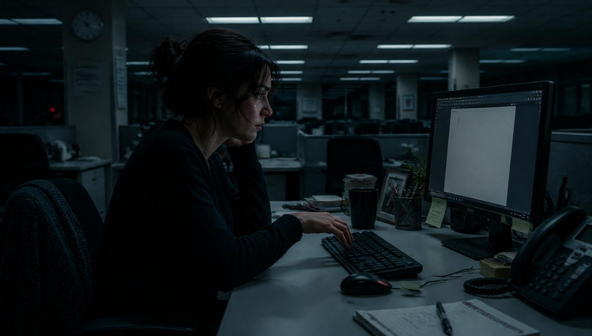
I submitted my application materials on a Wednesday evening after everyone had left.
The office was empty in the way offices get when the building’s ventilation system becomes audible.
I sat with the cursor blinking for a long time before I hit send.
Not because I doubted the application. Because submitting it quietly meant I was protecting something, and I was only beginning to understand what it was.
—
How Celeste Responded
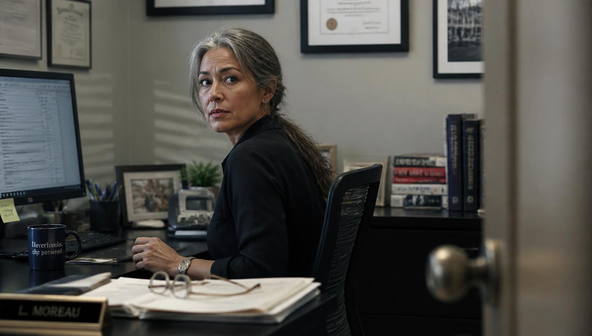
She called me into her office three days after the submission window closed.
She did not mention the application. She asked me about the Henderson account instead, and we worked through it for twenty minutes with the focused economy she brought to everything.
Then, as I was gathering my notes to leave, she said: I saw your name on the list.
She did not elaborate. She turned back to her screen. I understood that I had just been told something important without being told anything at all.
—
What Marcus Said About It
He found out the way Marcus found out most things, through observation rather than announcement.
He appeared in my doorway on a Tuesday with two cups of coffee and set one on my desk without being asked.
You submitted for the role, he said. It was not a question.
I looked at him. He looked back, unhurried, the way he always was. I told him yes. He nodded once, slowly, as if this confirmed something he had been thinking about for longer than I knew.
—
The Particular Weight of Waiting
The evaluation period lasted six weeks.
I worked through it the same way I worked through everything: thoroughly, without visible agitation, while internally maintaining a tension that I had learned to make invisible years before it became professionally necessary.
I did not talk about the role at home. I had no one to talk about it with, which was a fact I had grown accustomed to and which still, occasionally, arrived with unexpected weight.
—
November
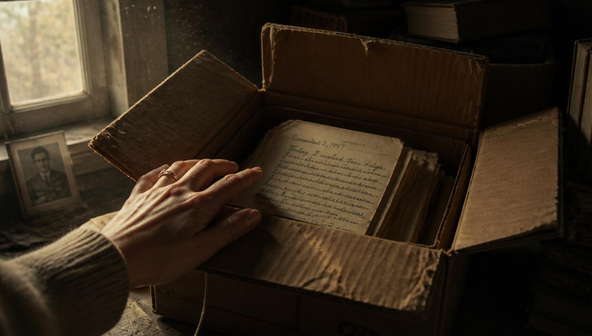
The box was still in the closet.
I was aware of this the way you are aware of an unread letter you cannot bring yourself to open because you already know it contains something that will require you to feel something.
One evening I moved it from the closet to my kitchen table. That was all. I did not open it. I made dinner and ate with the box at the edge of my vision, and then I moved it back.
—
What I Told Myself About That
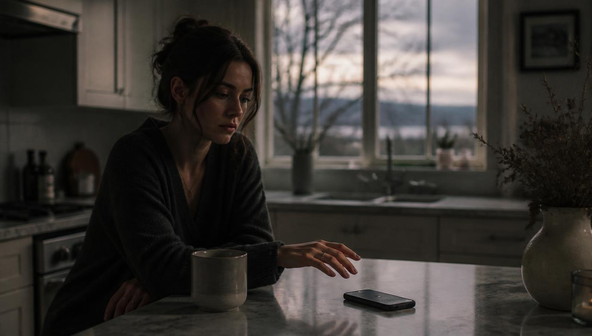
I told myself I was not ready.
This was partially true in the way half-truths are true, covering enough of the real surface that you can mistake it for the complete picture.
The fuller truth was that I had organized my present so carefully around forward movement that I was afraid of what looking backward would cost me.
The box represented a version of my family I had not yet fully assembled, and I was working very hard, in every other part of my life, on not needing them to be anything specific.
—
The Phone Call From My Aunt

My aunt Carol called on a Sunday afternoon in late November.
She was my mother’s younger sister and the relative I had stayed loosest contact with, which was to say she called occasionally and I answered when I was in a place where I could manage my voice.
Tyler’s second venture, she said, carefully, the way people say things they are testing the air with.
She let the sentence trail. I waited. She said it had not gone the way they’d hoped, and something in her tone had changed from the last time she had mentioned him, the confidence had shifted slightly, the way a load-bearing wall shifts before anyone admits it is shifting.
—
The Grammar Had Changed
This was the thing I noticed after I hung up.
The last time anyone had mentioned Tyler’s first failure, the sentences had all contained words like temporary and adjustment and next chapter.
Carol had not used those words this time.
She had used the word difficult. She had paused before the word difficult in a way that meant she had chosen it over a harder word.
I sat with this information and noticed that I did not feel what I expected to feel. I had expected something like satisfaction. What arrived instead was closer to a tired familiarity, the feeling of watching a structure behave exactly as its design had always promised it would.
—
What My Parents Were Not Saying
I knew, through the ambient noise of family, that my parents were still describing Tyler’s situation in the original language.
Potential. Timing. The right opportunity presenting itself.
I had spent enough years inside systems to know what that kind of language was for. It was not for describing reality. It was for maintaining a position while reality reorganized itself around you without your consent.
I did not call them. There was nothing to say yet, and I had learned, finally, that nothing is often the most honest response.
—
The Evaluation
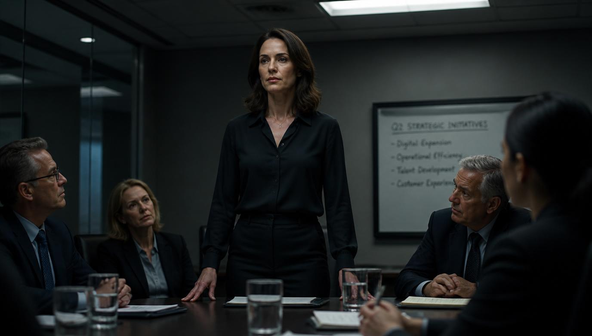
I was asked to present before a panel in the third week of the process.
I had prepared for two weeks. Not obsessively, which would have been visible. Thoroughly, which was invisible and more effective.
I stood in that conference room and I made the case for the role and for my particular way of understanding what the expansion would require, and I was aware, distantly, that I was not performing for anyone in the room.
This was the part that surprised me. I had spent years performing capability toward an audience that was never present. Standing in front of an audience that was actually present, I simply worked.
—
Celeste Afterward
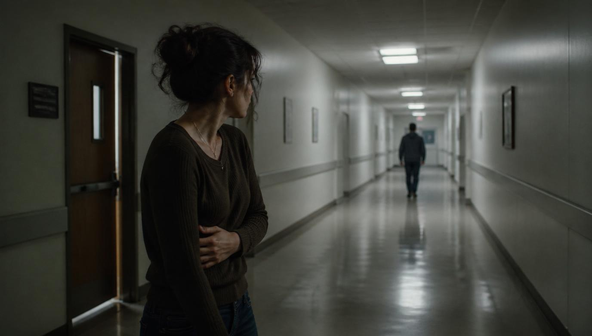
She stopped me in the hallway outside the conference room.
She said: That was yours.
I said I appreciated it. She shook her head slightly, as if I had misunderstood.
She said: I don’t mean it was a good presentation. I mean it was yours. You weren’t doing it for the room.
I looked at her. She held the look for a moment and then moved past me down the hallway, and I stood where she left me, trying to figure out why that observation had landed somewhere below my sternum.
—
December
The announcement came on a Thursday.
I was in the middle of a budget reconciliation when the email arrived, and I read it twice before I looked up from my screen.
Marcus appeared in my doorway seventeen minutes later. He said nothing. He raised his coffee cup.
I raised mine back. We held that for a moment. Then he nodded once and left, and I turned back to the budget, and I sat with the new information settling over me like something that had always been the right size.
—
The Unexpected Feeling
That evening I sat in my apartment with the official notification open on my laptop.
I had spent a decade building toward a feeling, something like vindication, something like the moment a case is finally admitted as evidence.
What arrived was quieter than that and more disorienting. The achievement was real. I had won something real. But the sensation I found when I looked for vindication was closer to stillness, and the stillness felt less like triumph and more like the first moment after a very long run when the ground holds you and you realize you have been bracing for it not to.
—
What I Did Not Do
I did not call my parents.
I noticed the impulse rise and I let it pass the way you let something pass when you have finally understood what it is asking of you.
I had built this thing without their knowledge and without their witness, and it had become real anyway.
I sat with that fact until the apartment grew dark around me, and then I turned on a lamp, and I opened the laptop again, and I started reading the expansion documents.
—
The Box
Three days after the announcement, on a Sunday morning when the light in my kitchen was flat and grey and honest, I moved the box from the closet to the table.
I made coffee. I sat down.
I opened it.
The First Layer
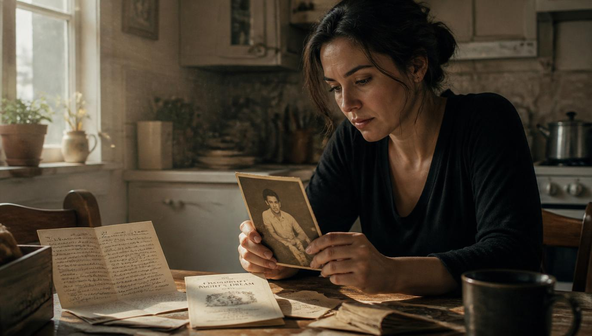
The top of the box held things that were ordinary. A birthday card in my grandfather’s handwriting. A folded program from a church event. A photograph of him I had not seen before, standing in a garden, squinting into the sun.
I set each thing down carefully on the kitchen table.
The photograph stopped me. He looked younger in it than I remembered him, more unguarded, like someone who had not yet learned to hold himself still for the camera.
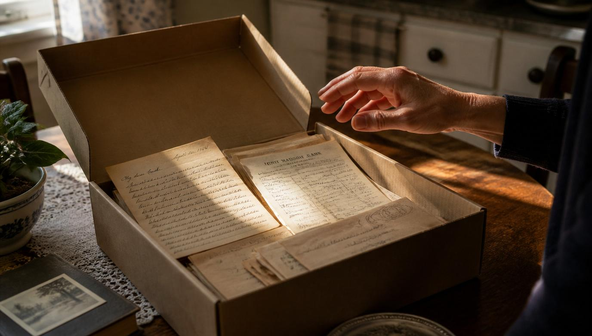
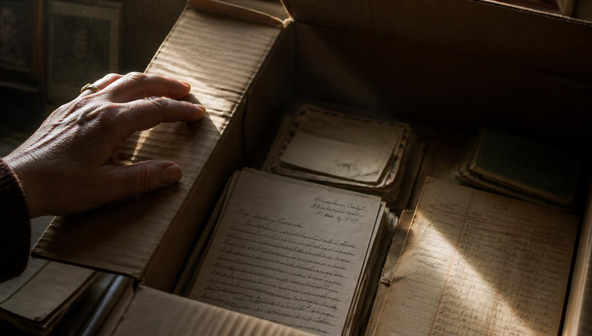
—
What Was Underneath
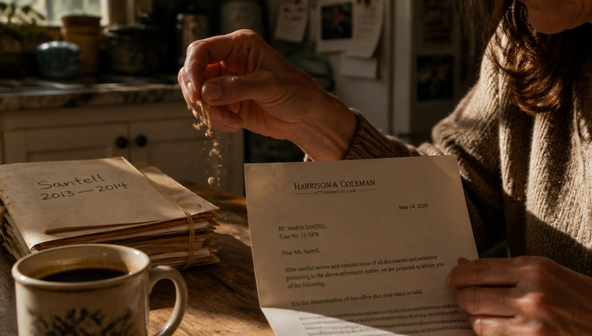
Below the personal items, the tone of the contents shifted.
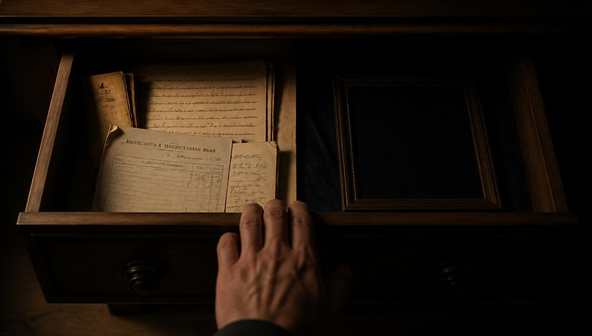
Envelopes. Printed pages. A manila folder with a rubber band around it, dried out enough that it snapped when I removed it.
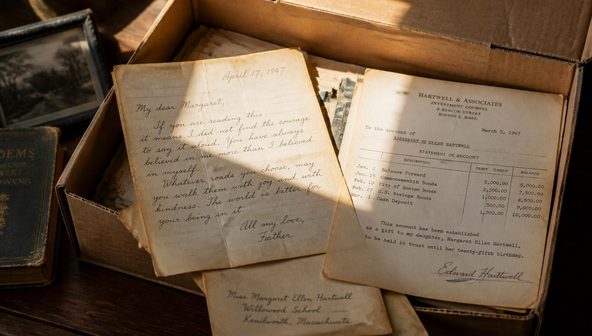
I recognized the letterhead on the first document before I understood what I was reading. A law office. The date in the upper right corner was eleven years ago.
I set my coffee down.
—
The Written Designation
The letter was not formal in the legal sense. It was a personal document, something my grandfather had written and had a notary witness.
It named me. Ava Holloway. It named a purpose: educational support.
It named a specific sum and referenced an account. The handwriting was his, careful and unhurried, the penmanship of a man who meant what he wrote and did not write things he did not mean.
—
The Account Records
The manila folder contained printouts. Account statements. Transaction histories.
My hands were very steady. I have always noticed this about myself, that my body performs calm when my mind is doing something else entirely.
The account had been active. And then, in a single transaction window spanning three months, it had been liquidated. The funds had moved. There was a forwarding record, partial, but enough to follow.
—
The Semester I Remembered
The transfer happened in the fall of my third year.
I knew that semester without needing to check a calendar. I knew it the way you know a scar, by the specific texture of it, by the way it sits differently from surrounding tissue.
That was the semester I had called my father from a payphone outside the financial aid office. The conversation had lasted four minutes. He had said they simply did not have the resources. I had believed him.
—
The Particular Quality of This Kind of Discovery
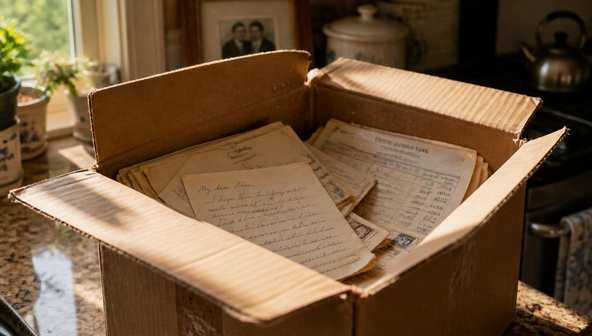
It was not like finding out something new. It was like finding out that something I had already survived had been larger than I knew.
The loans I took. The second job I added in January. The weeks I ate meals that were mostly calculation rather than food.
All of that had existed alongside a sum of money with my name on it, moving in a different direction, and no one had said anything at all.
—
What My Hands Did
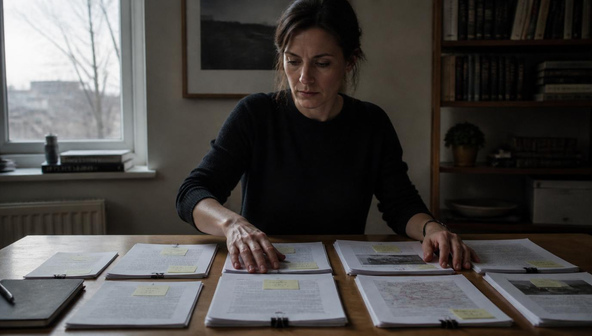
I stacked the documents in a careful order. Oldest to most recent. Primary to supporting.
I was aware that I was organizing them the way I organized work materials, with a precision that was keeping something else at a manageable distance.
I stood up. I walked to the window. The street outside was quiet and grey and entirely indifferent. I stood there for a long time before I returned to the table.
—
The Name That Was Not Mine
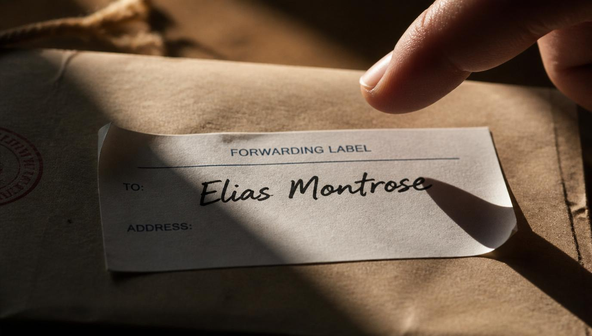
Buried in the forwarding records was a name. Not mine.
I had known, somewhere in the space between reading and understanding, that this was where the documents were going to arrive. But knowing a thing abstractly and finding it written in ink are not the same experience.
Tyler’s name in that context was not a surprise. It was something worse than a surprise. It was a confirmation.
—
What Confirmation Costs
There is a specific kind of grief that comes from being proven right about something you desperately wanted to be wrong about.
I had never let myself fully form the thought. I had lived for years inside the possibility that my family’s choices were complicated rather than deliberate.
The document closed that possibility. Not violently. Quietly. The way a door closes in a house where everyone is already asleep.
—
The Impulse I Recognized
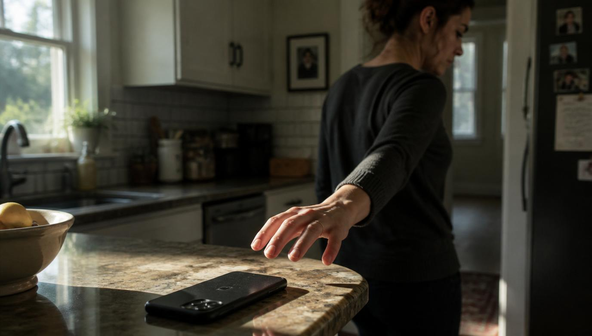
My phone was on the counter. I looked at it.
The impulse was there and I named it clearly: call your mother. Say you are looking at a document with your name on it. Say you know.
I let the impulse rise and I watched it without moving. I had learned, at some cost, that the action driven by the sharpest feeling is rarely the action that serves you.
I left the phone on the counter. I sat back down.
—
An Hour Later

I read everything twice. A second time slowly, the way you re-read when you are hoping the sentences will become different sentences.
They did not become different sentences.
I closed the manila folder. I held my coffee cup with both hands even though it had gone cold. Outside, someone was walking a dog and speaking on a phone, their voice passing and fading, ordinary and unhurried, belonging to a morning that had no idea what was happening at my kitchen table.
—
What I Understood About My Grandfather
He had tried. That was the thing that arrived last and hit the lowest.
He had looked at me clearly enough to see what I needed. He had written it down. He had gone through the appropriate channels in the only way available to him.
And then he had died, and the people left in charge of what he intended had made a different choice, and I had spent three years working two jobs believing that no one had thought to help me.
—
The Shape of It
I did not cry. I want to be honest about that.
I felt something move through me that was heavy and slow and not exactly anger, though anger was part of it. It was more like the sensation of a long-held posture finally releasing, the ache that comes after.
I had been the lesser child. I had believed this was my condition. I had spent a decade trying to disprove it. I was only now beginning to understand it had never been a diagnosis. It had been a choice someone else made.
—
What I Did With the Documents
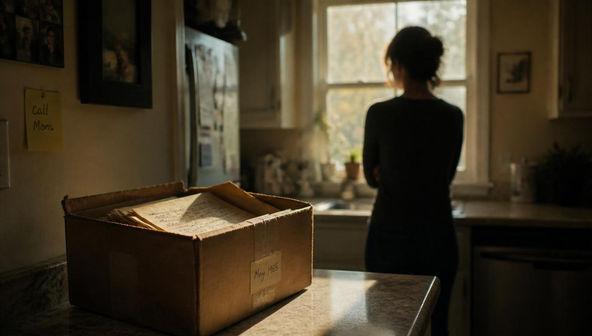
I put them back in the folder. I put the folder in the box. I put the box on my kitchen counter where I could see it.
I was not ready to decide what to do with what I knew. I understood this clearly. The decision required something I had not yet located in myself.
But I was done letting it sit in the closet. Whatever this was, it was going to stay where I could look at it.
—
The Rest of Sunday
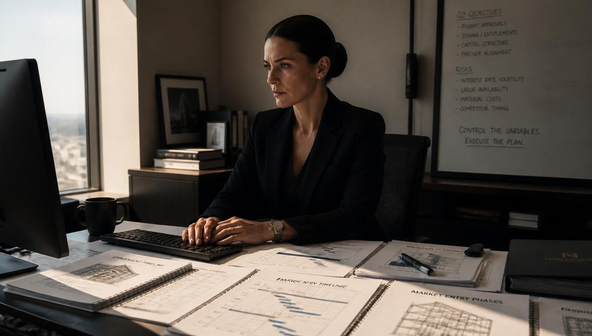
I worked for the remainder of the afternoon. Expansion documents, implementation timelines, the kind of detailed structural work that required my full attention and left no room for anything else.
Marcus had texted around noon to ask if I wanted to grab lunch.
I looked at the message for a moment. I typed back: next week. He sent a single thumbs up and nothing else, which was exactly the right response, and which was why Marcus was the person I trusted most in a building full of people I respected.
The Week That Followed
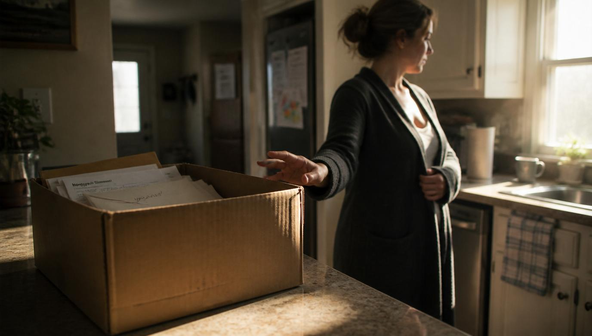
I went to work on Monday the way I always went to work. On time, prepared, carrying nothing visible.
The box stayed on my kitchen counter. I passed it every morning. I had decided, without fully deciding, that moving it would mean something I was not ready for it to mean.
Marcus noticed something. He did not say what. He simply watched me across a conference table with that particular stillness of his and waited.
—
The Announcement
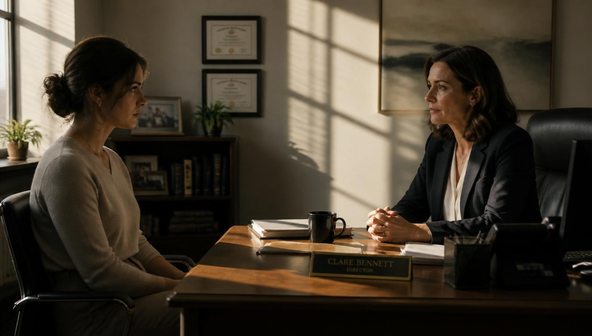
The internal confirmation of my role came on a Wednesday. Celeste delivered it in her office, door closed, in the precise way she delivered everything: directly, without performance.
She said the formal announcement would follow in ten days. Industry press had already been briefed. There would be a company event.
I thanked her. She held my gaze for a moment longer than the professional context required. Whatever she saw, she filed away without comment.
—
The Event Display
The company had produced a printed display for the launch. My photograph. My name. The new title beneath it in clean sans-serif letters.
I stood in front of it before the room filled.
It was a strange experience, seeing yourself rendered that way. Flat and certain. The version of me in the photograph looked like someone who had always known she would end up here.
—
What I Thought About
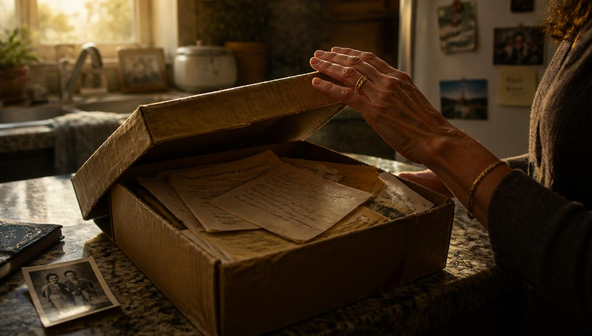
I thought about the photograph on my grandfather’s table. The one from the garden, him squinting into the sun.
He had tried to give me something. He had put my name on a piece of paper and meant it.
I thought about the semester I spent calculating meals. I thought about my father’s voice on the phone saying simply that they did not have the resources.
—
The Decision That Arrived

I did not plan it. That is the most honest account I can give.
I was standing in front of the display, holding a glass of water, and the decision was simply there, already formed, the way some decisions are.
I was going to send my parents a copy of this photograph. I was going to put it in a frame and mail it to the house where I grew up and I was going to write something on the back.
—
What I Understood About What I Was Doing
I was not confused about my own motives. I have always found self-deception harder than most people seem to.
I knew I was sending them something sharp. I knew the sharpness was intentional.
What I did not fully account for, what I would not understand until later, was that the act of sending it meant I was still addressing myself to them. That the envelope required a recipient. That I had not yet stopped writing letters to people who could not read them.
—
The Back of the Photograph
I wrote the message at my kitchen table, the box of documents two feet away.
I did not write many words. I did not need many. The photograph itself did most of the work.
What I wrote was controlled and specific and it arrived, when I read it back, like a door closing calmly on a room that had been filling with water for a very long time.
—
Mailing It
The post office was unremarkable. The clerk did not know what he was handling. I paid for tracking and walked back to my car.
I sat in the parking lot for a moment.
I had spent years making myself undeniable. I had done it. And now I had mailed the evidence to two people in a house on a street I had not visited in years, and I felt something I had not expected, which was not relief but a kind of fatigue I had been carrying so long I had mistaken it for my own weight.
—
What Was Happening in That House
I did not know the full extent of it yet. I knew fragments.
Tyler’s second venture had not recovered from the first. That much had reached me through a cousin who still sent occasional messages.
What I did not know was the extent of my parents’ involvement. The money flowing quietly out of their accounts. The conversations that had reorganized their entire household around managing a situation they had not yet named publicly as a crisis.
—
The Morning the Tracking Updated
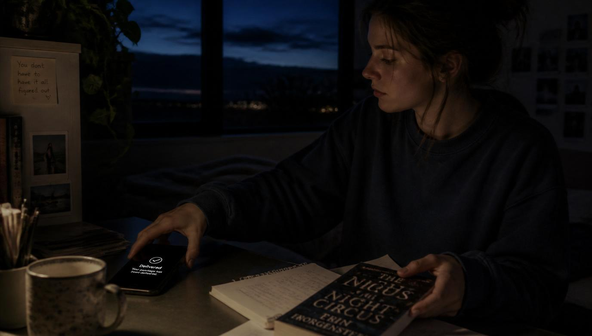
Four days after mailing it. I was at my desk, early, before the building filled.
My phone showed the package as delivered.
I set the phone face-down and opened my laptop. I had an implementation report to review. I reviewed it. I was good at this, at putting one thing in a specific container and moving to the container that was required next.
—
The First Call
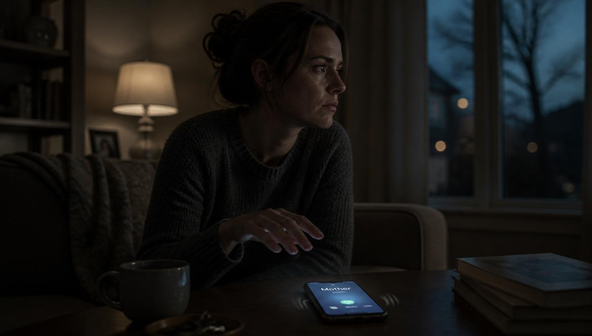
It came at 7:14 in the evening.
I was eating dinner. My phone lit up with my mother’s name and I looked at it with the particular steadiness I had been practicing for years without knowing I was practicing it.
I did not answer.
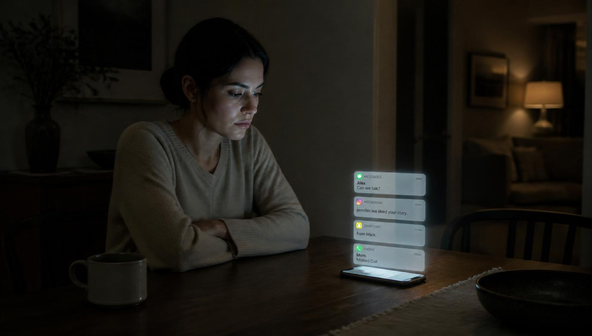
It rang through to voicemail. Then it rang again before the notification had finished appearing.
—
Watching the Count
I want to describe this accurately, because it is easy to describe it wrong.
It was not triumphant. It was not satisfying in the clean way I think I had imagined it might be, when I had let myself imagine it at all.
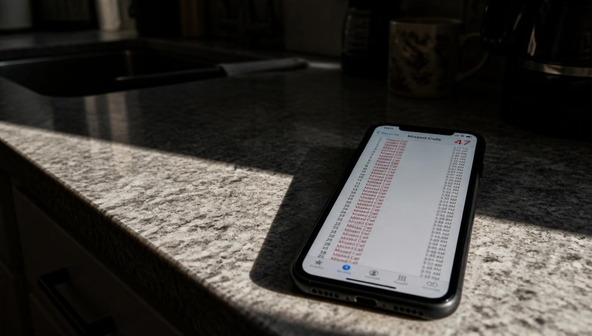
It was something more like watching weather. The calls arriving and arriving, the number on my screen climbing, and me sitting at my kitchen table with a half-eaten plate of food and understanding, with increasing clarity, that this was not a reckoning. This was my mother trying to get control of something.
—
Forty-Seven
The count reached forty-seven over the course of one hour. Then it stopped.
The silence after was different from the silence before. It had a texture. It pressed slightly.
I looked at the notification screen for a long time. Then I turned the phone over so the screen faced down, and I finished my dinner, and I did not feel what I had spent a decade working toward feeling.
—
What Was Actually In Those Calls
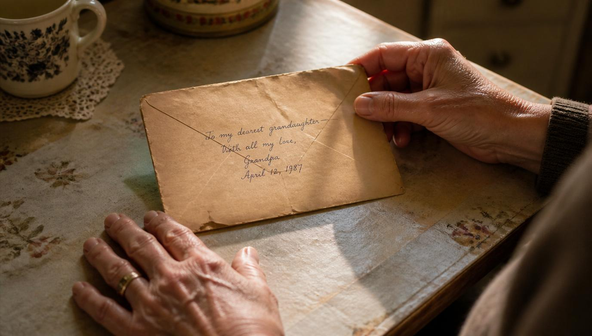
I did not listen to the voicemails that night. Or the next day.
I knew they were there. Forty-seven attempts and somewhere inside them, the range of my mother’s register: sharp then wounded then something briefly, dangerously close to real and then managed again.
I was not ready to hear which version was largest. I was not ready to confirm what I already suspected, which was that the window of something genuine would be narrow and surrounded on both sides by the familiar effort of controlling the story.
—
What Celeste Said
She stopped by my office the following afternoon.
She did not ask what was happening. She said: you seem like you’re carrying something that doesn’t fit in the usual containers.
I looked at her for a moment.
I said: I sent my parents a photograph of the announcement display. She was quiet. She said: how did that go. I said: forty-seven calls in an hour. She nodded, slowly, as if this answered something she had not asked aloud, and then she left my doorway and I sat with the shape of what I had just told another person for the first time.
What the Days After Looked Like
The calls did not stop entirely. They became less frantic, more deliberate. My mother called once in the morning and once in the evening, as if she had decided that frequency had failed her and strategy might work better.
I watched the notifications arrive and disappear. I did not answer.
My father called twice. Those were harder to ignore, and I was not yet sure why.
—
The Letter
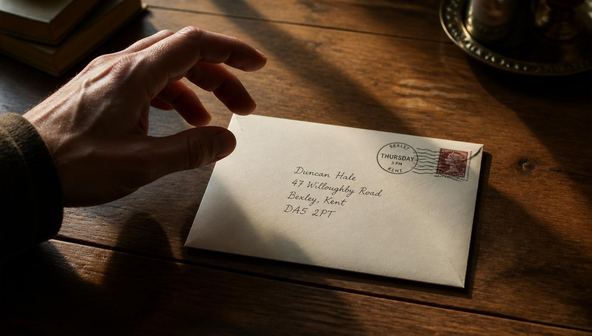
It arrived Thursday. My father’s handwriting on the envelope, which was unusual. He had not written me a letter in my adult life.
I held it for a while before opening it.
It was not long. Three paragraphs. The first was careful. The second was something adjacent to an explanation. The third was a sentence I read four times and still could not locate clearly as either apology or justification.
—
What the Letter Actually Said
He said they had been proud of me. He said he hoped I knew that. He said things had been complicated and that he was sorry I felt the way I felt.
I set it on the counter beside the box of documents.
They sat together like two versions of the same argument. One in his handwriting, recent and deliberate. One in my grandfather’s handwriting, years old and never meant to be hidden.
—
Relative Intermediaries
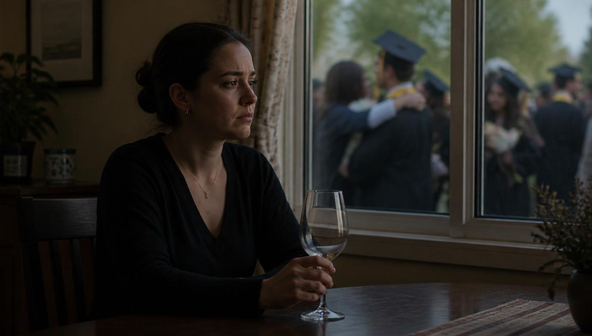
My cousin Dana sent a message. She was one of the few I had stayed loosely in contact with, and she had always moved carefully through family situations the way you move through a room with unstable furniture.
She said she was not calling on anyone’s behalf. She said she just wanted me to know she had seen the announcement and was proud of me.
Then she said, almost as an afterthought: your mom is really struggling, Ava. She said it the way people say things they know are incomplete.
—
What Dana’s Message Did
I did not feel softened by it. I want to record that accurately, because I examined the feeling carefully and softened is not the right word.
What I felt was tired. A specific kind of tired that comes from recognizing a pattern.
The pattern was this: someone close to my mother would carry a smaller, more sympathetic version of her distress to me, and I would absorb it, and eventually that absorption would be mistaken for forgiveness.
—
Celeste’s Questions
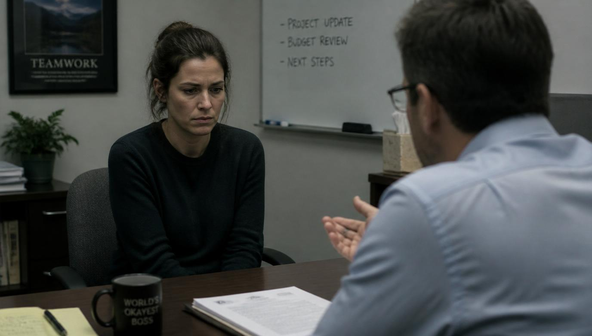
She called me into her office three days after I had told her about the forty-seven calls. She closed the door. She sat across from me without any particular ceremony.
She asked: what do you actually want to happen now?
I opened my mouth and found that the answer I had carried for a decade, the one about recognition and acknowledgment, had gone quiet. I did not know what was behind it.
—
The Question I Could Not Answer
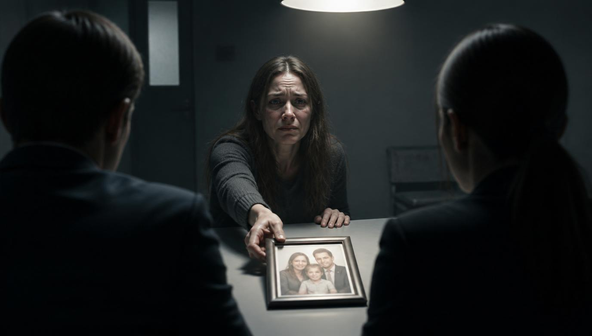
She did not push. She let the silence hold its shape.
She asked a second question, quieter: is the silence you’re keeping the same thing as being free?
I looked at the window behind her. The sky was flat and grey and completely unhelpful.
I told her I did not know yet. She nodded as if this was the most honest answer she had heard in a long time.
—
What Marcus Told Me
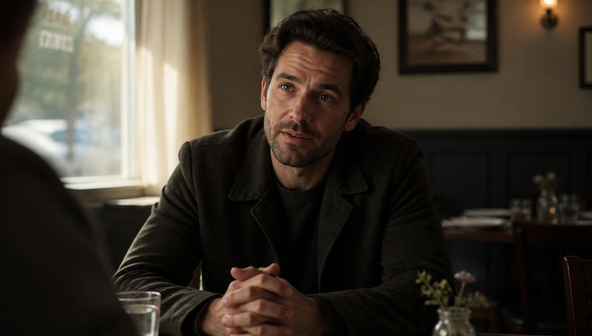
He asked me to lunch on a Friday, which was unusual enough that I agreed without thinking about it. He waited until we had ordered to say what he had come to say.
He told me he had met Tyler once. Years ago, through a professional connection that had since dissolved.
He said he had heard things, recently, from that same direction. He told me he was not saying it to hand me a weapon. He asked if I wanted to hear it.
—
What He Said About Tyler
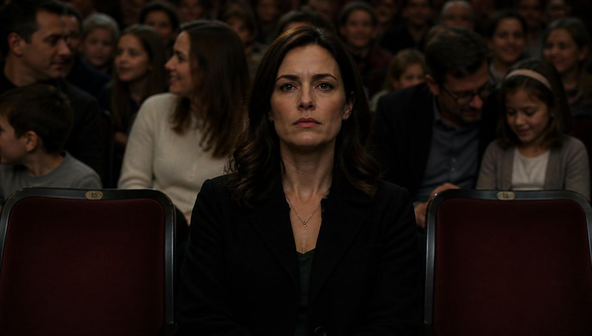
Tyler was not managing well. The second venture had not simply stalled. It had left real damage: financial, reputational, the kind that takes years to absorb.
Our parents had been covering significant amounts quietly.
Marcus watched me receive this information. I was aware of my own face, how still it was. I was trying to locate what I felt and what I found, underneath the place where satisfaction should have been, was something slower and heavier.
—
The Feeling That Was Not Vindication
I had imagined, in the abstract, that learning Tyler had struggled would feel like balance being restored. Some equilibrium finally arriving.
What I actually felt was a dull, aching sadness I did not know what to do with.
He had been handed a role he could not sustain and celebrated for it before he could develop any real foundation beneath it. That was not his victory. It was also not nothing. It was its own kind of damage wearing a different face.
—
Returning to the Box
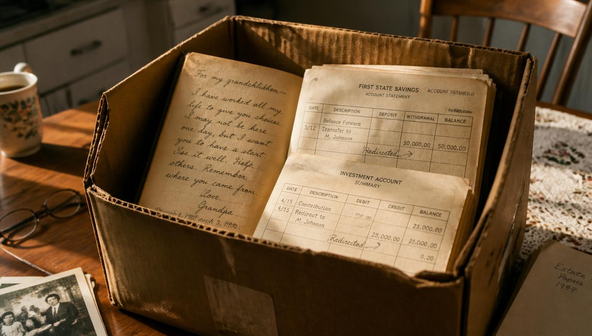
I opened it fully that weekend. Every document. I laid them on the table in the order they told their story.
My grandfather’s handwriting. The attorney’s letterhead. The account numbers and the dates and the redirected figures.
And underneath all of it, the date of the transfer. Which landed in the same semester as my father’s phone call, his carefully worded explanation about resources, his sympathy, his closed door.
—
The Attorney
I called one on a Monday morning. I had found her through a colleague’s referral and I had not told anyone I was doing it.
She reviewed what I sent her. She called me back within two days.
She said: what was done was not legally actionable. The designation was personal, not formal. The people with authority over the accounts made a choice.
She said: what you have here is a very clear record of what your grandfather intended, and a very clear record of what happened to that intention.
—
What I Did With That Information
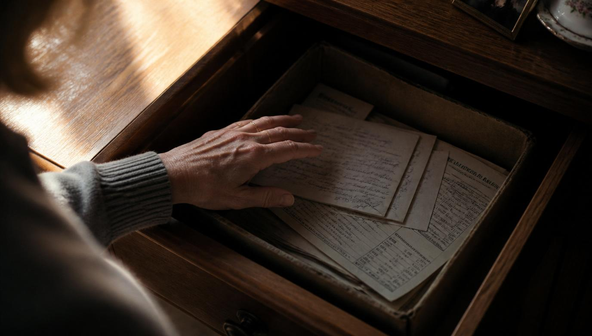
I placed the documents back in the box. I carried the box to the small desk in my second bedroom and I put it in the bottom drawer.
I sat on the edge of the bed for a while.
I thought about the word choice. That it had been a choice. Not negligence, not a misunderstanding. A specific decision made by specific people while I was working two jobs and calculating what I could afford to eat.
The drawer closed. I did not slam it.
—
Calling My Father
I called him on a Tuesday evening. Not my mother. I had thought carefully about why and the answer was simple: he was more likely to tell me something partially true than to spend the call managing what I was allowed to know.
He answered on the second ring.
I told him I had read his letter. I told him I had also read the documents from my grandfather’s box. I said I was not calling to fight. I said I needed him to know that I knew, and that I was not asking for an explanation I could believe.
—
What He Said
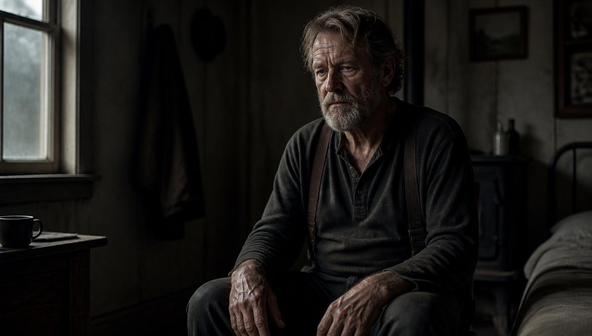
There was a long silence. The kind that has texture.
He did not deny it. He did not confess cleanly either. He said something about it being complicated, about Tyler’s situation at the time, about decisions made quickly. His voice was careful and tired.
He said: I know that doesn’t help you.
I said: no. It doesn’t. I thanked him. I ended the call. I set the phone face-down on the counter and stood in my kitchen in the silence of a conversation that had finally said the true thing, even if only barely, even if only once.
What Remained After the Call
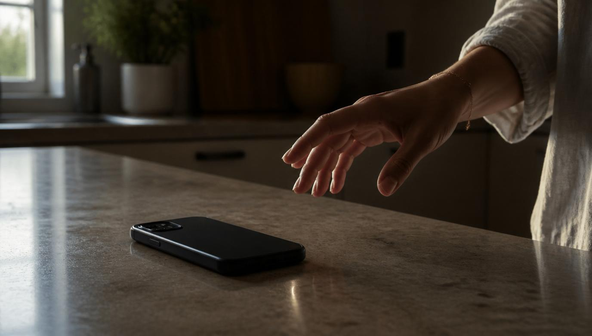
I stood in my kitchen for a long time. The phone was face-down on the counter, dark and silent.
My father’s voice was still in my ears, careful and tired, saying words that were shaped like honesty without quite being it.
I had expected to feel something sharp after hanging up. Instead I felt the particular stillness of a thing that has been waiting years to be said and has finally been said, and now must simply be absorbed.
—
The Voicemails
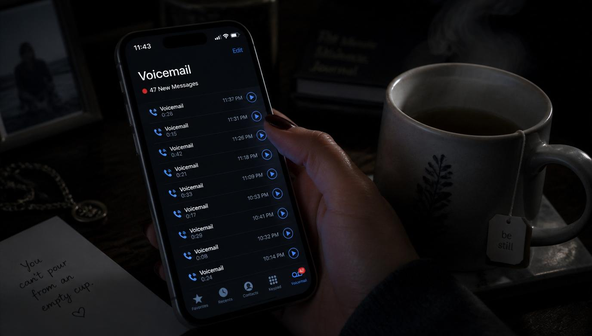
I listened to them that night. All forty-seven. I made tea first, which was probably a form of preparation.
My mother’s voice moved through ranges I had rarely heard from her: urgent, then indignant, then briefly something that cracked open slightly, then composed again, then managed.
The cracked-open moment came somewhere around call nineteen. Her voice did something unguarded for about twelve seconds. Then she pulled it back. She found the narrative again and climbed back inside it, and the next message was already reconstructed.
—
What I Heard Across All of Them
I heard a woman trying to regain control of something. Not her daughter. The story.
The story about the family that had worked out, about the choices that had been reasonable, about what she had and had not given.
The twelve seconds of something real were real. I am not going to pretend otherwise. But twelve seconds inside forty-seven calls is a very specific ratio, and I sat with that ratio until I understood what it told me.
—
What It Told Me
It told me this was not a reckoning. It was a management attempt.
If it had been a reckoning, she would have called once and said something true. Forty-seven calls is not grief. Forty-seven calls is pressure.
I closed the phone and thought about Celeste’s question, the one about whether the silence I was keeping was the same thing as being free. I was beginning to understand that the answer was not yet, but it was also not never.
—
Dana Again
She sent another message two days later. She said she was not relaying anything from my mother. She said she meant it this time.
She asked if I wanted to have coffee sometime, just the two of us, nothing attached to it.
I read it three times. I had spent so many years sorting people by proximity to the family architecture that I had never quite placed Dana in a category of her own. I wrote back and said yes. I said next week if she was free.
—
What Marcus Said on Wednesday
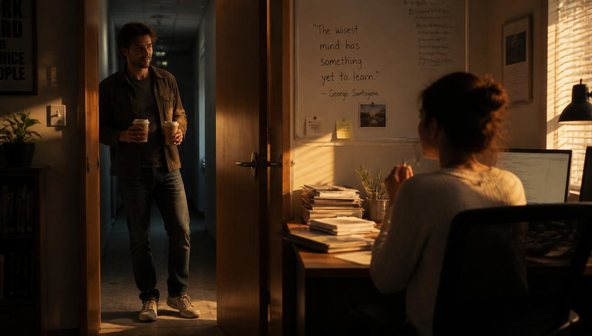
He stopped by my office door with coffee, which was his way of announcing he had something to say and was deciding whether to say it.
I told him to come in. He sat down. He said: you seem different this week.
I asked him different how. He said less like someone with a destination they need to reach before something catches them. I did not answer him. But I wrote it down after he left, which meant something.
—
The Thing About Tyler’s Message
It arrived through Dana, indirectly. Tyler had apparently asked her if she thought Ava would want to hear from him.
It was not an apology. It was an acknowledgment, sideways and clumsy, that he knew something about the shape of what had happened, even if he had not named it.
I read it once and set it down. He was not a villain in the story I was finished telling myself. He was someone handed a role built on another person’s costs, celebrated before he had foundations, and now quietly drowning under the weight of who everyone had decided he was.
—
Why I Did Not Respond
Not because I was punishing him. Because I genuinely could not locate a version of that conversation that ended somewhere honest.
There was no clean place to arrive at. Only two people sorting through inherited damage and trying not to assign it incorrectly.
Maybe eventually. Not now. I had learned, slowly and at some expense, to stop having conversations I could not yet afford.
—
Celeste Again
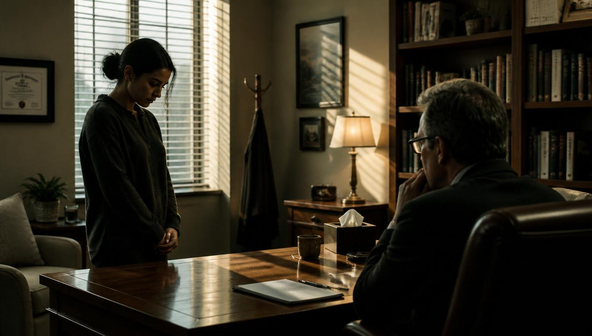
She asked me once more, at the end of a long Wednesday: have you figured out what you want from your mother?
I said: I think I wanted her to say that I was worth showing up for. That she knew, and that it mattered that she hadn’t.
Celeste was quiet. Then she said: and if she never says it?
I looked at the surface of her desk for a moment. I said: then I’ll have to finish building that knowledge somewhere else.
—
Grandpa Walter
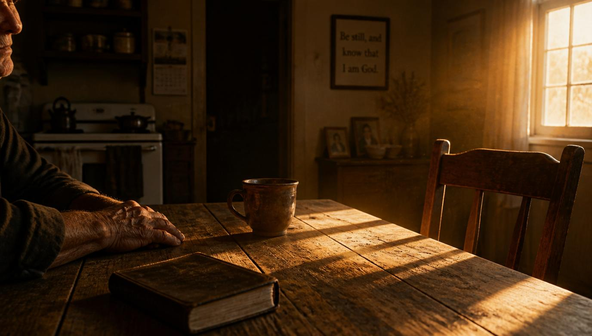
I thought about him that Thursday evening, walking home when the air had finally gone cool.
Not the general warmth of remembering him. Something specific: the afternoon he sat across from me at the kitchen table when I was sixteen and struggling in a way I could not name, and he said: the people who underestimate you are giving you something they don’t know they’re giving.
I had dismissed it then as the kind of thing old men said. I understood now that he had not been offering comfort. He had been telling me something structural and true.
—
What He Actually Meant
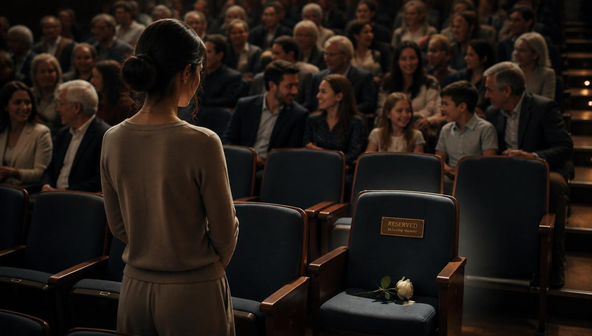
He meant that low expectations clear the room. They remove the performance. They leave only what you actually build.
Everything I had constructed in these three years, I had constructed without an audience in mind, because the audience I had been building for had stopped watching.
Walter had understood something about that dynamic that I was only now catching up to. He had tried to give me money and a head start, and when that was taken, he had also already given me the more durable thing, the one no one could redirect into someone else’s account.
—
The Second Photograph
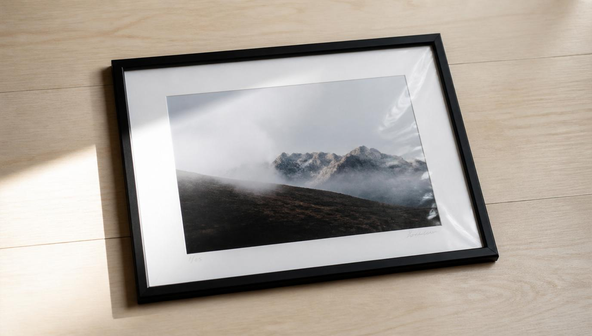
I took it down from the closet shelf on a Saturday morning. I had been stepping around the decision for weeks.
It was identical to the one I had mailed. Same image, same frame. No message on the back. Just the photograph, clean and unmarked, still in its protective sleeve from the company’s production run.
I held it for a while, thinking about what it had meant when I sent the first copy. What I had wanted it to do. Whether it had done that thing, or whether it had done something entirely different that turned out to matter more.
—
Hanging It
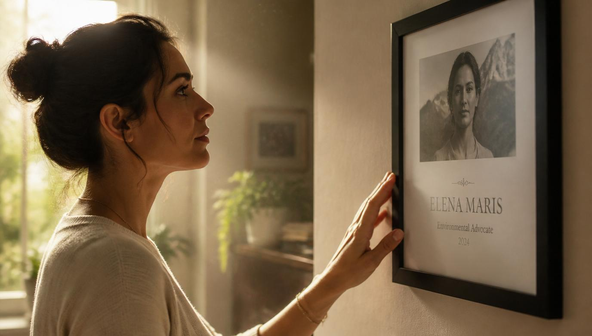
I put it on the wall in my living room, not centered but slightly off to the left, because that was where the light hit best in the mornings.
It looked like what it was: a record of something real. My name attached to work I had actually done.
It did not look like a monument to anything. It did not look like a message. Standing back from it, I realized that was the change. The first time I had thought of this image, it was addressed to someone. Now it was simply mine.
—
What My Kitchen Looked Like That Evening

The phone was on the counter, face-up for once. The drawer with the box inside it was closed.
The photograph was on the wall in the next room. Outside, the city made its usual sounds.
My mother had not called in four days. I had not called her. I did not know yet if I would, or when, or what I would say if I did. I had decided that not knowing was acceptable. That I could hold the question open without it hollowing me out. That was new.
—
What Reclamation Actually Looks Like
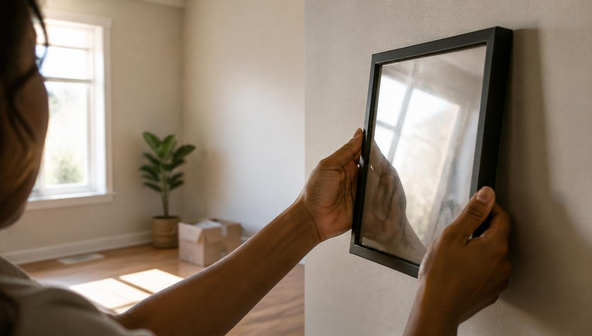
Not a clean ending. Not a confrontation that lands squarely and produces the words you needed.
It looks like a Tuesday evening when you realize you have not measured yourself against their silence in several days, and the absence of that measuring is not emptiness. It is space.
I was thirty-one years old. I had put myself through school on loans and night shifts and a stubbornness I had mistaken for ambition. I had built something real, and the building of it was mine in a way nothing had ever been mine before, because no one had helped, and no one had watched, and I had done it anyway, inside the gift my grandfather knew he was giving me even when he called it something else.


