
The Story Starts Below!
The Watch Says Ten-Thirty
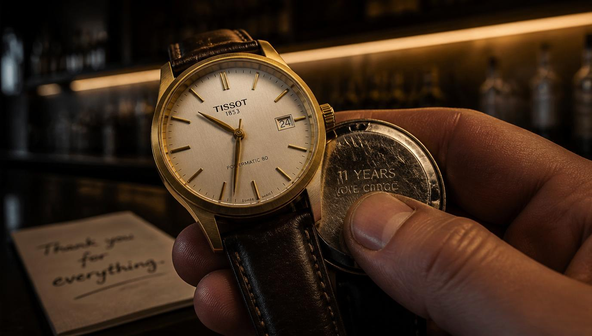
I checked my watch the way I always do — not because I needed to know the time, but because checking it gave me permission to leave.
Ten-thirty-two. The brushed gold face caught the recessed lighting above the bar, and I pressed my thumb against the familiar scratch on the case back.
Eleven years at Caldwell. Eleven annual parties on the twenty-second floor.
I had stopped pretending to enjoy them around year four.
What the Room Looked Like Without Me In It

The event space was doing what it always did by this hour — loosening. Ties pulled down, voices louder, the bar line shorter because most people had already committed to a drink in hand.
I stood near the east wall of windows, watching the city grid below with the detached appreciation of someone who had already mentally left.
My division had the best numbers in the building.
I held my near-empty glass and thought about that with a quiet, private satisfaction I allowed myself only in rooms where no one was watching.
Diane’s Message, Earlier That Afternoon

She had sent it at 4:47 PM, while I was finishing a client brief. *Q1 review looking promising for you. Let’s talk Thursday.*
I had read it three times. Not from doubt, but from the specific pleasure of confirmation arriving in written form.
Diane Reyes had been my advocate for two years. She was careful with language.
*Promising* from Diane meant something was already decided.
The Geometry of Leaving

The elevator bank was on the south side of the floor, past the bathroom corridor. I had taken that route every year because it avoided the main cluster near the bar where people lingered too long and said things they would regret by Monday.
I retrieved my coat from the rack near the south hallway entrance.
The party noise dropped as I moved into the corridor.
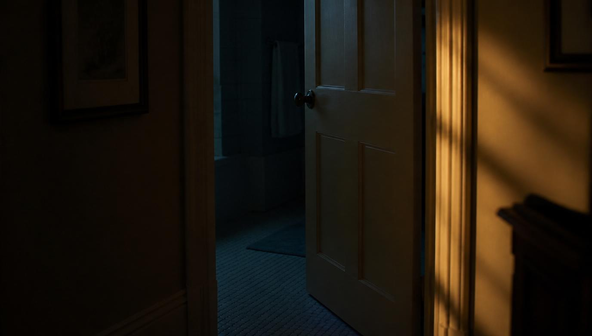
The overhead fixture cast its narrow pool of light, and the bathroom doors stood heavy and dark on my right, and I was already thinking about my car, about the drive home, about Thursday.
Something Wrong in a Specific Way

I heard the sound when I was four steps from the elevator button.
It was not loud. It was not distinct enough to name immediately. It was the kind of sound that registers in the body before the mind catches up — a quality of wrongness rather than a content of wrongness.
I stopped.
Not because I was suspicious. Because my instinct, which I have always trusted more than I have admitted, told me to.
The Door and the Man Who Came Through It

Marcus Hale came out of the men’s bathroom forty seconds after I stopped.
He came out straightening his jacket with both hands, a single brisk downward pull, the way a man straightens himself when he is recalibrating his public surface.
The gold cufflinks caught the corridor light.
He did not see me. He turned toward the event space with the unhurried ease of someone who owned every room he had ever entered, and his silver hair was perfect, and the back of his suit was perfect, and he was gone around the corner before I had fully processed what I was looking at.
The Two Minutes I Stood Still
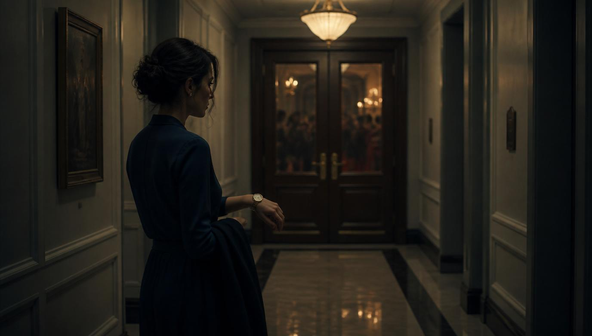
I did not move.
I am not someone who freezes. In eleven years of client crises and budget emergencies and the ordinary daily friction of managing fourteen people, I have never been the person who freezes.
I stood still for two minutes because I was doing math I did not yet want to finish.
The corridor was quiet. The party noise was distant and formless. My coat was over my arm and my watch read ten-thirty-four.
The Second Door
Ashley Monroe came out of the women’s bathroom at ten-thirty-six.
I knew her by face and name — twenty-eight, Client Relationships, fourteen months at the company. We had never had a direct conversation. She was too junior for our paths to cross in any meaningful way.
She straightened her blouse. She checked her phone.
Her gold pendant necklace caught the light the same way Hale’s cufflinks had, for just a second, and then she walked in the opposite direction from him without looking back.
What I Told Myself in the Elevator

I told myself I did not know anything.
The elevator doors closed and the city disappeared and I studied the brushed steel walls and I told myself that two people exiting bathrooms in sequence was not evidence of anything, that the sound I heard was ambiguous, that I was a forty-one-year-old woman who was tired and ready to go home.
I was not lying to myself exactly.
I was choosing the version of not-knowing that required the least from me.
The Drive

I took the 101 because the 101 at ten-forty is faster than the surface streets and because I needed the specific blankness of highway driving — the requirement to watch only what is directly ahead.
I did not turn on the radio.
I ran the sequence twice in my mind and then I stopped running it, deliberately, the way you stop pressing a bruise once you have confirmed it is there.
It was not my business. I did not actually know anything.
The House at Eleven-Fifteen
My house was quiet in the way that houses are quiet when they have been quiet for a long time and have stopped waiting for anything different.
I hung my coat. I set my bag on the kitchen counter. I filled a glass of water and stood at the window above the sink looking at the dark backyard.
My son would call Sunday. My watch read eleven-eighteen.
Diane’s message was still open on my phone: *Q1 review looking promising for you.*
The Belief I Went to Sleep With

I believed, when I turned off the light, that I had done the right thing by doing nothing.
I had worked eleven years at Caldwell. I had grown my division by sixty-two percent. I had fourteen people who trusted my judgment and clients who renewed contracts and a CFO who sent careful, warm messages about things that were already decided.
The system had always worked for me.
I believed, in the dark, that it would continue to.
What Load-Bearing Means
There is a structural engineering term my father used when I was small — load-bearing. A wall that cannot be removed because the whole house depends on it.
I had one belief at the center of everything I had built: that Caldwell ran on merit, that the promotions and recognition I had received were real measurements of real work.
I did not know, lying in the dark on that Thursday night in March, that I had just spent two minutes standing next to the thing that was going to take that wall down.
What Sleep Looks Like Before Everything Changes
I slept well. That is the honest thing to say.
I slept the way you sleep when you believe Thursday is going to bring good news and the highway is behind you and the quiet house is yours and the eleven years of careful, disciplined work are about to return something proportionate to what you put in.
My watch was on the nightstand.
The case file that would eventually hold everything I had not yet found did not exist yet — was not even a thought yet — and somewhere across the city Marcus Hale was sleeping well too, and the corridor on the twenty-second floor was empty and lit by its single fixture, and nothing had broken yet, and I did not know that it was about to.
Thursday
Diane called at 9:15 AM, not Thursday but the following Tuesday, and her voice had the specific quality of someone who had rehearsed what they were going to say and was now saying the rehearsed version.
The Q1 review was complete. My candidacy was strong. The timing, however, was not right.
There was mention of a reorganization. There was mention of division structure.
I held the phone and looked at my watch and the scratch on the case back was there under my thumb exactly where it always was, and I thought: *something is wrong*, and I thought: *I know what I saw*, and I thought: *those two things are connected*, and I did not say any of it out loud.
What Deferral Sounds Like
Diane used the word *timing* four times in six minutes. I counted without meaning to, the way you count things when the thing being said is not the thing being communicated.
I asked one clarifying question. She answered it with a sentence that began with *of course* and ended somewhere I could not follow.
I thanked her and said I understood and got off the phone.
After the Call
I sat at my desk for eleven minutes without opening anything.
The Infrastructure Solutions Group occupied the east half of the ninth floor, fourteen desks arranged in a configuration I had personally redesigned three years ago for better collaboration.
I could hear them out there — the ordinary sounds of productive work. I had built that.
What I Said to Myself First
I said: the system sometimes moves slowly.
I said: reorganizations create real complications and Diane would not have spent two years advocating for nothing.
I said it the way you say things that are meant to close a door, and the door stayed exactly where it was.
The Memo That Was Not Meant to Circulate
Three days after Diane’s call, a document appeared in my inbox by mistake. Priya Okafor had forwarded a thread to the wrong Victoria.
The attachment was an internal leadership development memo. Ashley Monroe’s name was in the third line, flagged as high-potential, earmarked for accelerated advancement.
Ashley Monroe. Fourteen months at the company.
Reading It Twice
The memo’s language was standard, the kind of language that sounds procedural until you know what it is describing.
I read Ashley’s name again. I read *exceptional performance trajectory* and *executive-sponsored development pathway*.
I thought about the corridor. I thought about ten-thirty-six and the pendant necklace catching the light.
What I Did Not Do
I did not respond to Priya’s misdirected message. I did not mention the memo to anyone.
I saved the attachment to a folder on my personal laptop, the one I used for nothing else, and I named the folder with a date and nothing more.
That was the first thing I put in it.
Priya at the Coffee Station
I saw Priya Okafor that Friday near the ninth floor coffee station. She was moving quickly, the way she always moved, and her eyes went to me and then away.
She said, quietly and without stopping: *That email wasn’t meant to go out widely.*
She kept walking.
What *Widely* Meant
I turned that word over for the rest of the afternoon.
Not: *that email wasn’t meant for you.* Not: *please disregard.* Not a retraction or an apology.
*Widely.* As if it had been released into a population and she was monitoring the spread.
The Task Force Announcement
The cross-divisional task force was announced on a Wednesday in the fourth week after Diane’s call. Seven names. Directors, senior managers, two exceptions whose titles read as significantly junior.
Ashley Monroe was one of the exceptions. I read the announcement email standing at my desk and felt something shift in my chest that I did not immediately name.
It was recognition. The kind that costs something.
What the Pattern Required
I spent a Saturday morning pulling three years of project assignment records. I had legitimate access to most of it through my divisional role.
The pattern was not hidden. It was simply spread thin enough that you had to be looking for it to see it.
Every high-visibility assignment Ashley Monroe had received carried executive sponsorship. When I traced the sponsorship back through the chain, it went the same direction every time.
Priya Again, This Time Deliberately
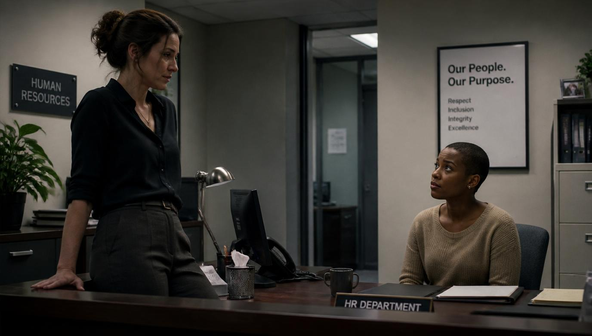
I found a reason to stop by HR the following Monday. Priya was at her desk and she looked up with the expression of someone who had been expecting something and was not sure if this was it.
I asked her about review scoring frameworks. A legitimate question with a researched answer.
Before I left, I said: *Ashley Monroe’s review. Exceptional rating. Was that standard?*
What Priya’s Hands Did
She looked at her hands. Not quickly — she considered them for a moment, her fingers still on her keyboard.
She said: *The rating came in elevated relative to the manager’s submitted assessment.*
She did not say anything else. She returned to her screen.
The Drive Home That Night
I took the surface streets deliberately. I needed the stoplights, the interruptions, the rhythm of stopping and going.
My division had grown sixty-two percent in three years. My last review had used the word *exceptional* too.
I wondered if that word meant the same thing when I received it as it did now.
The Harrington Capital Email
It arrived on a Thursday, companywide, formatted in the announcement style reserved for significant client news.
Harrington Capital. Caldwell’s largest new acquisition in four years. The account that my division’s infrastructure work had spent eight months positioning the firm to win.
Ashley Monroe was listed as lead associate. I read it standing in the kitchen, still in my coat, and my watch read 7:14 PM, and I did not put the phone down for a long time.
What Load-Bearing Feels Like When It Starts to Go
There is a moment before a structural failure when the thing being held still appears intact.
The crack is there. The weight is shifting. But the wall is standing and if you do not press it, if you do not look directly at the specific place where the load is no longer being carried, you can almost believe it is fine.
I pressed it. I looked.
I opened my laptop, the personal one, and I added a new entry to the folder with the date on it. Then I sat in the quiet house and began to write down everything I knew in the careful, precise handwriting I had used for eleven years to build a record of things that were true.
What I Told Richard
I chose Richard Sousa on a Tuesday, in the twenty minutes before the weekly directors’ briefing.
I told him I had noticed some irregularities in project assignments. I used that word deliberately — *irregularities* — something between a question and a fact.
He leaned against the doorframe with the posture of a man who listens carefully for a living.
He said: *That’s worth paying attention to.*
How Good He Was At It
He asked two precise questions. Not too many, not too few.
His eyes stayed on mine throughout, that particular stillness he had refined into something that felt like trust.
I gave him enough. Not the document. Not Priya’s name. Not the corridor at ten-thirty-six.
I gave him the shape of it and watched him absorb the shape with the expression of someone genuinely troubled on my behalf.
The Seventy-Two Hour Window
I did not know the number immediately. I reconstructed it later, working backwards from what changed.
By Friday of that same week, Tom Garrett had stopped making eye contact with me in the elevator. It was a small thing.
Small things were the only language this place used for the important communications.
The Shift in Marcus Hale’s Gaze

The all-hands meeting was the following Monday. Hale stood at the front in his charcoal suit, cufflinks catching the overhead light.
He spoke about the firm’s commitment to rigorous performance standards.
He used my division as an example, the way he often did.
But when his eyes moved across the room and found me, they did not pass through me the way they once had. They stopped. Briefly. Evaluating.
What Evaluation Looks Like From the Other Side
I held his gaze for exactly as long as normal and looked away first, the way I always did.
I pressed my thumbnail into my palm under the table.
The watch on my wrist read nine-seventeen. I focused on that — the thin gold hands, the cream dial, the precision of a mechanism that did not care what was happening in the room.
Priya’s Envelope

She left it on my chair. Not my office chair — the chair at the small worktable in the secondary conference room I used on Tuesday afternoons.
A plain white envelope with nothing written on it.
Inside was a single printed page. Not the memo. Something I had not seen before.
Reading the Document Standing Up
It was Ashley Monroe’s hiring file. The referral notation at the bottom was in a slightly heavier font weight than the surrounding text.
*Direct recommendation — Office of the CEO.*
I read it twice. I turned the page over, found nothing, turned it back.
Then I sat down slowly in the chair where Priya had left it, and I understood that I was no longer holding a grievance.
What Falsification Changes

Favoritism is a betrayal of culture. A senior leader choosing proximity over performance — that is a story organizations have told about themselves forever.
But a record altered thirteen months after hire, in the same week a board member raised governance concerns, was a different category of act entirely.
Someone with access and motive had reached into the official archive and changed what happened.
The Date in the Footer
The revision stamp was in the document’s footer, small and formatted in the institutional blue-grey of the HR system.
I compared it to my notes. The edit had been made on a specific Thursday.
I pulled up my calendar on my phone and found that Thursday. A board meeting had occurred two days prior.
The Problem the Document Created
I held the page for a long time before I put it in my folder.
Priya had a daughter in middle school and a son in second grade. She commuted forty minutes each way and she had worked at Caldwell for seven years.
Using this document openly meant using Priya, whether I named her or not.
Not using it meant the revision stamp disappeared back into the archive and continued doing its work quietly.
What I Said to Priya
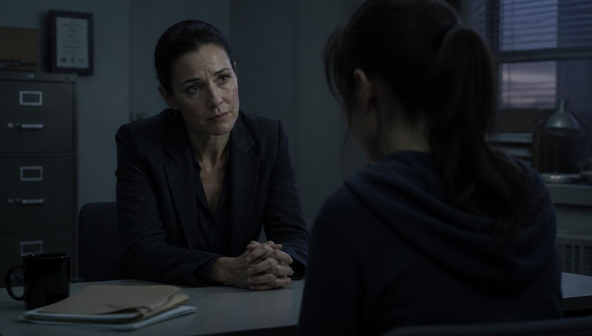
I found her at her desk the next morning before most people had arrived. She looked up without surprise.
I said: *I need you to know that I understand what this cost to give me.*
She nodded once, looking at her hands.
I said: *I will not put your name anywhere without your permission.* I meant it as a promise. I did not yet know the full weight of what I was promising to carry instead.
Diane’s Announcement
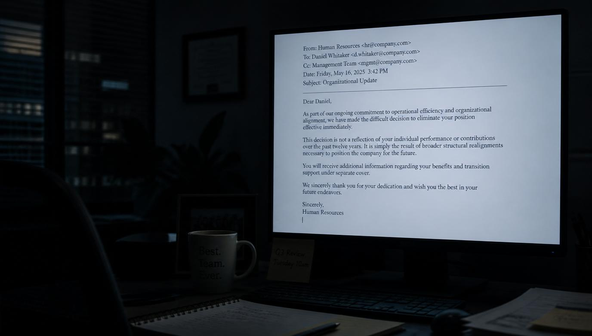
The email arrived on a Friday afternoon, the kind of timing that is never accidental.
*Diane Reyes will be transitioning to an independent consulting role, effective in six weeks. We are grateful for her twelve years of dedicated leadership.*
I read it at my desk and felt something I had been careful not to rely on finish its process of becoming unreliable.
What I Knew About Diane’s Timing
She had not mentioned this transition in our last conversation.
She had, in that conversation, told me to be careful about characterizing things I did not fully understand.
Six weeks. Clean enough to be considered a choice. Fast enough to be something else.
The Folder That Evening
I sat at my kitchen table with the personal laptop open and the physical folder beside it.
I added the hiring document behind the memo, behind the project assignment charts, behind the task force announcement.
I looked at what I had accumulated and understood that I had been building this case the way I built everything — methodically, without fully admitting to myself what I was building it for. The admission arrived now, quiet and complete.
What I Would Need

Evidence that lives inside an institution can be managed by that institution.
I wrote that at the top of a new page in small, careful letters.
Then I wrote below it: *Find who else was here before me. Find out where they went.*
I closed the folder. Outside, the neighborhood was quiet.
The wall I had been pressing had given way entirely now, and on the other side of it was not wreckage — it was a much larger room than I had known I was standing outside of.
The Budget Decision

The number arrived in an email from Finance with no covering explanation.
Sixty-eight percent of my requested allocation. Approved.
I read it three times before I understood what I was reading was not an error.
My division had grown revenue by sixty-two percent. We had positioned the firm to win Harrington Capital. The math was deliberate and it was not about the budget.
What Sixty-Eight Percent Actually Meant
I had four open project staffing requests pending approval. At sixty-eight percent, two of them would have to be withdrawn.
The team would feel it immediately.
They would not know why, and I would not be able to tell them. I would stand in our Tuesday meeting and present it as a resource constraint and watch them recalibrate their trust in the institution without understanding what was actually happening to it.
The Transfer Offers
Lena Vasquez came to my office that same week. She closed the door, which she had never done before.
She said she had been approached about a lateral move to the Client Partnerships division.
She was apologetic in the specific way of someone who has already decided.
I asked whether she wanted to go. She looked at the window instead of at me and said the opportunity was hard to pass on.
I told her I understood, and I did, and I also understood exactly who had decided this opportunity needed to exist.
Martin Two Days Later

He knocked, stood in the doorway.
His conversation followed the same shape as Lena’s, with the same apologetic quality, the same framing of the offer as something he had not sought.
He was one of my best people.
I thanked him for telling me directly. I kept my hands flat on the desk the way I did when I needed to stay very still. When he left I looked at my watch and let the second hand make one full rotation before I moved.
What Was Being Manufactured
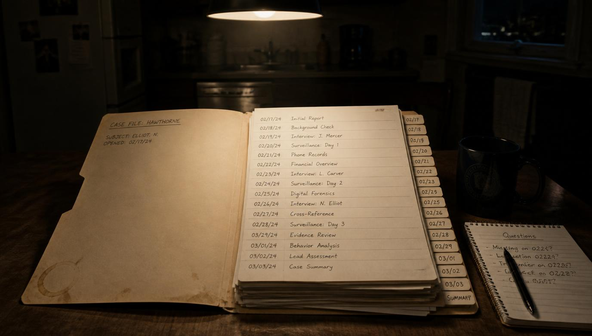
I pulled every client responsiveness record from the past eighteen months.
The feedback form concerned me not because it was damaging but because it was fabricated from something real — a two-day response delay in November that the client had explicitly accepted as reasonable at the time.
Someone had read my records carefully enough to find the one moment that could be shaped into a concern.
That required access and intention. Those two things together had a name.
Richard in the Hallway

I passed him near the copy room on Thursday morning. His face arranged itself into warmth immediately.
*Victoria. Good week?*
The question had the particular smoothness of someone who already knew the answer.
I said: *Productive.* I kept walking.
I waited until I was in the stairwell before I let myself understand completely that the man who had listened to me with such focused attentiveness had carried everything I gave him directly to the people I had been describing.
The Mechanics of Being Managed
None of what was happening to me would appear in any document as retaliation.
The budget reduction had a standard approval chain. The transfer offers were legitimate professional opportunities. The client feedback was a single data point in a file of otherwise consistent praise.
Each piece was deniable.
All of it together was a message, written in the only language institutional power uses when it wants to warn someone without creating a record of the warning.
What Isolation Feels Like in a Place You Built
The meetings I was not included in had always been optional before. Now their absence had a quality.
Colleagues who had copied me on threads for years began to omit me, then correct the omission with a forward that arrived twenty minutes too late to matter.
The corrections were the worst part.
They indicated awareness of what was being done and the choice to do it anyway, with just enough courtesy to maintain deniability.
Calling Diane
I used my personal cell and called her on a Wednesday evening.
She answered on the third ring, which told me she had looked at the screen before deciding.
We spoke briefly about her transition, about her plans. Then I asked the question I had been building toward, directly and without the softening she might have expected from me.
What Diane Said
*Victoria.* A pause I had learned to read across two years of working alongside her.
*Focus on what you can control. Be careful about how you characterize things you don’t fully understand.*
The phrase landed precisely.
She knew. She had always known. She was choosing the version of knowing that allowed her to leave with her reputation intact and her conscience managed down to something she could carry without it slowing her pace.
The Limit of What She Could Give
I did not press her. There was nothing more to extract.
I said: *I hear you, Diane.* And then, because it was true: *I hope the transition goes well.*
She said something warm and brief and we ended the call.
I sat for a while with the phone on the kitchen table and thought about the specific shape of that betrayal. Not hostile. Not cold. Just the carefully maintained distance of someone who had chosen, and knew they had chosen, and was living efficiently inside that choice.
The Evening I Reached the Bottom

I opened the folder and looked at what I had. The hiring document. The timeline. The project patterns. The compensation anomaly Marcus had not yet given me, though I did not know that yet.
I thought about Priya’s children. About Lena Vasquez, who had been good at her work and deserved better than being used as a weapon.
I thought about the folder growing thicker while the division I had spent three years building was quietly being taken apart around me.
What Marcus Chen Said Over Coffee

He tapped his pen against his palm three times before he spoke.
He described a promotion that had redirected unexpectedly three years ago, the one he had attributed to budget cycles and convinced himself was simply how these things went.
He said: *I wonder now if I missed a pattern I should have seen.*
He did not know yet what I knew. But he had his own piece of the architecture, and the way he said *pattern* told me he was ready to look at it directly.
Susan Yao’s Name
Marcus mentioned the interview almost as an aside, something he had read and half-remembered.
A former Caldwell director, critical of corporate governance in general terms. He could not recall the publication.
I wrote the name down when he left.
I looked at my watch — the thin gold hands marking a point in the afternoon that would become, later, the moment I understood the room I was standing inside was much older than I had known.
What the Folder Required Now
Evidence that lives inside an institution can be managed by that institution.
I had written that weeks ago and it was still true.
I needed something outside the walls. Someone who had stood where I was standing and had left carrying enough of their own account to confirm the shape of what I was seeing.
I opened my laptop and found Susan Yao’s professional profile in eleven seconds.
I drafted the message once, then deleted it, then wrote it again more carefully. I pressed send before I could revise it a third time.
Susan Yao Responds
Her reply came at 6:47 in the morning.
I had not expected to sleep well, and I had not.
She wrote two sentences. She said she appreciated the outreach, and that she had been wondering when someone from Caldwell would find her.
That second sentence stopped me completely. *When*, not *if*.
She had been waiting for this.
What She Agreed To

We arranged a call for Thursday evening. She specified her personal number, not a work line.
She asked that I not document the conversation until she gave permission.
I agreed to both conditions. I sat with the phone in my hand afterward and thought about what it meant that a woman I had never spoken to had clearly decided in advance what shape this conversation would need to take.
The Call with Susan Yao
Her voice was composed and careful, the voice of someone who had rehearsed a version of this before.
She asked me what I had. I told her what I could without naming Priya.
Then she was quiet for a long moment. When she spoke again, the composure had a different quality. Not diminished. More deliberate, like something being placed down gently on a hard surface.
What She Told Me About Paul Carver
He left six years ago, she said. He signed something.
She did not know the exact terms, but she knew the timing.
She knew what kind of situation produces that kind of exit, with that kind of speed, with that particular silence afterward.
She said: *His departure followed the same shape yours is following, except he did not find anyone to call.*
The Director Before That
She only knew a name, secondhand.
A senior manager who had been at Caldwell before even Paul Carver, who had left without public explanation, who existed in Susan’s account only as a shape, an outline of someone who had seen the same thing and had no infrastructure to act on it.
I wrote the name down even though I knew I might never find anything attached to it.
What Confirmation Sounds Like

Susan said: *It is not about any one person. He has a practice.*
The word landed specifically. Not a mistake, not a weakness. A *practice*.
Something cultivated and maintained and refined across years.
I looked at the folder on my kitchen table and understood that I had not discovered a failure in the system.
I had found the edge of something deliberately constructed.
The Question of Tom Garrett
I asked her about him.
She paused in a way that told me she had thought about him separately and had arrived at a conclusion she found unpleasant.
She said his directorship had come at an interesting time. She said she had never been able to prove anything specific about him, but that she had noticed how smoothly his career had moved in the same direction as certain other developments.
What She Would Give Me
She would write it down, she said. Her account, her timeline, her observations.
Not an affidavit. Not a signed statement.
But a document, structured and dated, that would give a careful reader the shape of what she had experienced at Caldwell and when she had experienced it.
She asked me what I planned to do with it. I told her I had not yet decided the exact channel. She said she had a thought about that.
Eleanor Marsh
She said the name before I did.
I asked how she knew about Eleanor Marsh’s board appointment.
She said she had been watching the company from the outside for eighteen months, and that when a governance-focused independent director appears on a board like Caldwell’s, it is usually because someone with institutional leverage has required it.
She said: *That is the pressure point. If there is one.*
The Meeting with Paul Carver
It took two weeks and three carefully worded messages before he agreed to a video call.
He was cautious in the way of someone who had built a careful life around a legal boundary and was aware that one careless word could shift its terms.
I did not press him. I laid out only the broadest shape of what I was assembling and asked whether anything in it resonated.
What Carver Confirmed
He said he could not discuss the terms of his agreement.
He said that sentence twice.
Then he said: *I can tell you that my departure was not my choice, and that the timing of it was not coincidental, and that I have thought about whether I made the right decision for a long time.*
That was enough. That was precisely enough.
Building the File for Eleanor Marsh

I worked in the evenings for three weeks.
I used my personal laptop at the kitchen table, the folder beside me, a cup of tea that went cold most nights before I remembered it.
I wrote an index first, the way I would structure a client proposal. Each section had a factual claim. Each factual claim had at least two independent sources or a documentary record.
What the File Did Not Include
It did not name Priya directly. Anywhere.
The hiring document appeared as exhibit three, attributed in the file’s cover notes to records obtained through internal review channels, which was accurate enough to hold.
I read every sentence twice to be certain her name could not be inferred from the framing. Then I read it a third time.
The Message to Eleanor Marsh
I sent it through a personal email address, not my Caldwell account.
I kept it to four sentences. The situation, the nature of my documentation, the request for a confidential meeting, and my direct contact information.
I did not use the word whistleblower. I used the word *governance*. Then I closed the laptop and watched the second hand of my watch move through a full rotation, and then another, and waited.
What Came While I Was Waiting
The companywide email arrived on a Tuesday.
Ashley Monroe, the message announced, had been identified as a high-potential candidate for the Senior Director position in Client and Strategic Development, effective pending final organizational review.
The role was the one I had been building toward for three years.
I read the email standing in my kitchen in the grey morning light and understood that the people running this institution had just told me, in the clearest language available to them, that they were not afraid of whatever I was doing.
Eleanor Marsh Responds
Her reply came in forty-eight hours.
Three sentences. She confirmed receipt, she confirmed confidentiality, and she named a date.
No warmth. No reassurance.
Just precision, which was exactly what I needed from her and nothing I had expected to feel grateful for. I printed the message and added it to the folder, then removed it. It was safer nowhere.
The Meeting Location

She chose a hotel lobby bar twelve blocks from Caldwell’s offices.
Not a conference room. Not anywhere associated with the company.
I understood the choice immediately.
She arrived before me, which told me she had wanted to see how I entered a room before I saw her. She was already evaluating before I sat down. I had done the same thing once, with Richard Sousa, and had read it completely wrong.
How She Listened
She did not take notes while I spoke.
She held the printed file on the table without opening it and watched my face.
When I finished the summary she asked three questions in sequence, each one tighter than the last, each one designed to find the load-bearing wall of my account and test whether it held.
I answered every question directly. The file held.
What She Said About the Document
She opened the folder at that point and went to exhibit three without instruction.
She studied it for a long time.
Then she said: *This alteration was made inside an access-controlled system.*
She said it quietly, almost to herself. I understood she was not telling me something I did not know. She was calculating what it meant for someone else. Someone with the authority to pull access logs.
The Thing She Would Not Promise
She told me she could not promise me an outcome.
She said the inquiry, if she opened one, would go where the evidence took it, and that I should understand that meant it could also surface things that complicated my own account.
I told her I understood.
She looked at me for a moment longer than the exchange required. Then she closed the folder and said she would be in touch within a week.
The Week That Followed
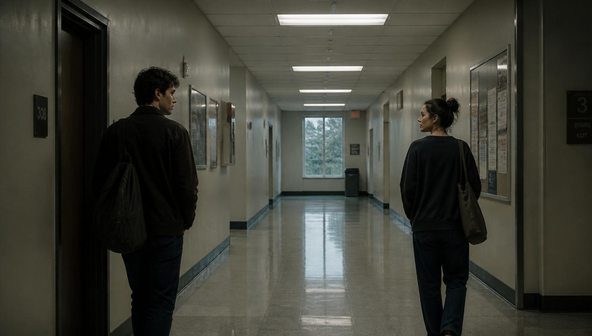
I went to work every day.
I ran my morning team check-ins and reviewed the infrastructure pipeline and answered emails with the specific attentiveness of someone performing normalcy under observation.
Because I was.
Marcus Chen passed me in the third-floor corridor on Wednesday and gave me a look that asked a question without words. I returned a look that told him to wait. He nodded once and kept walking. That was the full extent of our communication for four days.
What Hale Did With His Face

I saw Marcus Hale twice that week.
Once in the elevator, where he smiled at me with the full warmth of a man who had given a speech about meritocracy and believed every word. Once across the atrium, where he did not smile at all but held eye contact a beat too long.
The second one was the real communication.
He knew something had moved. He did not know what or how far.
Richard Sousa in the Hallway
He stopped me on Thursday outside the second-floor kitchen.
He asked how I was doing, with the careful sincerity of a man who had practiced looking innocent and enjoyed the performance.
I told him things were productive.
He said he had heard good things about the division’s recent numbers, which was technically true and entirely beside the point. I thanked him and walked away and spent the rest of the afternoon calculating exactly how much of my current strategy he might have already passed upward.
Marcus Chen Finds Something
He sent me a message on Friday evening through a personal channel.
It said only: *Can we talk this weekend? Not about work. About numbers.*
We met Saturday morning in a coffee shop near his apartment. He placed a single printed page on the table between us and waited while I read it.
It was a compensation summary. Aggregate, anonymized at the divisional level, but the outlier was visible to anyone who knew where to look. A discretionary supplement, CEO-authorized, with no supporting documentation in the standard approval chain.
What the Supplement Meant
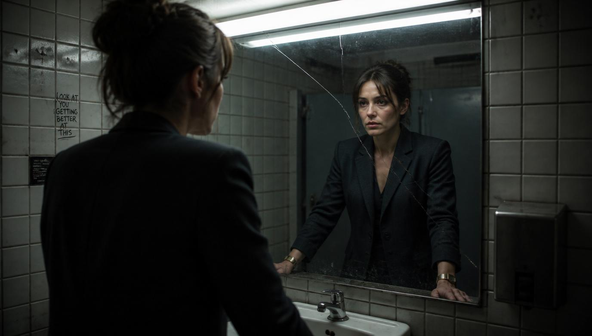
I had suspected something like this.
Suspecting it and seeing it on a page were two entirely different experiences.
I asked him how he had found it.
He said a routine quarterly reconciliation had flagged an irregular authorization code, and that he had followed the code through four layers of the compensation structure before it resolved into something that had no clean explanation. He said he had almost let it go. He said the word *almost* like it cost him something.
The Second File I Built
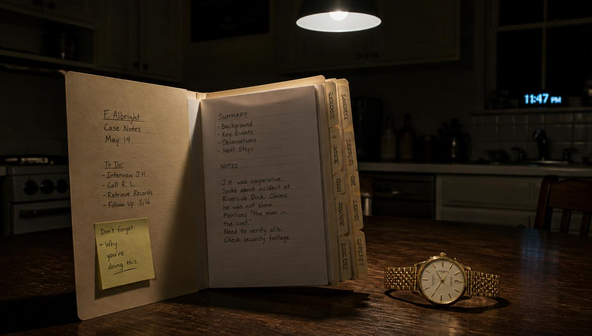
I added Chen’s summary to the file that night.
I wrote a single page of context placing the compensation irregularity against the timeline of Ashley Monroe’s advancement, and against Susan Yao’s account of the broader pattern.
I sent it to Eleanor Marsh’s personal email before midnight.
Then I sat at the kitchen table and looked at my watch and thought about the eleven years I had given the company sitting in that folder, organized into sections, reduced to evidence. The watch read 11:47. It had never felt like such a precise measurement of something being spent.
The Announcement
The formal announcement about Ashley Monroe came the following Tuesday.
Senior Director of Client and Strategic Development, effective upon completion of the organizational review.
The language was celebratory. There was a quote from Tom Garrett about emerging talent and institutional investment.
I read it in the open office because I had no choice, surrounded by people watching their screens, and I kept my face entirely still. The stillness required everything I had. I pressed one finger against the face of my watch under the edge of my desk and held it there until the moment passed.
Eleanor Marsh Calls
Her call came Thursday morning, seven forty-two.
She said the governance committee had agreed to open a formal inquiry into executive compensation practices and HR record management.
She said: *I want you to understand that this is now a process I am running, not one you are running.*
I said I understood.
She said: *Good. Do not contact anyone inside the company about this. Do not change your behavior. Go to work. Do your job. Let the process move.*
What Doing Nothing Felt Like
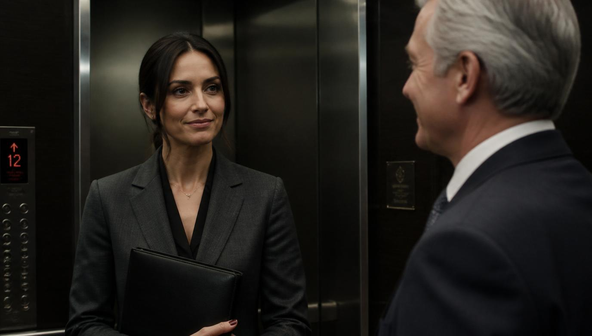
It was the hardest instruction I had ever followed.
I knew what was coming. I had assembled the case that triggered it. And now my role was to be invisible, to maintain the performance of a woman who did not know an inquiry existed, to stand inside the machine I had set in motion and not touch any of its parts.
I went to work. I ran my team check-ins. I reviewed the pipeline.
I answered Marcus Hale’s collegial smile in the elevator with a collegial smile of my own, and I held it long enough to be convincing, and I thought about what it meant to be more honest than the man I was smiling at while appearing to be exactly as dishonest as the situation required.
The Architecture Under Examination

Eleven weeks, Eleanor Marsh had said.
I did not count them. Counting would have made the waiting into a wound.
Instead I worked. I built the division’s Q2 projections. I wrote performance notes for my team. I kept every commitment I had made to every person who had trusted me, including the one I had written down and signed in my own handwriting for a woman with close-cropped hair and careful eyes who had looked at her hands while she decided whether to help me.
The inquiry was moving. Somewhere above me, in the architecture I could not see, something was being examined that had not been examined in six years. That had to be enough. I made it enough.
What Eleven Weeks Actually Contained
I did not hear from Eleanor Marsh for three of them.
The silence was not absence. I understood that. But understanding it and surviving it were different exercises entirely.
My team delivered the Q2 projections on schedule. I wrote every performance note with the same precision I had brought to everything for eleven years. The work did not become smaller because something larger was happening above it.
The Audit That Was Not Routine
In the fourth week, an internal auditor named Gerald Finch appeared at my division’s door.
He had a pleasant, procedural face and a clipboard he did not actually need. He said it was a routine operational review.
I offered him everything he asked for immediately, without hesitation, without the faint bureaucratic friction most directors applied to unexpected audits. I gave him clean records. I knew what clean records looked like because I had only ever kept clean records.
What Gerald Finch Did Not Find
He spent two days reviewing my division’s files.
He left without comment, which was its own communication. There was nothing to manufacture here.
I watched him go from the glass-walled side of my office and thought about the six years of machinery that had learned to punish people through procedure. It had tried that particular tool on the wrong person. I had always done the work. That had always been the point.
Priya in the Stairwell
She stopped me in the stairwell between the fourth and fifth floors on a Wednesday morning.
She looked at her hands briefly, the way she always did when she was deciding something. Then she looked up.
She asked if she needed to be worried. I told her the truth, which was that the inquiry was protecting its sources and that her name had not appeared. She nodded once, slowly, and I watched something in her shoulders release by approximately one degree. That one degree cost her something. I did not take it lightly.
Marcus Hale’s Last Speech
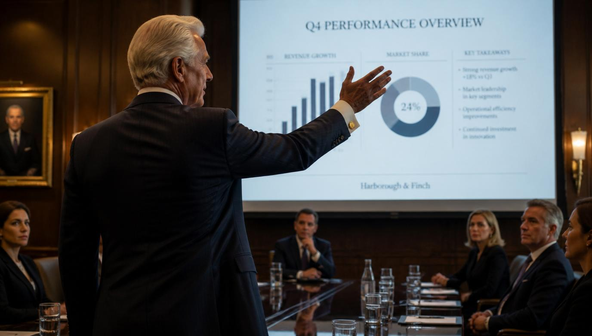
He addressed the full staff in the main conference room during week six.
It was a quarterly update. Revenue figures. Client acquisitions. He cited my division by name, which he had done before, and the room responded the way it always did. I sat in the third row and watched his hands gesture toward a slide that showed numbers I had built.
His cufflinks caught the light when he raised his arm. Brushed gold, rectangular. The same pair as always. The costume of authority, worn for an audience that did not yet know the costume was all there was.
The Morning Marcus Chen Said Nothing Useful
He found me in the parking structure on a Thursday.
He looked like a man carrying something heavy in a bag he was pretending was empty. He said he had heard, from someone in Finance, that an external forensic accountant had been given access to the compensation system.
He did not say anything after that. Neither did I. We stood in the concrete half-dark for a moment and the information settled between us like something that had been falling for a long time and had finally found the floor.
When Hale Stopped Smiling
I noticed it in week eight.
The collegial smile in the elevator was gone. Not replaced with hostility, which would have been a message. Replaced with nothing, which was worse. He looked through me the way you look through a window when the view has become irrelevant.
He had been told enough. Not everything. Enough. I understood that I had become, in his internal accounting, something between a problem and a fact. The distinction mattered to him. It no longer mattered to me.
Tom Garrett’s Performance of Normalcy
He tried harder than Hale did.
He stopped me outside the second-floor kitchen, which had become, I realized, the building’s preferred location for conversations that were not what they appeared to be. He asked about a cross-divisional project timeline with the specific attentiveness of a man constructing an alibi.
I answered his question completely and professionally. I watched his eyes work behind the performance of casual interest. He was trying to determine what I knew and I gave him no surface to read. Eleven years of being underestimated had made me very good at being unreadable when it mattered.
The Week Ashley Monroe Passed Me in the Hall
She was carrying a portfolio binder and moving fast.
We had never spoken beyond the minimal exchanges of people who occupied the same building without sharing a world. She glanced at me the way she always had, the glance of someone who recognized a face without attaching a story to it.
I watched her walk away. She had no idea what was moving through the architecture above both of us. I thought about the pendant at her throat, small and gold and entirely her own, and I thought about what it meant to be placed inside something you did not design and could not see the edges of. I had not forgotten that she was a person. I had never forgotten that.
Eleanor Marsh’s Second Call

Week nine. Six forty-eight in the morning.
She said: *The forensic review has confirmed the record alteration. Access credentials have been identified. The committee is moving to the next phase.*
She said it with the flat precision of someone reporting a structural finding, which is exactly what it was. I stood in my kitchen in the early grey light and held the phone and felt something shift in my chest that was not quite relief and not quite grief. It was the specific sensation of a truth that had existed for months finally acquiring institutional mass.
What Richard Sousa Said at the Coffee Station

He was friendly. He was always friendly.
He mentioned, with the practiced casualness of someone who had rehearsed the casualness, that he had heard there might be some leadership transitions coming. He said it the way someone says a thing when they want to watch your face receive it.
I told him transitions were a normal part of organizational health and poured my coffee and left. I gave him nothing. Behind me I heard him set his mug down with the faint careful sound of a man recalibrating.
Marcus Hale Resigns

Eleanor Marsh called at seven-fifteen on a Tuesday.
She said: *He submitted his resignation this morning. The board has accepted it. This will be announced internally this afternoon.*
The announcement came at two o’clock. It used the word *transition* four times. It mentioned his contributions to the firm’s growth. It said nothing true.
I read it at my desk and kept my face entirely still, for no audience this time. Stillness had become something I did for myself.
What Diane’s Message Said

It arrived three days after the announcement.
It was seven sentences. Carefully written, I could tell, the way a person writes something they have thought about for a long time. She said she had not handled things well. She said she had seen more than she acknowledged. She said she was sorry in a way that was honest enough to be inadequate and inadequate enough to be honest.
I read it twice. I did not reply immediately. I sat with the fact that the most intimate betrayal of the past eight months had arrived at its apology too late to change anything and just in time to confirm that she had always known what she was choosing. That was the limit of what she could give me. I accepted the limit.
The Offer

Eleanor Marsh did not deliver it through the normal chain.
She called me directly and said the board wanted to extend the Senior Director offer and that it was being made outside the standard process because the standard process had been the problem. She used those exact words. She did not apologize on behalf of the institution. She offered me a fact and a position and left the meaning to me.
I said yes. Not because the role had been restored to its original brightness. Because I had built my case with rigor and kept my promises and protected the people who trusted me and the role was the correct outcome of all of that. I took it on those terms. Only those terms.
What I Did on the First Morning
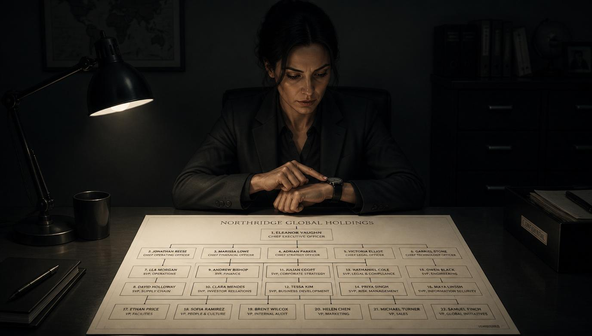
I sat in the office with my name newly on the door.
On the desk was an organizational chart of the division I was inheriting, twenty-two names arranged in a hierarchy that had been shaped by the same years I had spent watching it from outside. I placed the chart flat and read every name carefully.
I was looking for patterns. Not because I expected to find corruption here. Because I now knew exactly what patterns could hide inside a structure that presented itself as clean. I turned on my desk lamp, adjusted the light, and pressed one finger against the face of my watch the way I did when I needed to feel the weight of time being spent on something that deserved it. Then I started reading.


