
The Story Starts Below!

The Floor I Built
I built the Regional Growth Division from three people and a whiteboard with a broken marker.
That detail matters because nobody ever mentions the broken marker.
They mention the revenue figures, the twelve-person team, the third of domestic growth we carried for three consecutive years.
Nobody mentions that I spent the first six months working from a converted storage room because they hadn’t budgeted an office for a department they didn’t believe in yet.
—
What Earned Looks Like
I am not telling you this to complain.
I am telling you this because it is the only way to explain what I believed about the company before the party.
I believed it was a system that measured real things.
Not perfectly, not without friction, but fundamentally a place where the work showed up in the numbers and the numbers showed up in decisions.
I had evidence. Three years of it. That is not naivety. That is data.
—
The Annual Party

The event space occupied the entire executive floor.
Floor-to-ceiling glass on the north side, downtown laid out below like something designed to impress.
I had been to this party four times. I knew which bartender poured generously and which canapés were inedible.
I wore charcoal, as I always do, and I kept my coat on the chair nearest the exit.
I planned to stay ninety minutes. I stayed nearly three hours, which tells you something about how the evening began.
—
Daniel’s Useful Conversations
Daniel Reeve found me before I’d finished my first drink.
He had that expression he wore when he was delivering good news by accident, the conciliatory smile arriving a half-second early, glasses already off.
He steered me toward two men near the windows, board-adjacent consultants whose names I catalogued and whose body language I read carefully.
They asked intelligent questions about regional market segmentation. They listened to my answers with the particular attention of people evaluating rather than socializing.
I took that as a signal. I was good at reading signals. Or I believed I was.
—
What The Watch Said
By nine forty-seven I was ready to leave.
I know the exact time because I checked my watch, the one with the dark leather strap that has been on my wrist for eleven years.
My coat was on. My bag was over my shoulder.
I had said goodnight to Daniel and to two members of my team who were still there.
I was already composing the next morning in my head, which is what I do when a professional obligation has been discharged successfully.
—
The Corridor I Should Have Ignored

The exit route I chose took me past the partial wall that separated the main floor from the executive bathroom corridor.
I was not curious about it. I had simply forgotten that the shorter path to the elevator bank ran alongside it.
I heard something. Not loud. Not urgent.
It was the quality of deliberate quiet, the sound of something being kept below a threshold rather than occurring naturally beneath one.
I stopped. I did not examine why I stopped. My body made that decision before my mind caught up.
—
The Arithmetic of Waiting
I stood at the edge of the corridor for perhaps four minutes.
I told myself I was checking my phone. I was not checking my phone.
Marcus Hale emerged first. Tall, silver-haired, adjusting his jacket with the unhurried efficiency of a man organizing himself after nothing unusual.
His gold cufflinks caught the recessed lighting. He checked his phone. He walked back toward the party at a pace that contained no information.
I pressed myself slightly behind the partial wall. I do not fully know why.
—
The Three-Minute Gap

Roughly three minutes passed.
The party continued its noise at a distance, laughter shaped by acoustics into something indistinct.
Ashley Monroe appeared. I knew her the way I knew most mid-level coordinators in Client Relations, by sight and department, not by particular attention.
She moved in the direction away from the party. She did not see me.
She was tucking her hair behind her ear and looking at the floor.
—
What I Filed Away
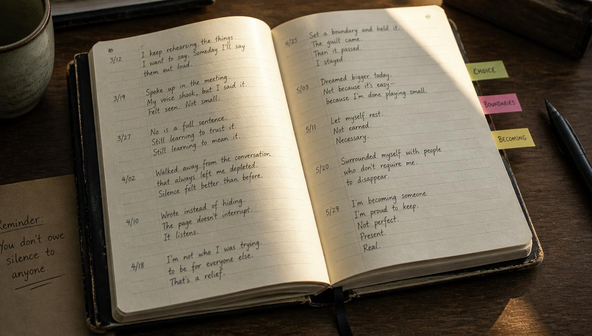
I walked to the elevator. I pressed the button. I looked at my watch again.
Nine fifty-three.
I had not witnessed anything I could prove. I had witnessed a sequence of events with an obvious interpretation that I chose, standing in that elevator, to categorize as none of my business.
Personal matters stayed personal. That was a principle I had always held.
I went home. I made tea. I read for forty minutes and slept.
I did not think about it again for eleven days.
—
What Eleven Days Looked Like
Those eleven days were unremarkable in the way that precedes something.
I ran three team meetings. I submitted the Q4 growth projection that I had spent six weeks refining.
Daniel scheduled a check-in and then rescheduled it. That was not unusual. Daniel rescheduled things with the consistency of a man who found preparation uncomfortable.
I drafted three talking points for my VP conversation and reviewed them twice before deciding they were too eager and paring them back.
I was still, during those eleven days, a person who believed she was about to be promoted.
—
The First Ordinary Signs

The promotion did not come in November.
This was not alarming. Fiscal year transitions moved slowly. I had been told April was the realistic announcement window.
But Daniel rescheduled our check-in again, and this time he did not offer a replacement date.
I noticed that. I wrote it down in my black notebook, not yet suspicion, just record-keeping.
I drew no lines between anything yet. Lines require enough points to connect them, and I had not yet understood what I was collecting.
—
Ashley Monroe’s Name
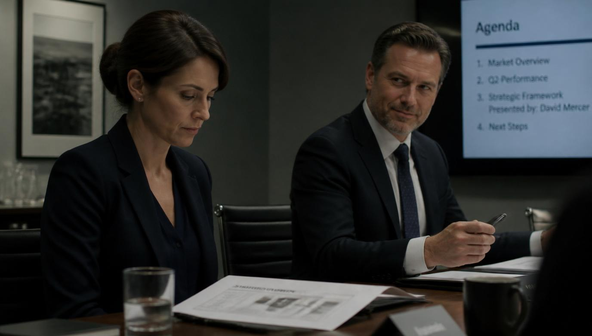
I first heard Ashley Monroe’s name mentioned in an executive context at a staff briefing in December.
Marcus Hale referenced her during remarks about cross-departmental collaboration, calling her contributions to Q3 client retention noteworthy.
I looked down at my printed agenda.
The Q3 client retention work he described had originated in a pilot program my team ran in August. I remembered writing the framework at my kitchen table on a Saturday morning.
I looked back up at Marcus Hale. His pale gray eyes were calm. He moved on to the next item.
—
What I Didn’t Yet Call It

I did not call it theft that day. I called it miscommunication.
I called it the inevitable blurring that happens when work crosses departmental lines and credit becomes imprecise.
I wrote Ashley Monroe’s name in my notebook. I wrote Q3 client retention beside it and put a small asterisk at the end.
I told myself I would raise it with Daniel as an administrative correction.
The asterisk felt very small. It was not yet a line. It was a dot that would, over the following weeks, find other dots to connect.
—
The Night I Went Back

I don’t know why I drove past the office building three weeks after the party.
I told myself it was the route home from a dinner. It was not the most direct route.
The executive floor was dark. The glass on the north side reflected nothing but sky and streetlight.
I sat at the red light below it and thought about that corridor with its cream walls and brushed steel door hardware.
I thought about the three-minute gap. And then the light turned green, and I drove home, and I told myself again that it was none of my business.
—
What I Know Now About Then

What I know now is that the lie I told myself in the elevator was not a moral failure.
It was the last moment of a particular kind of innocence.
Not the innocence of ignorance. I was thirty-eight years old and had spent fifteen years in professional environments. I was not innocent about how power operated.
The innocence I am describing is more specific: the belief that what I had worked for was being measured by the system that was supposed to measure it.
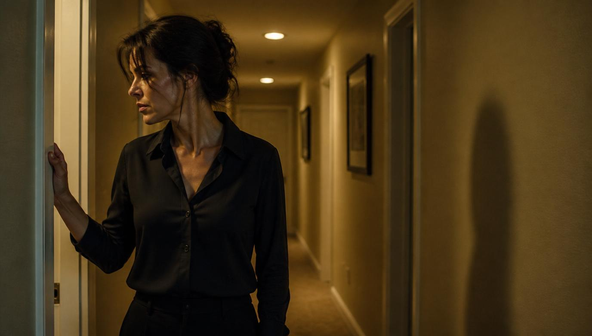
The corridor was not a secret. I did not know that yet. That knowledge would take months and cost more than I can explain in a single sentence. But it began there, at nine fifty-three, with a woman tucking her hair behind her ear and not seeing me at all.
The Announcement That Wasn’t
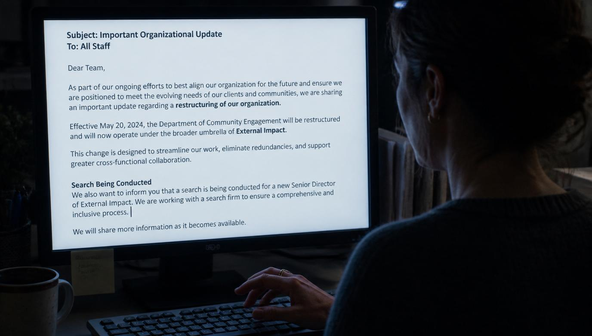
January arrived with the kind of institutional quiet that should have told me something.
The fiscal year turned. I waited for my name in the internal communications the way you wait for a train you’ve already heard announced.
No train came. The VP of Strategic Expansion announcement appeared mid-month, buried in an all-staff email from HR.
The role had been restructured. The title was different now. A search was being conducted.
I read the email three times.
—
Daniel’s Apology Face
Daniel met with me four days later.
He had his glasses off before he sat down, which meant he had rehearsed whatever he was about to say.
He used words like timeline flexibility and evolving scope.
He used the phrase leadership alignment twice without explaining what it aligned with.
His flush crept up from his collar while he spoke, that pinkish tide I had learned to track. He was uncomfortable. He was also not telling me the truth.
—
What I Wrote That Night
I opened my black notebook when I got home and wrote Daniel’s exact phrases from memory.
I wrote the date in the left margin. I underlined his name.
I sat for a moment, pen hovering.
Then I wrote the party at the top of a clean page and drew a single line beneath it.
I sat with that page for a long time before closing the notebook. I was not ready to name what I was doing. But I had started doing it.
—
The All-Hands Moment
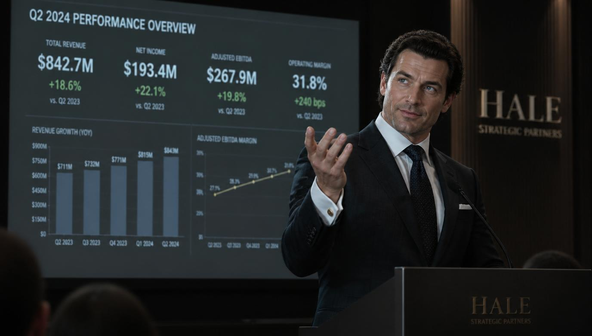
Marcus Hale presented the Q1 strategic outlook in February.
He moved through the slides with his particular brand of composed authority, pausing in the places that communicated gravitas rather than thought.
Midway through, he said Ashley Monroe’s name.
He said it the way you say the name of someone you expect the room to already know.
He credited her with developing the cross-regional client framework that my team had spent eleven weeks building last spring.
—
My Hands Under The Table
I was seated near the back of the room.
My hands were flat on my thighs beneath the table, pressing down.
I had learned, very early in my career, to keep my face professionally neutral when something landed wrong.
That skill had never cost me this much effort.
Around me people were nodding at Marcus Hale’s slide. Ashley Monroe sat two rows ahead of me, her light auburn hair catching the overhead light. She wrote something in her notebook.
—
The New Title Nobody Had Heard Of
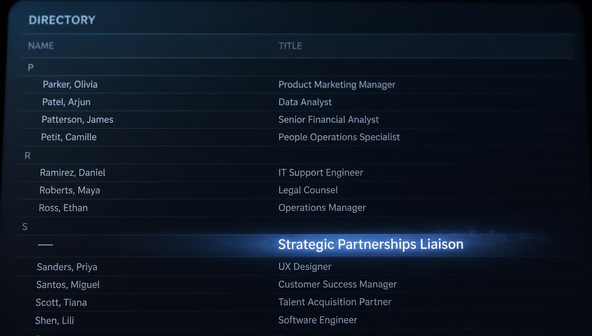
The internal directory updated in late February.
Where Ashley Monroe had previously been listed as Client Relations Coordinator, she was now Strategic Partnerships Liaison.
The title had not existed in any organizational document I could locate before her name appeared inside it.
I searched the company’s internal position registry. I searched the HR framework document from the prior year.
Nothing. The role had been created the way a stage set is created, constructed specifically for one person’s entrance.
—
Pages Accumulating
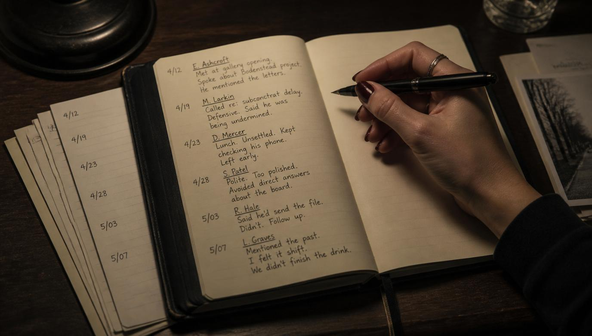
I had been telling myself the notebook was precautionary.
By the end of February I had six pages of specific, dated entries.
The misattributed client framework. Ashley’s new title. The all-hands remarks. The canceled check-ins. The budget notes from Q3 that listed my division as originating department for work now publicly credited elsewhere.
Six pages is not precautionary. Six pages is a case.
I stared at the word I had written at the top of the first page and did not look away from it.
—
The Conversation With Daniel I Actually Had
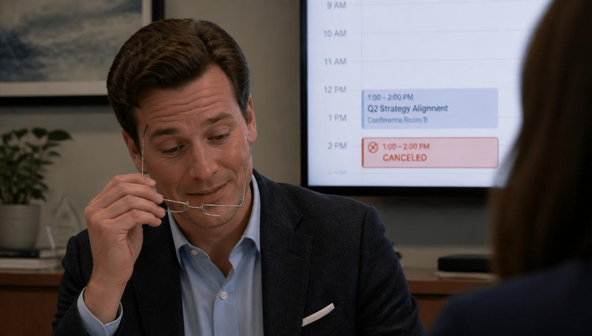
I raised the credit issue with Daniel in early March. I framed it carefully, an administrative oversight, easily corrected.
He said he would look into it. His tone was the tone of someone saying a sentence they do not intend to act on.
I gave him two weeks.
Nothing changed. I requested a formal conversation about my promotion timeline. He scheduled it. He canceled it. He scheduled it again.
—
The Third Meeting
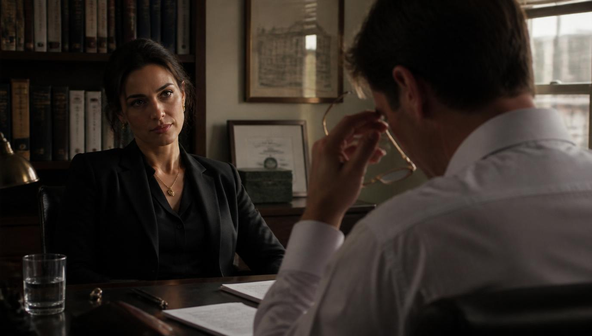
On the third attempt, Daniel actually sat across from me.
He told me that leadership was looking for a VP candidate with stronger cross-departmental visibility.
He said it with his glasses on, which meant he had not rehearsed it enough to need the gesture of taking them off.
Cross-departmental visibility. I had run collaborative projects with seven departments in the past eighteen months.
The language was not feedback. It was architecture, the kind built to justify a decision already made.
—
Ashley At The Conference
The industry conference was in Atlanta.
I had attended the prior year as a speaker. I received no invitation this cycle.
Ashley Monroe was listed in the conference program as the company’s representative presenter. Her session was titled Innovative Frameworks for Regional Client Growth.
I clicked on her session description and sat very still.
The framework she was presenting was mine. The structure, the terminology, the three-phase approach.
I closed the browser and wrote the date and the session title in my notebook with a steadiness that surprised me.
—
The Newsletter Profile
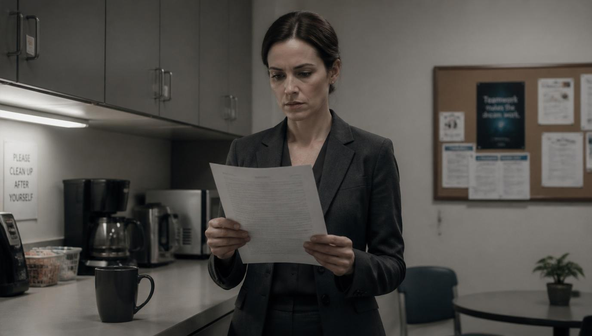
In April the internal newsletter ran a profile.
It used the word visionary.
I read it twice in the break room, standing, with my coffee going cold beside me.
Ashley Monroe was described as a rising force whose instincts for cross-functional innovation were reshaping how the company thought about growth.
She was twenty-six. She had been with the company for eighteen months.
I had been with the company for four years and was not described in any newsletter as anything.
—
What I Noticed About The Room
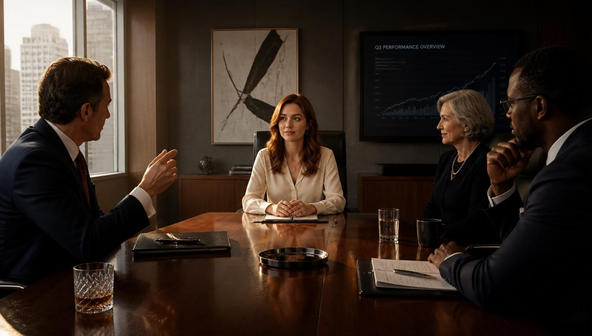
I began paying different attention at executive meetings.
Not to the content, I had always tracked content. To the formations.
Sandra Briggs, Ronald Chu, Marcus Hale. The three of them occupied different corners of any room and yet their responses to Ashley’s presence were synchronized in a way that could not be accidental.
A nod at the right moment. A specific kind of attention when her name was mentioned. The small, deliberate encouragements of a system running a chosen candidate.
—
The Scope Of What I Was Seeing
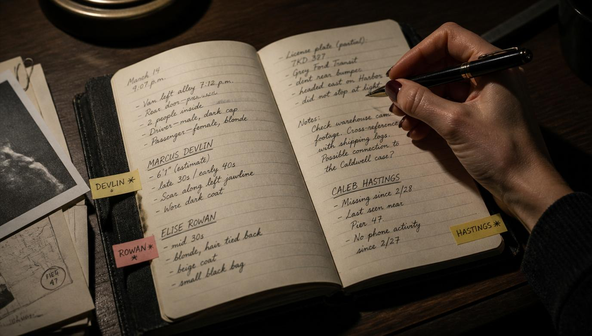
By May I had stopped telling myself this was about one relationship.
One relationship does not produce synchronized endorsement across three senior leaders. One relationship does not generate a fabricated title, a rerouted conference invitation, and a retroactive crediting of another person’s documented work.
One relationship is personal. What I was looking at was organizational.
I had a full page in my notebook now with three names in a column.
I drew a line between them and stared at it for a long time.
—
What She Didn’t Know About Me
I want to be clear about something before this goes further.
I did not hate Ashley Monroe.
I watched her at a March team meeting, asking careful questions, writing things down, working with the earnest energy of someone who genuinely believed she was learning.
She was not the architect of what was happening to me. She was the beneficiary.
Understanding that distinction would take me longer than it should have. But even in May, some part of me already knew where the weight of this actually belonged.
—
The Line Between Watching And Moving
I closed the notebook on a Tuesday evening in late May.
I had seven pages now. Fourteen weeks of specifics, dated and cross-referenced, each entry connected to at least one verifiable record somewhere in the company’s documentation.
I had raised it once with Daniel. I had been managed, deflected, and given feedback designed to sound constructive while pointing nowhere.
The person who had built a division from three people and a broken marker was not going to wait to be seen.
I opened the notebook back up and wrote the name Garrett Osei.
What I Knew About Garrett
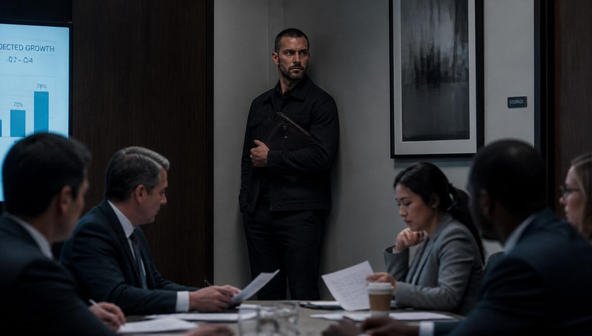
Garrett Osei had been with the company seven years.
He had built the project management infrastructure that three departments now relied on without crediting him for it.
He was the kind of person who arrived early and left late and documented everything and was promoted exactly once, four years ago, and had not moved since.
I knew him the way you know a colleague who operates in your peripheral vision, present, capable, quietly unacknowledged.
—
The Approach
I did not go to him immediately.
I spent a week watching how he moved through the office, who he spoke to, which meetings he attended and which he skipped.
I needed to know whether he was someone who had processed his situation into acceptance or into something still alive.
There is a particular flatness that settles over people who have genuinely decided not to fight.
Garrett did not have it. He had something else, something tighter and more controlled, the look of a man keeping a lid on something he has not yet decided what to do with.
—
The Coffee That Wasn’t Casual

I asked him for coffee on a Wednesday, framing it around a cross-team process question I could have emailed.
He said yes without hesitation, which meant either he suspected nothing or he had already been waiting for someone to ask.
We sat in the corner of the building’s small café, away from the cluster of desks near the windows.
I watched him watch me before I said anything real.
Then I asked him, very carefully, what he made of the director role restructuring from the prior quarter.
His coffee cup stopped halfway to his mouth.
—
What His Eyes Did

He did not answer immediately.
He set the cup down with a precision that looked like buying time.
“Why are you asking me that,” he said. It was not a question. It was a test.
I told him the truth, that I was trying to understand whether what I was seeing in my own situation was pattern or coincidence.
His jaw shifted. Something moved behind his expression and then went quiet again.
“Pattern,” he said. Just the one word. Then he looked out the window.
—
Seven Years Of Careful Records
What Garrett told me over the next forty minutes arrived in measured, deliberate portions.
He had not kept records because he suspected fraud. He had kept records because he was meticulous about everything, project timelines, decision logs, resource allocations, the professional habit of a man who had learned that verbal agreements were invisible.
His records covered eighteen months of the director role process, including meeting notes, internal email summaries he had logged by hand, and budget documentation showing where his team’s resources had been redirected.
He pulled out his leather portfolio notebook and turned it toward me on the table.
—
What Was Inside
The pages were dense, organized by date, with names written in small neat letters.
I recognized three of them immediately. I recognized the budget line items from my own division’s quarterly reports, cross-referenced against resources that had moved in directions no one had formally explained.
My hands were still on the table.
I looked up at him and he was watching me read with the expression of someone who has been carrying something heavy alone for a long time.
“I wasn’t going to do anything with it,” he said quietly. “I didn’t know what it was yet.”
—
The Weight Of Being Believed
Something shifted in that moment that I had not anticipated.
I had come looking for corroboration. I had not expected to feel the specific relief of being believed by someone who had no obligation to believe me.
Garrett was not an ally yet. He had a family. He had told me that within the first ten minutes, not defensively, but as information, as the honest disclosure of a man naming his constraints before he named anything else.
But he had turned the notebook toward me. That was not nothing.
—
The Decision He Wasn’t Ready To Make
Before we left the table, I told him I was building documentation.
I told him I did not know yet where it was going or what it would cost.
I did not ask him to commit to anything. I had watched enough people make promises they couldn’t keep to know that an early yes is worth less than a later truth.
He nodded and picked up his portfolio notebook and held it for a moment before tucking it under his arm.
“Give me time to think,” he said.
—
Priya In A Reorganized Office
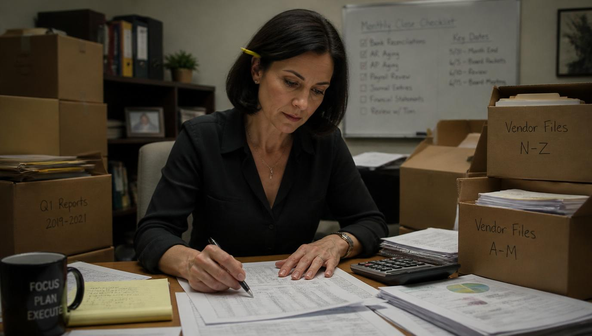
I had worked alongside Priya Anand for two years without ever fully understanding what she saw.
Internal audit is the department that everyone respects theoretically and avoids practically, the function that validates clean organizations and reveals broken ones.
I scheduled time with her under the pretense of a compliance question about divisional expense categorization.
Her office was half-packed. Boxes on the floor, shelves partially cleared, the specific entropy of a workspace being deliberately dismantled around its occupant.
The highlighter was still behind her ear.
—
What She Already Knew
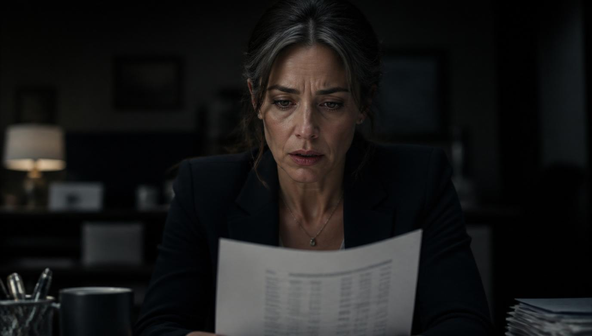
I had prepared a careful, indirect entry into the conversation.
Priya made it unnecessary within five minutes.
“You’re here about the budget reclassifications,” she said, not looking up from the document she was reviewing.
I asked her how she knew. She turned one page with her finger and said, “Because someone else should have been here six months ago and wasn’t.”
She pushed a printed summary across the desk toward me without drama.
The numbers at the bottom of the page made my throat tighten.
—
The Shape Of The Problem
Priya walked me through it in the flat, methodical register of a person who has removed emotion from information as a professional practice.
Budget lines from my division, reclassified as discretionary innovation expenditures under a fund attached to Marcus Hale’s office.
The amounts were individually unremarkable. Collectively, across eighteen months, they added up to something that was no longer unremarkable at all.
“The trail is clean on the surface,” she said, tapping the page with one finger. “That’s the part that worried me. Clean trails take effort.”
—
What I Understood Standing There

I had thought I was investigating favoritism.
I had thought I was building a case about a personal relationship producing unfair professional outcomes.
Standing in Priya’s half-empty office with her printed summary in my hands, I understood that I had been reading the shadow of something and mistaking it for the thing itself.
The favoritism was real. It was also a symptom.
The disease was underneath it, in the money, in the reclassified lines, in the manufactured career funded by resources extracted from my team’s work without anyone ever saying so out loud.
—
The Cost She Was Already Paying
Priya’s department was being folded under Sandra Briggs’s oversight by the end of the quarter.
Her independence, the specific structural independence that made her findings possible, was being dissolved in real time.
She was not bitter about it in the way I might have been. She was precise.
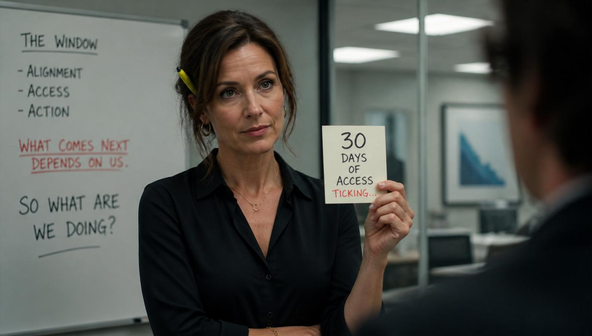
“I have thirty days of access to the full audit function before the transition completes,” she said. “Whatever is findable is findable now. After that, I don’t know what I can get to.”
She looked at me steadily, the highlighter still behind her ear. “So what are we doing?”
—
James Whitfield’s Kitchen Table
I reached James Whitfield through a mutual professional contact, framed as an informational call.
He had left the company eight months ago. He answered on the second ring and agreed to speak without asking many questions, which told me he had been expecting someone to call eventually.
He was sitting in what sounded like a kitchen. A chair scraped, something was set down.
I described the pattern I was tracking in careful, minimal language.
He was quiet for a long moment when I finished.
“Yeah,” he said finally, the word arriving with the weight of something he’d been holding. “That’s how it works.”
—
The Name I Wrote Last
James Whitfield gave me two hours and confirmed three things I had suspected and one I had not.
Patricia Weld’s name came up near the end of the call. He said it carefully, the way you handle something that might still be hot.
He couldn’t speak to specifics. He could speak to presence, who was in which room when which decisions were made.
I thanked him and ended the call and sat for a long time in my car in the parking garage.
Then I opened the black notebook to a fresh page, wrote Patricia Weld at the top, and underlined it twice.
What Simone Said Over Lunch

Simone Park had the particular gift of making invitations feel accidental.
She texted me on a Thursday, casual language, a place near the office she knew I liked.
I went because refusing would have been its own signal.
She ordered quickly and smiled and asked me how my team was holding up through the audit process, and I watched her eyes the whole time, looking for the angle she was working before she found it herself.
—
The Question Beneath The Question
She said she had noticed I seemed stretched thin lately.
Said it warmly, the way you say something true to make the thing beneath it easier to ignore.
I told her the division audit was creating overhead nobody had budgeted for.
She nodded slowly, turning her water glass in her hand.
“Victoria,” she said, “are you thinking about leaving?”
The question was so precisely placed that I understood she already knew the answer was no, and that was not actually what she was asking.
—
What I Chose Not To Say
I told her I was focused on my team.
I told her the audit was routine and that I was managing it.
She looked at me with the expression of someone who has prepared for exactly this response and found it satisfying in the way that confirmed something rather than resolving it.
We talked about nothing real for another twenty minutes.
Walking back to the office, I counted what I had disclosed. Nothing that mattered. But the conversation itself had been a door being tested, and I needed to remember that.
—
The Notebook At Night
I was keeping the black notebook in a bag I carried home every evening.
Not because I was certain anyone would look through my desk, but because certainty was no longer a resource I had available.
The entries from the past three weeks were dense.
Dates, names, dollar amounts from Priya’s summary, Garrett’s portfolio cross-references, things James Whitfield had said that I had reconstructed from memory immediately after the call.
I sat at my kitchen table one night and read all of it from the beginning, and the thing that struck me was how ordinary each entry looked on its own.
—
The Shape Of Ordinary Evil
That was the part I kept returning to.
No single line in the notebook was dramatic. No single budget reclassification was a smoking gun.
It was the accumulation that became damning, the way a series of unremarkable choices, made by people with institutional authority, arranged themselves into something that had deliberately and systematically stripped my team of credit and resource to manufacture someone else’s career.
The system had not failed accidentally. It had been operated.
That distinction made something cold settle in my chest that did not entirely go away after that.
—
Ashley At The All-Hands
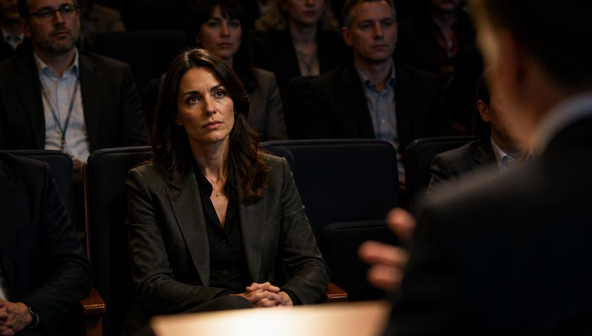
The all-hands meeting was held on a Tuesday in the main conference auditorium.
Marcus Hale spoke for twenty minutes about strategic vision and organizational momentum.
Then Ashley Monroe was introduced, and she walked to the front of the room in a blazer that fit her well, and she spoke about the Strategic Partnerships initiative with the careful enthusiasm of someone who had rehearsed sincerity.
I sat four rows back and listened to her describe outcomes that I could trace, line by line, back to work my team had done.
Her light auburn hair caught the overhead lights. She tucked it behind her ear.
—
What I Felt That I Did Not Want To Feel

I had expected to feel anger.
I felt something more complicated, something closer to grief, which surprised me and which I did not have room for.
Watching Ashley at the front of that room, I understood for the first time that she believed it.
Not all of it, maybe. But enough. She believed she had earned the room’s attention.
The people who had built the architecture around her had been careful enough that she could not see the frame. And that made her harder to hate than she had been when she was simply an abstraction in my notebook.
—
Priya’s Thirty Days
Priya messaged me on a Friday afternoon using a personal email address I had not seen her use before.
The message was brief. She said she had found the third reclassification authorization. She said the signature on it was not Marcus Hale’s.
It was Sandra Briggs’s.
I read the message twice and then closed my laptop and sat at my desk for two full minutes without moving.
Sandra Briggs had not simply permitted the misappropriation. She had signed it. Her name was in the record. That changed what we were building from a pattern into something with a direct line of attribution.
—
What Direct Attribution Means
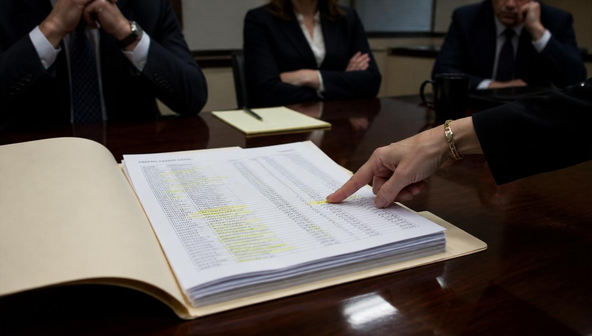
Priya and I met after hours in a conference room on the third floor, which had no cameras at the interior angle and which I had checked twice.
She laid out three pages on the table between us.
The signatures were clear, dated, unambiguous.
“She knew what she was approving,” Priya said, not as a question.
I asked her about Ronald Chu.
She slid a fourth page across the table, a performance review criteria modification dated seven months prior, logged under his department’s procedural updates, buried in language designed to look administrative.
—
The Document Taking Shape

Priya had begun organizing everything into a single compiled package.
Printed pages, numbered dividers, a one-page summary in language a board member with no financial background could understand in under ten minutes.
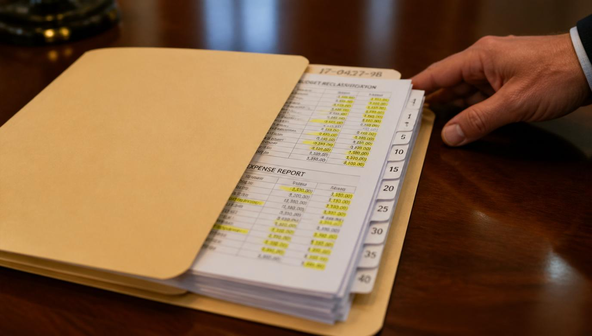
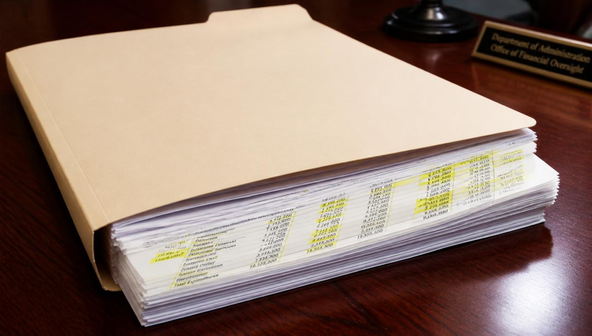
The folder was plain manila with a handwritten reference number on the tab. No markings. Nothing on the outside that named what it was.
She set it on the table between us.
“This is what we have,” she said.
I looked at it and thought about the weight of paper, how something this thin could contain the mechanism of what had been done to twelve people’s work over eighteen months.
—
The Variable I Could Not Solve
Patricia Weld sat on the compensation committee.
If she had known and said nothing, the problem did not stop at the executive level. It reached the board.
Taking this to the board was only viable if there was someone on it who was clean.
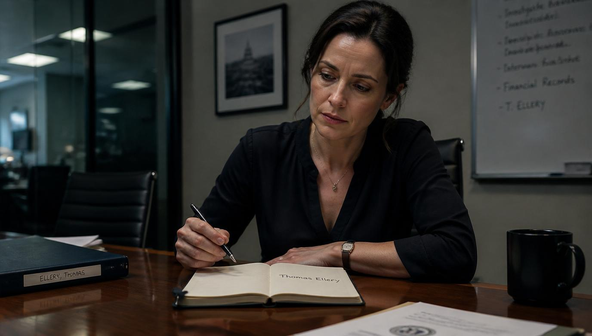
I had one name from Priya’s research: Thomas Ellery.
Fourteen months on the board. No overlap with the compensation committee’s decisions during the relevant period. An institutional investor’s representative, not a loyalist.
I wrote his name in the notebook and held the pen over it for a moment before I closed the cover.
—
Garrett’s Answer
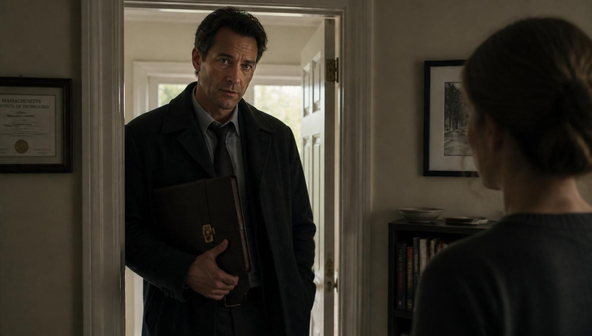
He came to my office on a Monday morning without an appointment.
He stood in the doorway with his portfolio notebook under his arm and waited until my assistant was out of earshot.
“I’ve been thinking about what you told me,” he said.
I did not say anything.
“I have a family.” He looked at the floor and then back at me. “I know what that sounds like. I know what it is.”
He set the portfolio notebook on my desk.
“My records are yours. Whatever you need.”
—
What It Cost Him To Say It
He did not wait for me to thank him.
He picked up the portfolio and said he would make copies and that I should tell him what format was most useful.
He left before I could find the right words, which was considerate of him because I am not sure I had any.
I sat with the weight of what he had just given me, not the records, though those mattered, but the decision itself.
He had calculated the risk with full knowledge of what he stood to lose and he had decided anyway. There is a specific loneliness in accepting that kind of help, because you understand immediately that you now owe someone a debt that cannot be repaid with outcomes you cannot guarantee.
—
The All-Hands Aftermath
Two days after the all-hands presentation, Ashley Monroe was publicly mentioned in an executive communication as a key contributor to Q3 strategic growth.
I had the source documents for that growth in a compiled folder in Priya’s possession.
I sat in my office and read the communication on my screen and felt the particular quality of helplessness that comes not from ignorance but from having evidence that has not yet reached the person with power to act on it.
Thomas Ellery had a name and a folder waiting. But Priya needed the complete package first.
She had eleven days left of full audit access.
—
What Priya Said At The End Of The Week
She called me on a Saturday morning, which she had never done before.
Her voice was the same careful register she always used, but I heard something different in the pause before she spoke.
“I found the expenditure classifications for Ashley’s conference travel,” she said.
“All of it traces back to the innovation fund.”
Another pause.
“Victoria.” She said my name the way you say something before bad news. “Patricia Weld approved the fund’s formation. Not Marcus. Patricia.”
The line was quiet.
I looked at the plain black cover of my notebook on the kitchen table and understood that the problem was larger and older than I had been building toward, and that I had eight days to decide what to do with that.
Eight Days
Eight days felt like a number someone had chosen carefully.
Not enough time to be thorough. Enough time to make a mistake.
I wrote Patricia Weld’s name in the notebook beneath Thomas Ellery’s and drew a line connecting them. The line was not decorative. It was a question I did not yet have an answer to.
Priya had found the fund’s formation documents. Patricia’s signature was on the authorization page, dated twenty-two months ago.
—
What The Signature Meant
If Patricia had approved the fund before the misappropriation began, she may not have known its eventual purpose.
That was the charitable interpretation, and I held it lightly because I needed to, not because I believed it.
The less charitable interpretation was that the fund had been designed with its purpose already in mind.
I turned both possibilities over for two days and could not resolve them. The honest answer was that I did not have enough to know. What I had was enough to make Thomas Ellery ask the right questions.
—
The Conversation I Kept Rehearsing

I would be walking to the kitchen, or standing at the copy machine, and I would find myself rehearsing the sentence.
*Mr. Ellery, we have documentation of a material misstatement in the company’s operational resource records.*
Then I would catch myself and stop, because rehearsing was a way of feeling like I was doing something when I was actually just waiting.
Priya needed six more days of access. I needed to give her those six days without doing anything that accelerated a response from above.
—
The Lunch I Could Not Avoid
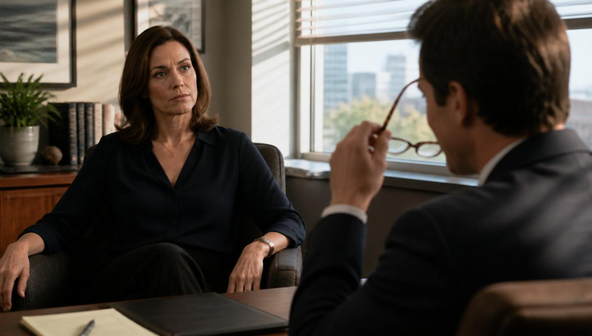
Daniel scheduled a check-in for Wednesday. Not unusual. I had been careful to keep our interactions normal.
He arrived at my office three minutes early, which was his tell for conversations he had prepared for.
He sat down, removed his glasses, set them on his knee.
“I want to make sure you’re getting what you need from the division right now,” he said.
I recognized the sentence. It was the language of someone who had been told to take a temperature without being told why.
—
What I Gave Him
I told him the audit had been disruptive but manageable. I said my team was solid.
He nodded with the careful rhythm of someone logging responses rather than hearing them.
“You seem focused,” he said, and the word *focused* landed with a weight that told me it had been chosen.
I said I was. I smiled in the way I had learned to smile in rooms where smiling was a form of armor.
He put his glasses back on. The meeting ended in eleven minutes. Neither of us said anything real.
—
Priya’s Access Window
She messaged me on Thursday evening, again from the personal address.
*Two more expenditure sets to cross-reference. Should have the complete package by Sunday.*
I read it twice, then deleted it from my phone, which I had not done with her messages before.
The deletion felt significant in a way I did not want to examine. There is a version of caution that is just fear wearing professional clothing. I was not sure which version I was practicing.
—
Garrett’s Copies
He delivered them in an envelope inside a larger envelope, sealed, handed to me during a conversation about a project timeline that neither of us cared about.
His face was composed in the particular way of someone who has made a decision and is no longer reviewing it.
The records inside were organized by date, annotated in his small neat handwriting.
Seven years of habit had made him precise without meaning to be useful. But useful was exactly what it was, and I sat with the envelope on my kitchen table that night and felt the specific gratitude of being handed something irreplaceable.
—
What I Almost Did
On Friday I drafted a message to a journalist I knew peripherally from a conference two years prior.
I did not send it.
I sat with the draft open for twenty minutes, reading it in pieces, and what I felt was not conscience exactly but something structural. The logic of it fell apart when I examined the sequence.
Priya had said it would compromise the legal integrity of the package. I knew she was right. I closed the draft and did not save it and sat in the quiet of my apartment with the understanding that wanting to do something and being wrong about it could exist in the same moment simultaneously.
—
What That Revealed
The fact that I had drafted it at all told me something I had not wanted to know.
I had become someone who was calculating. Not corrupt. But calculating in a way that treated people as pieces in a sequence rather than as themselves.
Priya was not a strategy. Garrett was not a resource.
I wrote nothing in the notebook that night. I sat with the discomfort of knowing that obsession had done something to my edges, worn them into shapes I did not entirely recognize.
—
Sunday Morning

Priya’s message came at nine forty-seven.
*It’s complete.*
Two words that landed with the weight of everything we had spent six weeks building toward.
I made coffee and did not drink it. I sat with the manila folder’s image in my mind, forty pages, numbered dividers, Sandra Briggs’s signature on page fourteen, Patricia Weld’s authorization on the fund formation, Ronald Chu’s retroactive criteria modification, all of it arranged in the plain language Priya had used deliberately so that no one could claim they had not understood.
—
The Name At The Top Of The Page
Thomas Ellery.
I wrote his name again in the notebook, this time without anything beneath it.
Priya would make the approach through the formal board communication channel. Her credentials as the outgoing Head of Internal Audit gave the contact weight that mine no longer could, given what was building above me in the organizational structure.
We had agreed on the framing. An internal audit handoff conversation. Neutral language. Nothing that would register as alarm before we were in the room.
—
What Garrett Said When I Told Him

I told him Sunday afternoon, by phone, careful with every word.
There was a pause on his end that lasted long enough that I checked the connection.
“Okay,” he said finally.
Not relief. Not triumph. Just a man absorbing the information that something he had helped build was now in motion, and that motion could not be recalled.
He asked me what he should do. I told him to keep his records and to do nothing that changed his visible behavior at the office. He said he understood. I believed him.
—
The Thing About Simone
She was still in the building. Still in meetings I attended. Still sending communications that were professionally indistinguishable from before.
I did not know precisely what she had told Daniel. I knew she had said something. The timing of Daniel’s temperature-taking lunch had confirmed the general shape of it.
She had not given him the documentation. She did not have the documentation.
But she had given him enough to create awareness, and awareness had been passed upward, and somewhere above me Marcus Hale now knew that Victoria Hayes was not simply managing her disappointment about the promotion.
—
The Acceleration I Did Not See Coming
Monday arrived with an email from HR, sent at seven twelve in the morning.
A revised performance plan notice, attached as a PDF. New timeline noted in the cover paragraph.
My window had not changed from five weeks to something manageable. It had changed from five weeks to two.
I read it at my kitchen table before I had fully woken up, still in the clothes I had put on to make coffee, and I understood that someone above Daniel had made a decision over the weekend that had been waiting for the right moment to execute.
—
Two Weeks

Priya had the package. Ellery had a name and a reason to meet.
Two weeks was not the timeline I had prepared for. But it was the one I had.
I closed the email. I picked up my watch from the table where I had left it the night before and fastened the worn leather strap around my wrist.
The crack near the clasp had not gotten worse. Or maybe I had stopped noticing. Either way, I put it on and stood up and understood that the space between building something and having to use it before you are ready had just collapsed into a single point.
The Call Priya Made
She reached Ellery’s office through the formal board communication channel on Monday afternoon.
I was in a budget review meeting I could not leave when she messaged me.
*He responded. Meeting confirmed. Wednesday morning, ten o’clock.*
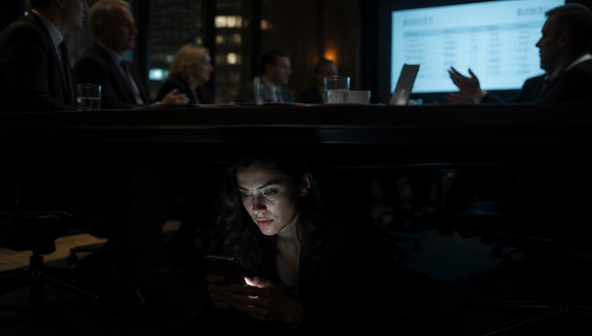
I read it under the table with my phone angled away from Daniel’s sight line.
Two days. We had two days.
—
Wednesday Morning, Nine Fifty-Three
Priya was already in the lobby when I arrived.
She had the manila folder tucked inside a larger briefcase, invisible unless you knew what you were looking for.
She looked exactly as she always looked. Precise, unhurried, the highlighter behind her ear.
I did not ask her if she was certain. She had been certain for weeks. That was not the kind of question the moment deserved.
—
The Room We Were Given

A conference room on the building’s fifteenth floor, assigned through the board’s administrative calendar as a routine audit handoff.
Ellery arrived at ten exactly.
He was heavier than his board photo suggested, with a stillness about him that I recognized as deliberate.
He set his own folder on the table, which I had not expected.
He looked at us and said, “Tell me what you have.”
—
What Priya Said
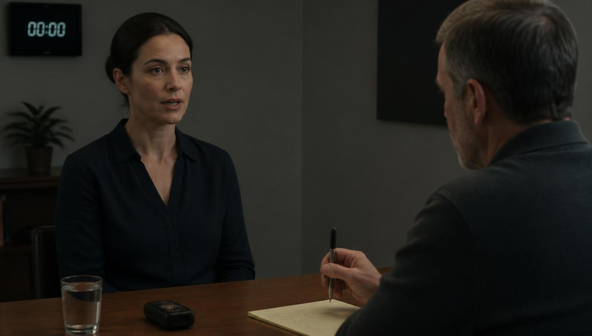
She spoke for eleven minutes without interruption.
She used plain language, as she had promised. No jargon. No interpretation. Just the sequence of what the records showed.
When she reached Sandra Briggs’s signature on the reclassification approvals, Ellery picked up his pen.
He did not write anything down. He held the pen the way some people hold stillness, as a kind of anchor.
—
The Three Questions
He asked the first one when Priya finished.
“Are the originating budget entries recoverable from the division’s own records, independent of the fund documentation?”
Priya said yes.
The second question: “Was any of this disclosed in the parent company’s quarterly operational filings?”
Priya opened the folder to page nine and slid it across the table.
He looked at it for thirty seconds. “And Patricia Weld’s authorization predates the misappropriation by how long?”
“Four months,” Priya said.
—
What His Face Did
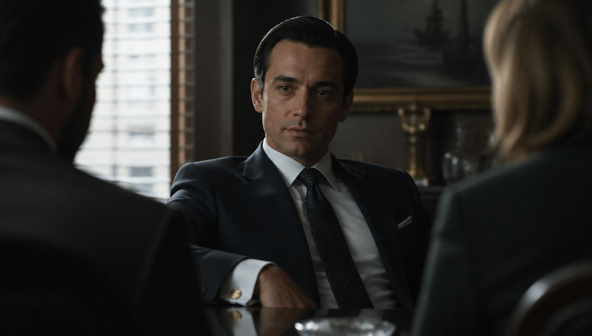
Nothing visible. Which was itself an answer.
He set the pen down and looked at both of us with the specific quality of attention that belongs to someone who has just arranged several things into a shape they recognize.
“I’ll need to retain external forensic accountants,” he said.
“That’s understood,” Priya said.
He looked at me for the first time since the questions began. “You’re currently under a performance plan.”
It was not a question.
—
What I Told Him
I told him the timeline. Two weeks, as of Monday.
I told him what I believed the plan was designed to do, not punish me but build a record that would make me terminable and discreditable simultaneously.
He listened with complete stillness.
“Thirty days,” he said. “That’s the outer edge of what the forensic review requires.”
He did not say he was sorry about the gap. He said, “Do not sign anything.”
—
After The Meeting
Priya and I did not speak until we reached the street.
The morning was cold and overcast, the kind of gray that makes buildings look heavier than they are.
She tucked her briefcase under her arm and said, “He asked the right questions.”
I knew. I had felt it in the room.
She said it like a person confirming something they had needed to confirm before they could fully exhale.
—
The Thirty-Day Problem
I had two weeks before the performance plan made me terminable.
Ellery needed thirty days.
I did the arithmetic on the walk back to the office and arrived at the same answer every time.
The gap was not theoretical. It was the space in which the company could move against me before the review concluded, before anyone with authority had confirmed what the documents said.
—
What Marcus Hale Knew
Not everything. But enough.
Daniel told him something was happening through channels Victoria could only estimate.
I became aware of it Thursday when my calendar access to two executive meeting rooms was quietly revoked without explanation through a system notification that used the language of an administrative update.
Small. Deliberate. The kind of pressure that is designed to feel like weather.
—
Ashley’s Question

Priya told me about it Friday morning.
Ashley Monroe had gone to Marcus Hale’s office and asked why her budget approvals were routing through Sandra Briggs rather than standard channels.
I stopped walking when Priya said it.
Ashley had noticed the financial irregularity from her own side and had asked the wrong person directly.
Which meant Marcus now believed Ashley might be part of whatever Victoria was doing. And he was wrong. And that wrongness was going to accelerate everything.
—
The Notice
It came the following Tuesday. Seven days ahead of the original revised timeline.
A formal termination notice in a thin envelope delivered to my office at nine in the morning by an HR coordinator who did not make eye contact.
Inside, a two-week severance offer. A nondisclosure agreement, broadly written, eleven pages.
I read every page slowly.
The NDA covered all conduct witnessed at the company. All communications with external parties regarding company operations. Everything.
—
The Room Where I Was Asked To Sign
HR. Third floor. Two people I had never spoken to before.
A company attorney sat in the corner with a yellow legal pad balanced on his knee.
They explained the terms in the patient, flattened language of people who had done this before.
I held the document with both hands.
The watch on my wrist was the only familiar thing in the room.
—
What I Said
I set the document on the table.
I said I would need time to review it with my own counsel, which was both true and a refusal in the language they understood.
The attorney in the corner wrote something on his legal pad.
I picked up the document, thanked them with a steadiness I did not entirely feel, walked out of the building, and called Ellery’s office from the sidewalk before I had fully decided to.
—
The Morning After

I was officially terminated the next morning. A calendar notification canceled every recurring meeting.
My badge deactivated at nine.
I sat at my kitchen table with the notebook open in front of me and did not write anything in it.
There was nothing left to document. The case was built.
The next move belonged to Thomas Ellery, and to thirty days I no longer had the standing to survive inside, and to the specific, clarifying silence of a person who has done everything correctly and lost anyway, at least for now.
What The Kitchen Table Looked Like

The notebook sat open to the last entry. I had not closed it.
The date in the left margin was two days ago.
Outside, the city moved at its ordinary pace, indifferent to the specific quality of silence inside my apartment.
I made coffee I did not drink. I sat in the chair I always sat in. I waited for the feeling of having done something irreversible to become something I could carry rather than something that was simply happening to me.
—
Garrett’s Call
He called at eleven that morning.
His voice was flat in the way voices go flat when someone has already made a decision and is simply reporting it.
“They pulled the offer,” he said. “Sandra’s office sent a one-line email. No explanation.”
I waited.
“I’m sending my documentation to Ellery’s forensic team today,” he said.
He did not say it heroically. He said it the way a person says a thing they have calculated and accepted, a math problem with one remaining answer.
—
What That Changed
I told him he did not have to.
He said he knew.
There was a pause long enough that I understood he had already considered every version of not doing it and had discarded them.
“They took it back the moment the external review started,” he said. “So I have nothing left to protect by staying quiet.”
Which was true. Which was also not the only reason he was doing it, though it was the reason he would give, and I let him give it.
—
Priya’s Message, Day Four
*Forensic team has the originating budget records from your division’s files. Independent of the fund documentation. They confirmed the chain.*
I read it standing in my hallway still wearing a coat I had not bothered to remove.
The documents could stand without me now. They did not require my credibility, my employment record, my performance plan history.
They required only the records themselves, which existed before any of this, and which no one had thought to destroy because no one had believed anyone would look.
—
The Waiting Shape
I learned what it felt like to wait for something you had already done everything to cause.
It felt like stillness with all the wrong texture. Not peace. Not rest.
The days had a quality of suspended weight, like a structure that has shifted but not yet settled.
I called my sister once. I did not tell her the full shape of it. She said I sounded tired and I said I was and that was both true and insufficient and we agreed to have dinner the following week.
—
Day Eleven
Ellery’s office sent a single line through the formal channel.
*Review proceeding. No action required from you at this time.*
I held my phone until the screen went dark.
Eleven days of the thirty. Nineteen remaining. The company’s legal department had contacted my attorney twice.
The first contact had been procedural. The second had been softer in language, which my attorney read as a signal that someone on their side was beginning to understand the direction things were moving.
—
What I Did With The Days
I updated my resume for the first time in four years.
The exercise was clarifying in ways I had not expected, not because it gave me hope but because it made the shape of what I had built legible to me again.
Twelve people. Three years. A third of domestic revenue growth.
That existed regardless of what any document said, regardless of what any performance plan claimed, regardless of whether Marcus Hale would ever sit across from me and say the word sorry.
—
Day Twenty-Two
The call came eight days early.
Priya’s voice, entirely level, the way it always was when the information was significant enough that affect would be a distraction.
“The forensic review is complete,” she said.
“Twenty-two days,” I said.
“The misstatement qualifies as material under the parent company’s reporting requirements,” she said. “They notified the parent’s general counsel this morning. Before Marcus.”
Before Marcus. I understood immediately what that sequence meant.
—
The Cascade
I did not learn the specifics in real time.
I learned them later, in pieces, the way you learn the shape of a wave after it has already broken.
Marcus Hale was placed on administrative leave on a Thursday morning. The notification went to his phone before his assistant knew. Sandra Briggs resigned forty-eight hours later, without a public statement, with a single-paragraph internal announcement that used the phrase pursuing other opportunities.
Ronald Chu was placed on leave the same day Sandra resigned. Patricia Weld recused herself from the compensation committee and said nothing.
—
The Company’s Statement
Seven sentences. I read them three times.
Leadership transitions. Governance excellence. Commitment to stakeholders. The language of an institution describing its own correction without describing what had required correcting.
Marcus Hale’s name did not appear. Sandra Briggs’s name did not appear.
The statement read as though a series of positions had simply become vacant, as though people had not made specific choices inside specific rooms, as though the bathroom corridor and the reclassification approvals and Ashley’s manufactured ascent had been weather rather than decisions.
—
What Settlement Looked Like

My attorney handled most of it.
Three weeks of negotiation conducted through written exchanges I was not present for, after which she called me and read the terms in her precise, unhurried voice.
Financial compensation. Formal expungement of the performance plan. A written acknowledgment of procedurally improper termination, nonpublic, carefully worded, sufficient.
I did not get Marcus Hale in a room saying what he did to my career. I got a clean record and a check and the knowledge that both existed because the alternative had become untenable for them. That was a form of truth.
—
Ashley

The investigation found no evidence she was a knowing participant.
Her role was restructured downward. She was not fired. She was not disciplined. She was a twenty-six-year-old who had been offered acceleration and had taken it without fully reading the price attached.
I had spent months holding her as the object of something that felt like anger. What remained now was not forgiveness exactly. It was precision.
The people I needed to hold responsible had been in rooms she had not been invited to. She had been the vehicle, not the architect.
—
Priya, After

She was recruited by the parent organization’s internal audit function within two months.
She told me over coffee in a place neither of us worked near anymore. She looked the same. Highlighter behind her ear. The specific expression she had when information had been correctly organized.
“It’s a better structure,” she said. “More independence.”
She did not say she was glad things had worked out. She was not a person who said things like that. She said, “The records held,” and that was the version of gladness available to both of us.
—
The Role That Wasn’t Mine

The VP of Strategic Expansion was filled by an external candidate six weeks into the transition period.
I heard about it through a former colleague’s message, brief and careful in tone, as though she was not sure how I would receive it.
I sat with it for a full evening.
I had spent three years building toward that role and more than a year fighting to expose why it had been taken from me, and in the end the company had been so thoroughly disrupted that the role itself had become something different, restructured into a shape that no longer held what I had actually wanted.
—
The First Day Somewhere Else
Six months later. A mid-sized competitor, smaller scope, younger team.
The politics were different. Not absent. Different.
In my first meeting, a senior manager said something deliberately vague to avoid committing to accountability, the kind of statement designed to sound like a position while containing none.
I watched myself not respond to it immediately.
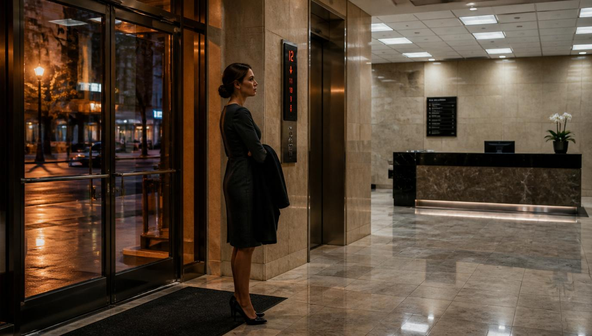
I made a note instead. I knew what I was looking at now. I knew how long it took to understand what you actually understood. I was not the person who had stood in a hallway outside a bathroom corridor, coat in hand, trying to categorize a sound. That person had believed the system measured what it claimed to measure. This person knew better, and carried that knowledge like the watch on her wrist: worn in, functional, chosen for what it was rather than how it appeared.


