
The Story Starts Below!
The Thing About Being Needed
I built my business the way you build anything that has to last — slowly, carefully, with a lot of unglamorous work that nobody applauds.
Whitmore Vendor Consulting. Ten years old this past spring. I started it at twenty-four with a borrowed laptop and a spreadsheet of contacts I had gathered from two years of assistant work at an events firm downtown.
Nobody handed me the connections. I earned each one through follow-through, through showing up on time, through being the person who never let a detail fall.
—
What the Family Saw
My mother, Renata, told people I was “in events” the way you might say someone works “in computers.”
A vague gesture toward something she respected without fully understanding. She was proud of me, I believe that. But pride and comprehension are not the same thing.
To her, what I had built was less a business than a very useful set of phone numbers. A resource. Something the family could draw on when the occasion arose.
—
Paige’s Kind of Beautiful
My sister Paige has always been the kind of beautiful that photographs immediately and apologizes for nothing.
Warm chestnut waves, wide soft eyes, a smile that arrives half a second before she needs it. She moves through rooms the way water moves — finding the easiest path, leaving everyone feeling gently touched.
I do not say this with bitterness. I say it because it is structurally true and because I spent thirty-four years pretending it did not shape everything between us.
—
The Distribution of Labor
Our father, Gerald, died three years ago.
A quiet cardiac event on a Tuesday afternoon that turned the following week into a logistical emergency I handled from my kitchen table. Vendors, catering, the memorial hall rental, flowers, the printed programs with his photograph on the cover.
Paige delivered the eulogy. Forty beautiful words that made every aunt in the room reach for their handkerchiefs. People still mention it. Nobody mentions the printed programs.
—
The Promotion Nobody Questioned
Derek Brennan, Paige’s now-fiance, got his promotion eighteen months ago because I made one phone call.
A mutual contact of mine needed a reliable project manager for a mid-level contract. I mentioned Derek. My contact trusted my judgment because I had never wasted it on someone unworthy. Derek impressed them, got the contract, and the promotion followed naturally.
Within the family mythology, this became evidence of Derek being impressive. My phone call quietly dissolved from the story the way contributions do when the recipient is more interesting than the source.
—
What I Told Myself
I did not resent any of this. That is the part that is hardest to explain now.
I genuinely believed that being the person who held things together was a form of being loved. That being needed was the same as being chosen. That if I stopped being useful, some essential warmth in my relationships would go cold.
I had built that belief so carefully, over so many years, that it did not feel like a belief. It felt like weather.
—
The Engagement
Paige called me on a Thursday evening in October, her voice already at the register she uses when she wants full attention.
“He asked me last night,” she said, and I heard the ring in her voice before she said the word ring. Derek had proposed at dinner, something private and tasteful, and Paige had said yes the way Paige says yes to everything beautiful — completely, immediately, without a backward glance.
I was happy for her. I want to be honest about that. The happiness was real.
—
When the Calls Started
The planning began within the week. Paige called me almost daily in November.
She needed a florist she could trust. She needed someone who did catering for larger events without requiring a deposit that would empty their savings. She needed a venue with flexibility because Derek’s mother had opinions about dates.
I gave her Marcus’s number. I gave her the caterer’s name and mentioned she should use mine. I flagged the venue contact who owed me a soft favor. I did all of it freely, without hesitation, because this was what I did and she was my sister.
—
What I Received
Paige received reduced rates from Marcus because I vouched for her personally.
She received flexible payment deferral from the caterer because I had always been reliable and my name carried a decade of goodwill. She received the venue at a rate that would not have been offered to a stranger.
I received her gratitude, which lasted approximately as long as it took to move on to the next problem she needed solved.
—
December Going Quiet

By December, something had shifted in the texture of our contact, though I could not name it yet.
My calls began reaching voicemail more often. My texts received one-line replies. When I asked about the day-of coordination and whether she needed me to manage anything on-site, Paige said the planner had it covered and moved immediately to a different subject.
I told myself this was wedding stress. I had seen it before in clients. The closer the date, the more the bride turned inward. I gave her space because I was practicing being the sister who did not demand too much.
—
Daria’s Assumption
My cousin Daria mentioned her invitation over coffee in mid-January.
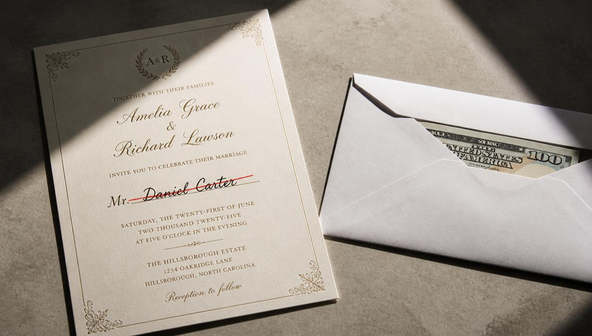
She stirred her drink and said something offhand about how the paper stock was beautiful and asked whether I had gotten the same design. She assumed, entirely reasonably, that if she had received one months ago, I had too.
I smiled and said it was lovely and changed the subject with the smooth efficiency of someone who has had practice redirecting away from her own gaps.
—
What Was Not There
I went home and checked.
I opened every drawer, went through every accumulated pile of mail on the kitchen counter, checked my email twice. I had texts from Paige from six months ago, cheerful and plural, saying I was “obviously coming.” But no formal invitation. No envelope with my name on it. No RSVP card. No table number.
I searched again as if it would materialize. It did not.
—
Renata’s Answer
I called my mother on a Sunday morning, choosing my words carefully.
Renata told me the invitation must have gotten lost in the mail. She said it the way she says everything she needs me to believe — with a mild impatience that reframes my question as the problem rather than the answer.
“Just show up, Camille. Stop creating problems before the wedding even happens.” I wrote down what she said almost word for word, which I had never done before. Something in me was beginning to keep records.
—
The First Real Cold
I believed my mother. I need to be precise about why.
I believed her not because the explanation was convincing but because the alternative — that Paige had deliberately excluded me from the guest list for her own wedding — required me to hold a truth so painful that my mind simply was not ready to contain it yet.
I was not naive. I was protecting myself from a conclusion that, once admitted, could not be walked back. There is a difference, and it matters.
—
The Blazer I Chose
I picked out my outfit for the wedding weekend the way I always choose what to wear to an event I am helping coordinate.
A deep navy blazer, structured, with practical pockets. Understated. The kind of clothing that signals I am there to work rather than to be seen. I laid it on the chair by my closet door and thought, without irony, that it would be perfect for running any last-minute logistics.
I did not yet understand that the blazer was already telling the truth about how I expected to be treated, and that I had packed it without asking myself a single question about why.
The Rehearsal Dinner Invitation That Wasn’t
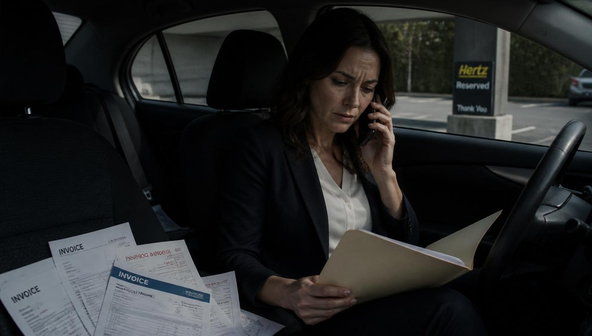
Paige called on a Wednesday to tell me about the rehearsal dinner.
She did not say “you’re invited.” She said “you can come if you want to,” which is a different sentence, one that places the social burden entirely on the person being told.
I said I would be there. I said it without hesitation, which I now recognize as the reflex of someone who has been trained to minimize her own need to be asked properly.
—
What Peripheral Looks Like From Inside
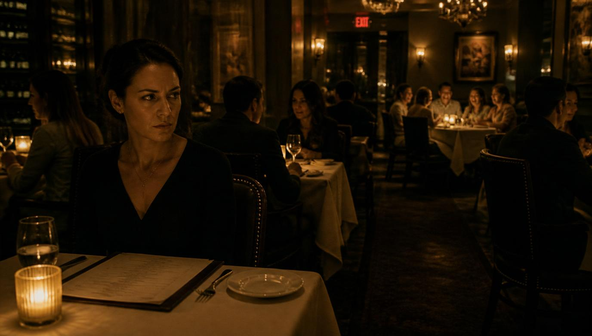
The rehearsal dinner was held at a restaurant with low amber lighting and small candles on each table.
I found my name written on a card at a table near the back, next to Paige’s childhood piano teacher and a couple I did not recognize.
The family table was sixteen feet away. I counted, absently, while pretending to read the menu. The bread arrived and I thanked the server and smiled and did what I always do in uncomfortable rooms, I made myself useful and undemanding and easy.
—
Derek’s Relatives

Two of Derek’s relatives were speaking near the bar when I moved past them to get water.
I was not eavesdropping. They were simply loud enough, and the sentence arrived clearly: “Camille probably isn’t coming to the ceremony anyway.”
I stopped. I turned toward them and said, carefully, that I was planning to come. The woman who had spoken looked at me with an expression I had never received before at a family event. Genuine confusion. Not embarrassment, not the flicker of someone caught saying something unkind. Confusion. As if my presence contradicted information she had been given.
—
The Prepared Story
She excused herself with the speed of someone who had said something she had not meant to reveal.
I stood near the bar with my glass of water and understood something that my mother’s reassurances had not been able to touch.
There was a story. Someone had told Derek’s relatives a story about why Camille would not be at the ceremony. Not a passing comment. Something prepared, distributed, credible enough that this woman held it as settled fact. A work conflict, I would learn later. That was the phrase they had been given.
—
What Marcus Called About
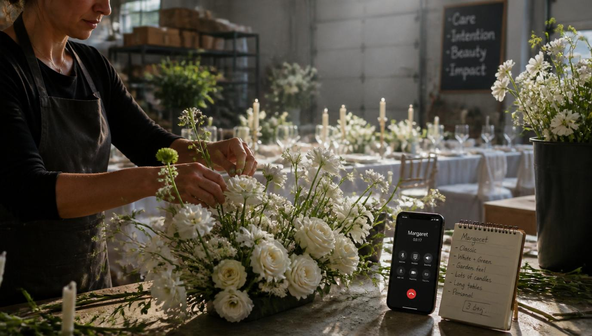
My phone rang three days before the wedding.
Marcus, my florist contact, spoke in his usual direct and unhurried way. He had a question about the day-of delivery timeline and whether the reception tables should be fully dressed before the ceremony began or staged in phases.
He assumed I was coordinating. I was not, but I knew the answer because I had been involved in every conversation that led to these arrangements being made. I gave him the timeline and told him I would follow up. After I hung up I sat with the fact that Marcus thought I was responsible for this event in a professional capacity. I was not. But my name and my knowledge had been arranged so convincingly in his world that the distinction had never occurred to him.
—
What Yolanda Said She Probably Misread
Yolanda mentioned it at lunch the following week, the way you mention something you are hoping will not turn into anything.
“I heard Paige’s wedding is coming together beautifully. You must be glad it’s nearly done.”
I told her I was not actually coordinating. She said she might have misread a communication she received from the planning account, that it referenced my firm in some capacity, but she was probably confused. Her eyes did not match her words. She dropped the subject. I let her, in the moment. But I did not drop it inside myself.
—
The Record I Started Keeping
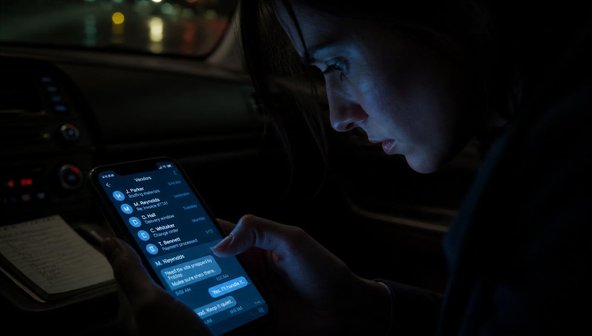
That evening I opened a notes application on my phone and began writing things down.
Not in an organized way at first. More like inventory. Marcus’s call. Yolanda’s non-explanation. The Derek relative’s confusion. The cousin who received her invitation months ago.
The blank space where my own invitation should have been. I listed each item in plain language without interpretation, the way I would document a vendor inconsistency before deciding whether to flag it. Something in me was quietly becoming unwilling to keep explaining these things away.
—
Renata’s Particular Phrase

Renata had used the phrase “stop making everything about yourself” four times in our conversations since the planning began.
I had counted those too, though I had not understood why I was counting until I saw the number written out. Four times. Deployed consistently whenever I asked a practical, logistics-based question.
The phrase did something specific and efficient. It repositioned my question as an emotional demand. It reframed my presence in the conversation as the problem. It closed every inquiry without answering it. I looked at the number four and thought about how many doors that phrase had shut before I thought to notice them closing.
—
What Daria Did Not Say
Daria knew. I understood this more clearly the longer I sat with it.
She had known something was wrong when she asked about my invitation and saw my face rearrange itself into blankness. She had let me redirect without pressing because she was not sure it was her place.
I did not resent her for it. Silence in families like ours is not always cowardice. Sometimes it is a survival behavior learned over so many years it stops feeling like a choice.
—
The Morning I Packed
I drove to the venue city on a Friday, the morning of the wedding weekend.
I had the navy blazer hanging in a garment bag behind my seat in the rental. I had my phone charged, my vendor contacts organized, a small notebook in my bag because I am always prepared to take notes. I had dressed like someone arriving to work, which is the only way I knew how to dress for something like this.
I drove the two hours thinking about logistics. Flower placement. Timeline. Whether Marcus’s delivery crew would need access before nine.
—
The Clipboard at the Entrance
The venue coordinator was a composed woman with a lanyard and a professional smile.
She held the clipboard with both hands when she looked up at me. She said my name back to me in the tone of someone confirming what they already suspect they will not find.
She looked twice. She turned the page. Her expression did not change, because she was good at her job, but the pause before she spoke again was long enough that I already knew what the pause meant before she said the words.
—
Not on the List
“I’m so sorry,” she said. “I don’t have you listed here.”
She showed me the page with the care of someone who wanted me to understand this was not her error. The list was clean, typed, alphabetical. The Ws showed two entries.
Neither of them was me. The list had been finalized and submitted three days ago. By the planner. On behalf of Paige. My name had not been left off by accident. My name had never been on it.
—
The Calls I Made
I stepped away from the entrance and called Renata first.
She answered in a hushed voice that told me she was already inside. She said “this is not the time” before I had finished my second sentence.
I called Paige. Voicemail. I sent Derek a text explaining the situation and received “I’m sure it’s a mistake, just talk to mom” within ninety seconds, which told me he had read it immediately and chosen the shortest possible response that transferred the problem back to me. The word “just” sat in the middle of that sentence like something I needed to stop and look at directly.
—
The Prepared Explanation

Aunt Sylvia found me outside, near a low stone planter, still holding my phone.
She had the expression of someone assembling concern from pieces. She said she had heard I had a work conflict, that it was such a shame, that Paige must have been disappointed.
I stood very still. A work conflict. Those were the words. Not my sister had a miscommunication with the planner. Not there was a problem with the guest list. A work conflict. Someone had given Sylvia that sentence in advance, which meant someone had anticipated this moment and prepared a story to contain it.
—
The Performance at the Door

Paige appeared about ten minutes later, pulled out by Renata, moving with the particular grace of someone who had rehearsed looking surprised.
She said “oh my god” and “there must have been a mistake with Cristina” and held my hands in both of hers and looked at me with her wide soft eyes full of something that resembled distress.
She did not tell the venue coordinator to add my name. She did not take out her phone. She hugged me with the warmth of someone resolving a situation and went back inside, and the watching relatives relaxed, because the hug had looked like a resolution, and they needed it to be one.
The Chair That Was Not Mine
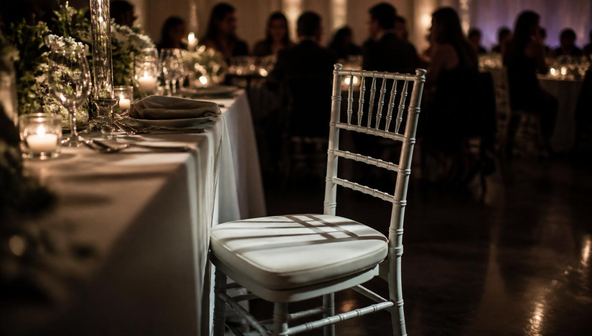
A well-meaning cousin appeared at my elbow holding a chair.
She said something about there being an extra, that I should sit down, that it was fine. The chair was white and matched every other chair in the room.
It had no place card. It had no table assignment. It had no name on anything anywhere that acknowledged it had ever been intended for me.
—
What I Did With My Hands

I sat in the borrowed chair and folded my hands in my lap.
This is what I do when I need to appear composed. I go very still and I make my hands quiet and I breathe through the noise of whatever is happening inside me.
The ceremony was beginning. The music started. People around me shifted in their seats and smiled.
—
The Flowers Marcus Made
The floral arrangements were extraordinary.
Marcus had outdone himself on the altar piece, sweeping white peonies and eucalyptus cascading down a wrought-iron arch. I recognized the installation style immediately.
I had described that aesthetic to him myself, in a conversation seven months ago, when Paige had called me from the florist’s showroom and handed me the phone because she did not know the vocabulary.
—
Watching From The Back
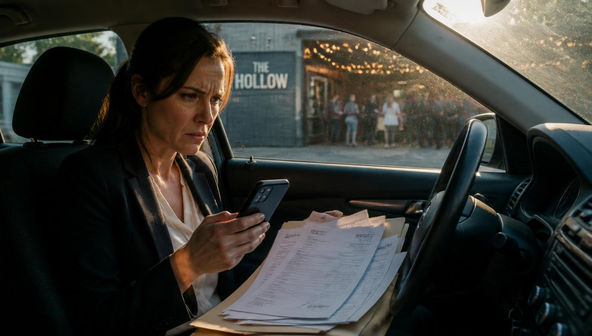
Paige walked down the aisle looking luminous.
She was. I am not willing to pretend otherwise. The dress was perfect and the light through the tall windows found her exactly right, and Derek’s face when he saw her was entirely genuine.
I watched from the borrowed chair in the back row and felt something split cleanly inside me, love for my sister and a grief I could not yet fully name, running parallel, not canceling each other out.
—
Cristina With The Folder
The reception had been running for forty minutes when Cristina found me.
She moved through the room with the efficient neutrality of a professional who has learned to be invisible at celebrations. She had a folder. She was scanning faces, looking for mine specifically.
She said my name as a confirmation, not a question, and sat down beside me with the manner of someone completing an administrative task.
—
The Documents In Her Hands
She opened the folder across her knees.
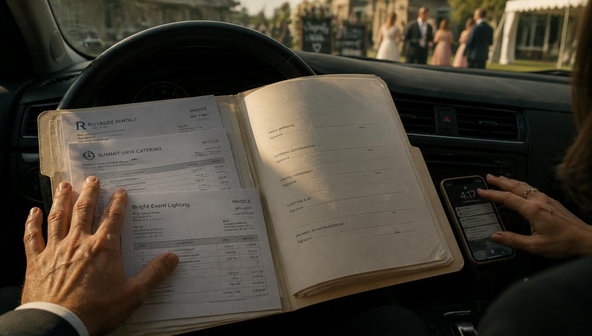
My business name appeared on the first page. Then on the second. She pointed to a line near the bottom of the third page and explained, in a low professional voice, that the final balances needed a sign-off from the coordinating consultant before the close of the event weekend.
She had my name on four separate documents. She had been given my information as the responsible financial party.
—
The Caterer’s Page
I turned to the page from the catering company.
The formatting was standard business letterhead. Near the bottom of the deferred payment arrangement, beneath the typed names of Paige and Derek as primary clients, there was a second line. A co-signer line.
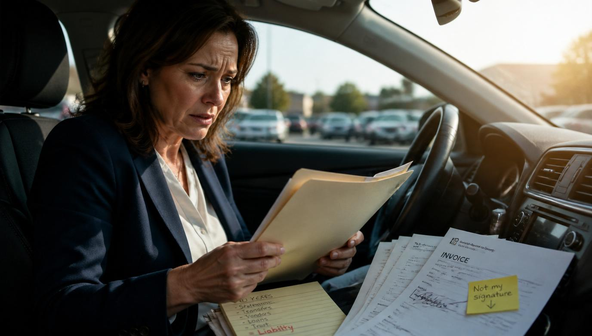
My firm’s name was typed there. Beneath it was a signature line. It was not blank. Something was written on it, in handwriting I recognized without wanting to recognize it.
—
Cristina Did Not Know
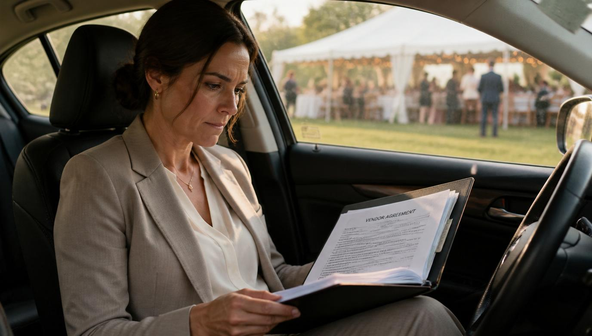
Cristina watched my face with the attentive neutrality of someone who senses a complication.
She said she hoped everything was in order and that she just needed sign-off before the end of the evening. She had been given my contact information by Paige’s planning team. She had no reason to question it.
She was doing her job. None of this was her error. That clarity made it worse somehow.
—
What Renata Said When She Sat Down
Renata appeared in the chair on my other side before I had finished looking at the documents.
She put her hand over the folder and said, quietly and with great firmness, “Not today.” She said this was Paige’s day. She said I was bigger than this.
She said the word “family” three times in four sentences, which is what she does when she needs the word to substitute for an argument she cannot otherwise make.
—
The View Across The Room
I looked up from the folder and found Paige.
She was at the main table laughing at something Derek’s father had said. Her head was tilted back slightly. Her shoulders were easy and relaxed. She was entirely comfortable.
She had not looked toward the back of the room once since the reception began.
—
The Decision That Had No Drama In It

I did not feel rage. I want to be precise about that.
What I felt was a very quiet, very complete settling. Like a question I had been holding at an angle finally lying flat, and the answer being exactly as clear as I had feared it would be.
I closed the folder. I told Cristina I needed time to review the documents. I stood up.
—
What I Said And What I Didn’t
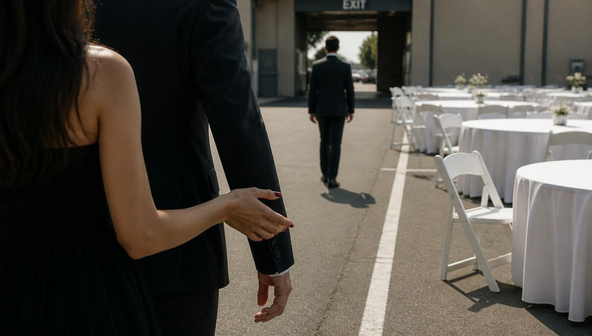
Renata reached for my arm. I looked at her hand and then at her face.
I said I would be back inside shortly. I said it without edge, without performance, without any of the escalation she was braced for. Her hand stayed on my arm for a moment longer.
She let go. I walked toward the exit with the folder under my arm and the borrowed chair empty behind me.
—
The Parking Lot
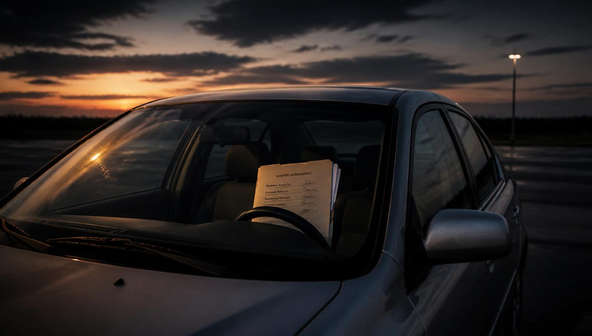
The evening air outside was cooler than I expected.
The rental car was where I had left it, anonymous and silver in the far end of the lot. I sat in the driver’s seat without starting the engine and opened the folder across the steering wheel.
My phone was charged. My contacts were organized. I had a decade of professional relationships in this device and I was about to find out exactly how many of them had been used without my knowledge.
—
The First Call
I called Marcus first because I already knew what he was going to tell me.
He answered on the second ring. I asked him directly: what documents do you have with my name on them. A brief pause. The sound of a drawer opening.
He said he would send photographs immediately and asked if everything was all right. I told him I was conducting a review. I told him to send everything he had.
—
What I Understood While I Waited
The photographs from Marcus arrived while I was still in the parking lot.
His vendor agreement showed my business name in the reference field and a notation that I was managing the account. It was written in language I would never have used, formal and slightly off, close enough to sound credible, wrong enough that I could see exactly where someone had filled in my identity like a form.
I opened the notes application. I started a new list. This one was not inventory. This one was evidence.
What The Photographs Showed Me
Marcus had sent seven images.
I opened each one slowly, zooming into the fields where names appeared.
My business name was listed not as a reference but as an active coordinator. The language implied ongoing professional involvement. Someone had written my role into these documents the way you write in a real person, with specificity, with confidence, with the particular vocabulary that only sounds correct if you have spent time around someone long enough to borrow their voice.
—
The Second Document In The Series
The fourth photograph stopped me.
It showed a supplemental agreement attached to the floral contract. A preferred vendor clause, extending my discount rate across all arrangements for the event.
That clause was not generic. It referenced the professional history between Marcus’s studio and my firm by name. It cited a timeline of collaboration spanning four years. Paige had not guessed at these details. She had known them because I had told her, casually, over dinner, the way you tell a sister things.
—
Yolanda Picked Up Immediately
I called Yolanda next and she answered before the second ring.
I told her I needed the communication she received, the one that referenced my firm. She did not ask why. She said give me three minutes and went quiet.
The three minutes felt like something geological. Outside the car, the venue lights threw warm gold across the parking lot. I could hear faint music from inside, the reception band starting something slow, and I made myself breathe through the sound of a celebration being held inside a building that had no seat for me.
—
What Yolanda Sent
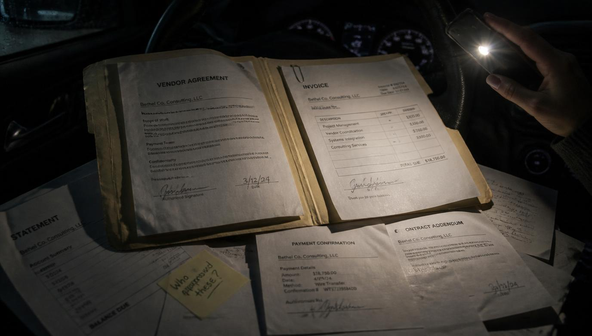
The email arrived.
It was sent from a planning address I did not recognize, formatted professionally, with a subject line that read: Vendor Coordination Confirmation, Whitmore-Brennan Event.
The body of the email described my firm as the coordinating consultant responsible for vendor relationship management throughout the planning period. It named me personally. It was written in present tense. It was sent to Yolanda six months ago, at a point when I was still answering Paige’s questions cheerfully and calling it helping.
—
The Vocabulary Was Mine
I read the email twice.
Certain phrases landed wrong in the specific way of things that have been copied rather than composed.
Whoever wrote it had listened to me carefully. The cadence, the particular way I describe vendor relationships as sustained rather than transactional, the phrasing around flexible payment terms as goodwill structures. These were my words, extracted from conversations I thought were just conversations, and reassembled into a document that made my professional identity available without my body present to go with it.
—
Building The List
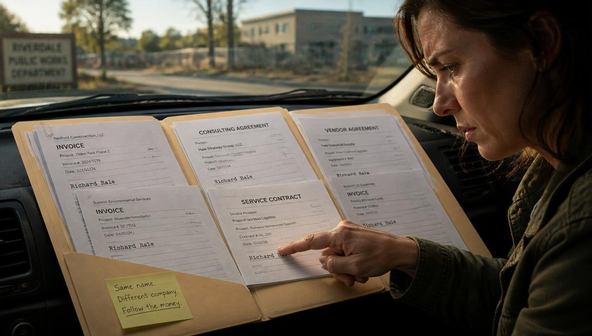
My notes application now had eleven entries.
Each one was a documented instance, a vendor, a communication, a contract clause, a reference field with my name in it. I was not adding anger to the list. I was adding facts.
There is a particular kind of clarity that arrives when you stop trying to find the innocent explanation. It does not feel like relief. It feels like the moment your eyes adjust in a dark room and you can finally see the actual shapes of things.
—
The Caterer’s Line
I returned to the photograph of the catering document.
The signature on the co-signer line was not mine. It was close. The C was right and the slant was approximated and someone had clearly practiced, or at minimum, had not hesitated.
I sat with that for a long moment. There is a distance between misusing someone’s name informally and signing their name to a financial instrument. Paige had crossed that distance. She had crossed it on business letterhead, in a deferred payment arrangement, in the full knowledge that if I ever saw it, the wedding would already be over.
—
The Plan In The Design
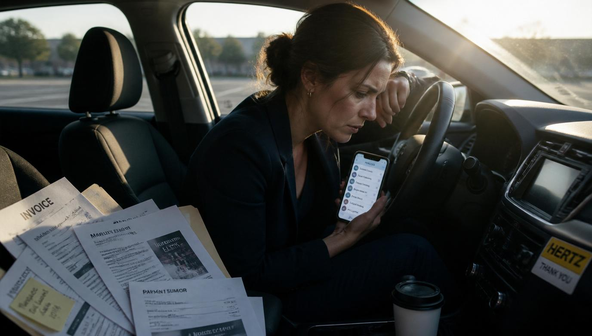
I understood the architecture now.
Keep Camille close enough to mine for information and contacts. Keep her far enough away that she cannot see what is being built with what she gave.
Exclude her from the guest list so she has no official standing on the day itself. Tell the family she has a work conflict so no one asks questions. Let the vendors believe she is present and accountable. And then, when the bill arrives, put her name on it in a room full of people where refusing means becoming the scene.
—
What I Was Not Going To Do
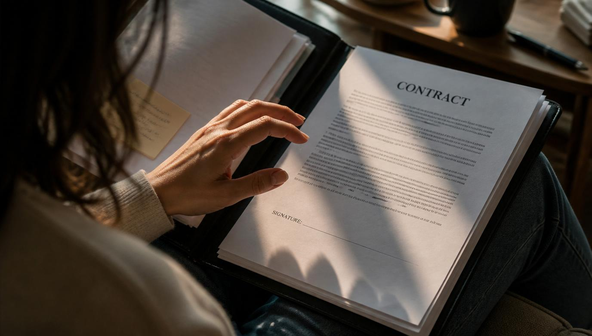
I was not going to sign anything.
I was not going to absorb this quietly to protect the performance happening forty yards away from me.
I was not going to let the elegance of the trap be the reason it worked. Paige had built this on the assumption that my need to be needed would be stronger than my need to be honest. That my fear of becoming the problem would outweigh my understanding that I already was one, just not in the way she intended.
—
Marcus Again
I called Marcus back.
I told him plainly that I had not authorized the use of my name or firm in any coordinating capacity for this event. I told him the vendor agreements referencing my business were not approved by me.
He was quiet for a moment. Not a confused quiet. A careful one, the quiet of a professional man doing a rapid internal accounting. He asked what he should do with the outstanding balance. I told him to direct all payment questions to Paige and Derek directly and to make no further adjustments based on any arrangement tied to my name.
—
The Rate Had Always Been Conditional
Marcus said he needed to tell me something.
The rate he offered for the florals, the discount he extended, it was based on the referral pipeline he expected from my firm going forward.
Without that professional relationship in confirmed standing, his standard rates applied to the remaining balance. He was not punishing anyone. He was simply describing reality without the layer Paige had placed over it. The gap between what Paige had budgeted and what Marcus would now invoice was, he told me quietly, significant.
—
The Caterer’s Office

I called the catering company’s main line.
It went to an after-hours service. I left a clear, professional message stating my name, my firm, and the specific information that I had not authorized the use of my business name as a co-signer or guarantor on any deferred payment agreement, and requesting that the accounts team contact me directly in the morning.
I kept my voice level. I did not explain the family situation. I stated facts. That is the only language that protects you when the thing that has been done to you is this precise.
—
The Music Was Still Playing
From the parking lot I could still hear the band.
They had moved into something celebratory now, the tempo higher, the kind of song that means people are dancing.
I sat in the silver rental car with my phone in my hand and my notes list open and eleven documented instances between me and whatever I had believed about my family six hours ago. The music came through the car windows faintly. I did not go back inside. I had nothing left to retrieve in there.
—
What The Folder Actually Was
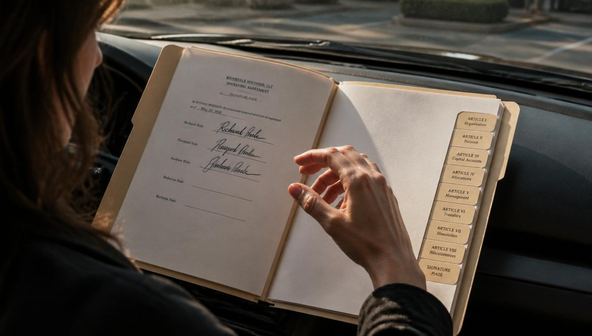
I looked at the vendor folder again.
Cristina had assembled it carefully. Every page was tabbed and ordered. She was good at her job.
The folder was not the weapon. It was just the moment the weapon became visible. Everything it contained had been constructed over seven months while I answered phone calls and offered contacts and vouched for my sister the way you vouch for someone you love, which is to say without conditions, without documentation, without the thought that love could be a credentialing mechanism someone else was quietly using to unlock rooms you had built.
—
The Decision Settling Into Something Permanent
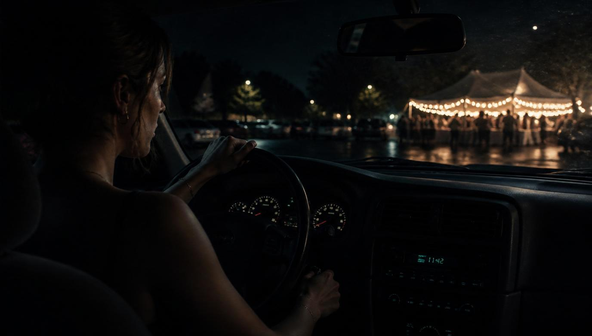
I started the car at nine forty-seven.
Not to leave. I was not leaving. I simply needed the act of starting something.
I sat with the engine running and understood that the decision I had made inside was not a feeling that would change in the morning. It was not anger that would cool. It was information that had finished arriving, and what you do with complete information is not the same as what you do with hurt. What you do with complete information is move precisely, and I was already moving.
The Photographer’s Call
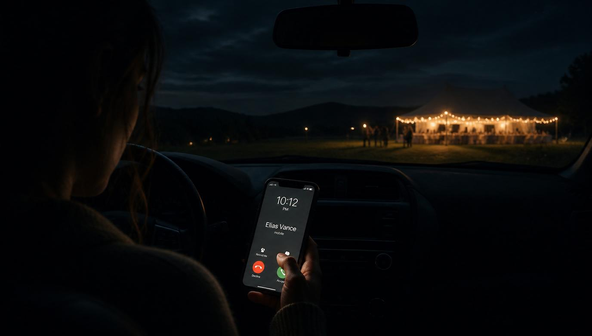
My phone lit up at ten twelve.
It was the photographer, a man named Joel who had known me for three years through industry events.
He had heard from Marcus. He was calling to verify what Marcus told him, not accusatorially, just carefully, in the way a professional checks a story before he decides what to do with it.
I confirmed it. I told him my name had been used without my authorization.
—
Joel’s Voice Dropped
He said he owed me an apology.
He had offered a friends-and-family rate because the planner told him I was managing the account personally.
He said he wished he had called me directly to confirm. I told him that was not his fault, that the representation had been detailed enough to be convincing, and that I was sorry he had been put in this position.
He said he would need to revisit his arrangement with the couple.
—
Three Vendors In One Hour
I added Joel to the notes list.
Three vendors in under sixty minutes, each one reaching out independently, each one operating from the same foundational misrepresentation.
The structure Paige built was efficient because it used the same lie in multiple places simultaneously. Pull one thread and you do not unravel a stitch. You unravel an entire section. I had not planned for three threads to move at once. I had simply told the truth and the truth had its own momentum.
—
Renata’s Name On My Screen
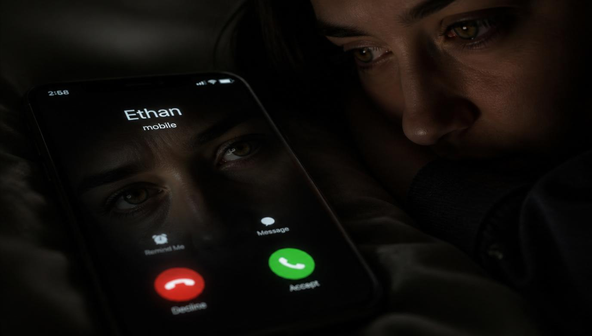
My phone lit again.
I watched it ring without picking up.
Renata had been inside the reception for three hours. Someone had reached her, probably Paige, probably the moment Marcus or Joel made contact. The call rang out and she tried again immediately, which told me everything about the level of emergency being managed inside those warm gold lights.
I let it ring a second time.
—
What I Said To No One
I did not owe anyone a scene.
That was the thing I kept returning to, the clean logic of it.
Paige had built this so that any public resistance would immediately become my failure of character. My dignity was the hostage. But dignity is only a hostage if you are willing to perform composure on demand. I was not in the business of performance anymore. I was in the business of accurate documentation and clear communication.
—
The Catering Message I Left
I pulled up the voicemail I left for the catering company and listened back to it once.
The voice on the recording sounded like someone who had already finished grieving.
It was calm without being cold. It named the specific document, the specific misrepresentation, the specific request. I had done this right. Not because I was practiced at protecting myself from family, but because I had spent a decade being practiced at protecting other people from operational disasters, and I finally understood which category this was.
—
Inside The Venue
At ten thirty-one, Derek texted me.
The message said: Camille what is happening, Marcus just called Paige.
There was a second message that arrived eleven seconds later: Are you still at the venue?
I was. I was forty yards from where he was standing, in the parking lot, in a car that did not belong to me, holding a phone that had spent the last hour dismantling the financial structure of his wedding night.
I typed: I’m here. Not going anywhere.
—
What Derek Did Not Know
I did not know then how much Derek had been told.
I would learn later that Paige had managed his understanding of the vendor arrangements carefully, the same way she had managed everyone else’s, by simplifying until the uncomfortable parts disappeared.
He knew I had helped. He did not know the shape of how. He was texting me from inside a reception he believed was already paid for, with a version of events in his head that was about to be significantly revised.
—
Paige Came Outside
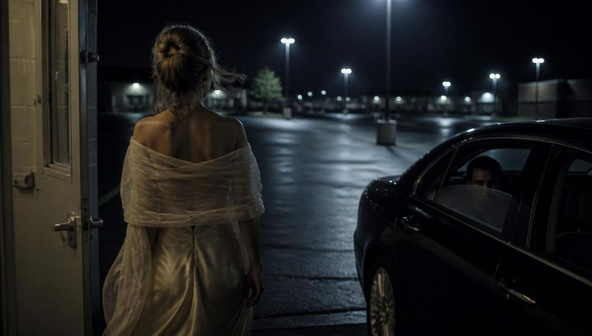
At ten forty-seven, the side door of the venue opened.
Paige walked out still in her dress, a wrap over her shoulders, her wedding updo slightly loosened at the edges. She had found me in the parking lot the way you find someone when you have been looking for exactly one person and you know their habits.
She stopped ten feet from the car. I rolled down the window.
—
The Performance Beginning
She said my name the way she always said it when she needed something.
Soft at the start. A question shape. Camille used as an invitation for me to be who she needed me to be.
She said there had been a misunderstanding with the vendors and could we please talk about it inside. She said Derek was worried. She said the reception was still going and people were asking where I was. She said my name again, softer.
I said I was fine out here.
—
What She Could Not Find
She stood in the parking lot in her wedding dress and looked for the version of me she knew how to manage.
The version that would be moved by her visible distress.
The version that would weigh the cost of a scene against the cost of just absorbing the thing quietly and choose absorption because absorption was familiar. She looked for that version for a long moment. I watched her not find it. The silence between us was the most honest thing we had shared all evening.
—
What I Said
I told her I had spoken to Marcus, Yolanda, and Joel.
I told her I had a message in with the catering company’s accounts team.
I told her I had spent two hours in this parking lot building a complete picture of what she had done with my name over the past seven months. I said it without anger, without the tremor she would have known how to use. I said it the way you state a position you have already verified twice and will not be moved from.
—
Her Answer

She said it was not what it looked like.
Then she said she had been overwhelmed and made some mistakes.
Then she said the vendors had misunderstood their communications. She moved through the explanations in the order of least accountability first, each one slightly more honest than the last, each one still stopping short of the thing that was actually true. I recognized the pattern. I had watched her use it my entire life and always accepted whichever version arrived first.
—
The Thing I Did Not Give Her
I did not argue with any version she offered.
Arguing would have given her something to respond to, and Paige was very good at responding.
Instead I told her that the vendors would be in contact in the morning and that she and Derek should make sure they were available to clarify payment terms and confirm responsible parties. I told her I had removed my name from every arrangement I could reach. I told her I was going to my hotel. Then I rolled the window up.
—
The Drive To The Hotel

She was still standing in the parking lot when I pulled out.
I watched her in the rearview mirror until the venue lights made her a small figure in white and then made her nothing at all.
The road was empty at that hour. The rental car’s interior was quiet in the way of spaces that have held something significant and settled back into ordinary air. I was not shaking. I was not numb. I was thirty-four years old, driving away from my sister’s wedding, and I was completely, accurately, finally awake.
The Hotel Room At Midnight
I sat on the edge of the bed without turning on more than the single lamp by the door.
The room smelled like generic fabric softener and recycled air. I had stayed in hundreds of rooms like this one for work, and they had always felt temporary in a way that was comfortable. Tonight it felt temporary in a different way.
Like I was between two versions of myself and neither one had fully arrived.
—
The First Text From Renata
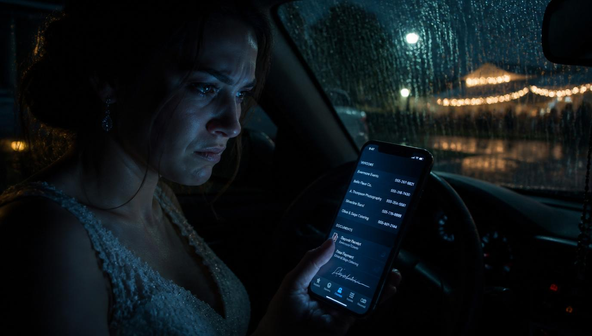
It came at twelve forty-three.
Renata did not call again. She texted instead, which meant someone had advised her to, probably Paige, who understood that a voicemail from Renata in this mood would not help anyone.
The message said: I hope you’re proud of what you did tonight. Then a second one, nine minutes later: This is not what your father would have wanted.
—
What My Father Would Have Wanted
I set the phone face down on the nightstand.
My father had been a quiet man who expressed love through presence and never asked anyone to shrink. He would have hated the eulogy Paige gave at his memorial, not because it was wrong, but because it made him into a story that served her.
I had thought that at the time and said nothing. I was finished not saying things.
—
Morning Came Gray
I was awake before six.
The catering company’s accounts team had sent an email at seven forty-two the previous evening, time-stamped while I was still driving to the hotel. It was formal and brief: they had reviewed the deferred payment documentation and required direct confirmation from the named clients before the Sunday brunch service could proceed.
My name had been removed from the account as of that communication. They had done it efficiently and without drama.
—
Derek Called At Seven
His voice sounded like a man who had not slept.
He said he needed to understand what happened, not as an accusation, just as a genuine and slightly bewildered request from someone whose morning had started with three vendor calls before coffee. I told him I would explain what I knew.
I was careful and I was honest and I did not editorialize.
—
What I Told Derek
I said that over approximately seven months, my professional name and business identity had been used to secure vendor arrangements I did not authorize.
I said I had documented each instance and had communicated directly with the vendors involved. I told him the caterer needed confirmation of payment terms before the brunch service, the florist had a revised balance outstanding, and Joel the photographer would be reaching out separately.
Derek was quiet for a long time after I finished.
—
Derek’s Silence

When he spoke again he said: She told me you were helping.
I said: I was. In the beginning. The vendor introductions were genuine. What I did not do was authorize my firm as a financial guarantor on any agreement.
He said he had not seen the catering paperwork. I believed him. His discomfort was not the discomfort of someone caught. It was the discomfort of someone realizing the floor beneath him was not where he thought it was.
—
What He Said Before He Hung Up
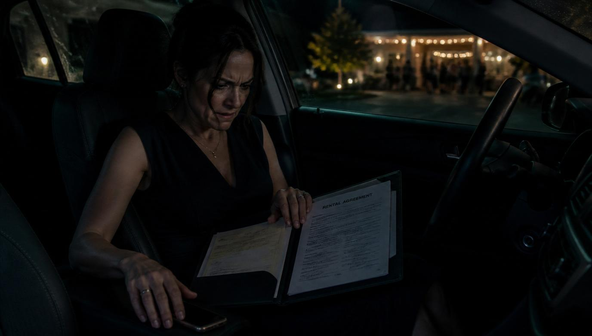
He said he was sorry.
He said it plainly, without softening it into a conditional, which I had not expected. He said he should have asked more questions and he did not and he was sorry.
I told him I appreciated that. I meant it. Then we said goodbye and I sat with the strange, almost painful clarity of being seen accurately by someone I had not expected to see me at all.
—
The Brunch I Did Not Attend
The Sunday brunch happened.
Derek’s parents covered the outstanding catering balance after his father made two phone calls and asked four direct questions of the kind that do not leave room for a comfortable deflection. I learned this later from Daria, who had attended and texted me a message that said simply: His dad is not messing around.
I read that in a diner three miles from the venue, eating eggs alone, and felt something loosen in my chest.
—
Renata’s Second Wave
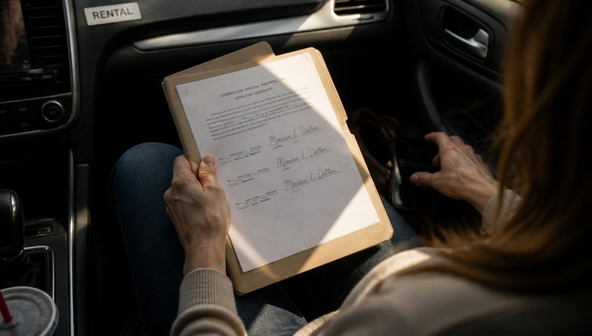
By Sunday afternoon, Renata had moved from texts to a coordinated effort.
Two cousins I had not spoken to in years sent variations of the same message, the kind of message that arrives when someone has been on the phone with your mother. They used words like family and unnecessary and what’s done is done. I read each one once and set my phone on the table.
What’s done is done was doing a lot of work in those messages.
—
Daria At The Diner
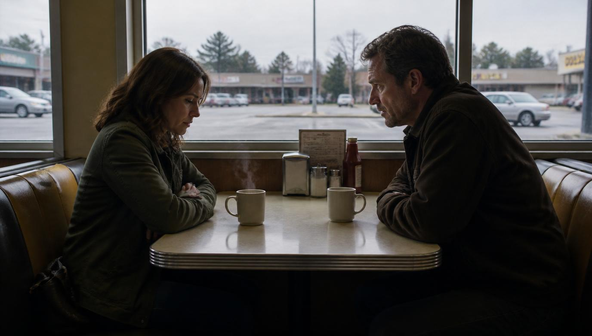
She showed up at eleven forty-five without calling first.
She slid into the seat across from me, set her keys down, and said: I told your mother I was running an errand. I wanted to see if you were all right.
I said I was all right in a way that was mostly true and she looked at me with the expression of someone who has decided to believe you and also keep watching.
—
What Daria Said She Should Have Done
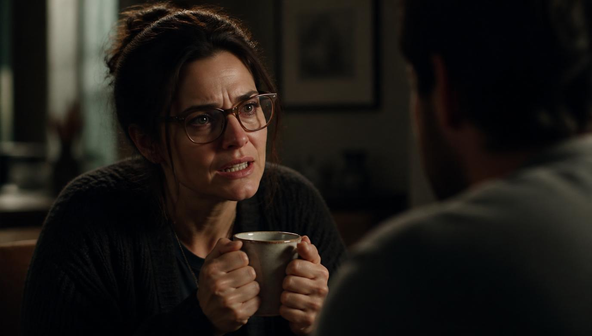
She wrapped both hands around her coffee cup and said she had seen the dynamic for years.
She said she had watched the family take from Camille and call it love and she had said nothing because she told herself it was not her place. She said that was a coward’s reason and she had known it while she was using it.
I told her that her being here now was not nothing. I meant that too.
—
The Cousin Who Called Me Jealous

By Sunday evening, the family narrative had been organized.
Daria told me later that the version circulating through the extended family positioned my actions as jealousy, an older sister who could not bear to see Paige celebrated. Several people had accepted this version without question because it was familiar and it required no one to revise anything they already believed.
I had expected this. Expecting it did not make it land softly.
—
What Paige Sent That Night
A message came through at nine fifty-one Sunday evening.
It was long. It moved through several registers: apologetic, then wounded, then explanatory, then wounded again. It framed the vendor situation as a series of miscommunications that spiraled. It said she had never intended to put me in a difficult position.
It did not mention the guest list. It did not mention the prepared story about my work conflict. It did not mention that my name had been on a financial document I never signed.
—
The Drive Home The Next Morning

I checked out at seven and loaded my bag into the rental car in the early gray light.
The venue was on my route to the highway, unavoidably. I passed its entrance without slowing down. The parking lot was empty, the white string lights gone, the whole structure returned to ordinary building in ordinary morning.
I drove toward the highway with both hands on the wheel and the radio off, and I did not look back again. I had been someone’s infrastructure for long enough.
The First Week Back
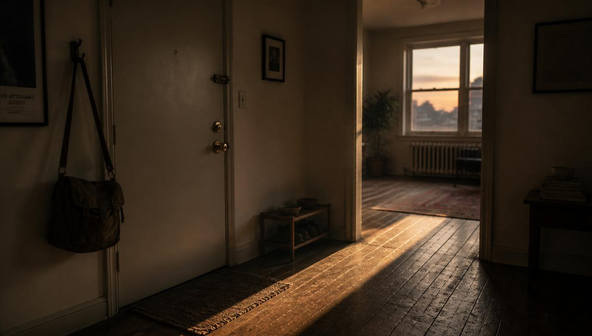
The apartment looked exactly as I had left it.
I stood in the entryway with my bag still on my shoulder and understood that this was the first time I had returned from a work trip to somewhere that was only mine.
No calls to check in with. No one expecting a debrief. The quiet was not comfortable yet. But it was honest.
—
The Administrator I Finally Hired
Her name was Priya. She was twenty-six, organized, and entirely unbothered by complexity.
I had been meaning to hire someone for two years and had not because managing everything myself felt like evidence of something. I could not have told you what.
I sent the job listing out on a Monday. By Wednesday I had a candidate. By Friday she had a start date. The decision was so simple once I stopped protecting the reasons not to make it.
—
Reviewing The Vendor Agreements
I spent the better part of a week going through every contract, every standing arrangement, every informal understanding I had built over a decade.
I was looking for places where my name meant something because I had been present, versus places where my name was being borrowed because someone assumed I would not notice.
There were more of the second than I expected. Not all of them were Paige’s doing. Some of them were simply what happened when you never drew a line.
—
Marcus Calling To Check In
He called on a Thursday afternoon, eleven days after the wedding.
He said he wanted to make sure we were all right, professionally, because he valued the relationship and had not loved the way the situation unfolded. I told him we were all right.
He said: I should have called you to confirm when I first got the account setup. I knew something felt sideways and I told myself it was not my business.
I told him I understood the instinct. I was working on the same one myself.
—
The Caterer’s Letter
It arrived by email, formal and brief.
It confirmed that my firm had been fully removed from their documentation, that the outstanding balance had been settled directly by the clients, and that they looked forward to working with me on future projects if the opportunity arose.
The professional normalcy of it landed somewhere in my chest. Not as relief, exactly. As a kind of verification. I had not burned what I built. I had only stopped letting someone else build on top of it without asking.
—
Yolanda Over Coffee

We met at a place she liked near her office.
She had a way of getting to the point that I had always appreciated, and she used it immediately. She said: I should have pushed when I saw that email. I told myself it was probably fine.
I said: You told me. I was the one who said it was probably fine.
She looked at me and then said: We did each other a disservice. I think we can do better. I told her I thought so too.
—
What Renata Offered
She called on a Tuesday, three weeks after the wedding.
Her voice had lost the fury of the first wave. What was left was something harder to name, a woman managing the distance between what she understood and what she was willing to say.
She told me that things had gotten out of hand and that both her daughters had made mistakes. I listened to the full sentence.
Then I said: Mom. I love you. But I am not going to accept part of the blame for being defrauded in order to make this easier to live with.
—
The Silence That Followed That
She did not hang up.
That surprised me more than I let on. She stayed on the line for almost a minute and I could hear her breathing and the faint sound of a television somewhere in her house.
She finally said: I don’t know how to do this differently.
I told her I did not need her to know right now. I told her I would stay in the conversation if she would. She said she would try. It was not enough and it was also the most honest thing she had said to me in years.
—
Daria Becoming Real

She drove up on a Saturday in late October.
We walked a trail near my apartment that I had not used in months, and she told me things about the family she had been holding for years, not gossip, but observation. She had always seen the architecture. She had just been waiting for someone to acknowledge the blueprint.
I told her what it had cost me to believe that being needed was the same as being wanted. She was quiet for a moment. Then she said: I watched you believe that. I should have said something sooner. I told her: Start now.
—
Paige’s Second Message
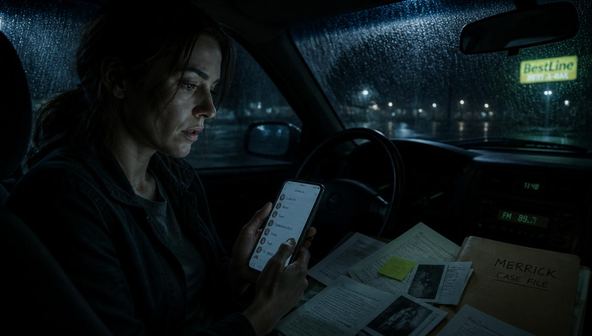
It arrived on a Wednesday, six weeks after the wedding.
It was shorter than the first one, which told me something. The long message had been about managing the story. This one was quieter.
She said: I knew what I was doing when I left your name off the list. I told myself you would understand eventually. I don’t think that was true. I think I just didn’t want to explain it.
I read it four times. Then I set the phone down and did not respond for three days.
—
What I Did Those Three Days

I worked. I took a long route home on Wednesday evening and watched the light change over the city in a way I had not let myself notice in months.
On Thursday I had coffee with Priya and we talked through a new client intake process that made the boundaries of what my firm would and would not endorse structurally clear.
On Friday I called Yolanda to refer a vendor her way, the first referral I had made in weeks that felt clean, chosen deliberately, not as currency but as genuine.
—
The Response I Finally Sent
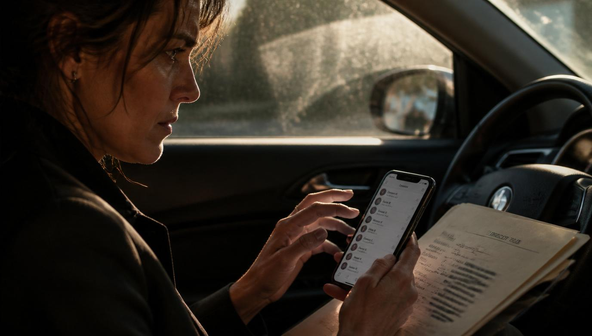
On Saturday morning I wrote back to Paige.
I said: I know. I’ve known for a while. What I needed was for you to know that I knew, without me having to prove it to you.
I said I was not closing anything permanently. I said I was not ready for it to be fine. I said if she wanted to have an honest conversation, a real one, not a managed one, I would have it with her eventually.
I pressed send before I could revise it into something smaller.
—
The Vendor Gathering

It was an industry event I had attended every year for a decade.
This year I almost skipped it. Not because of Paige. Because I had spent two months in something close to internal renovation and I was not sure I had the surface-level professional ease it required.
I went anyway. I put on a blazer that fit well and I drove to the venue and I walked in without running the math on what I needed to get out of the evening.
—
The Newer Vendor

His name was Tomás and he ran a small audiovisual company I had connected with a lighting designer eight months ago.
He found me near the end of the evening and said the introduction had changed the shape of his business. He said it directly, without softening it, the way people speak when something is genuinely true.
I thanked him. I did not deflect it. I did not immediately calculate what it meant about my value in the room. I just let it be what it was, a thing someone felt and decided to say.
—
The Drive Home

I took the long route again.
The city was lit and moving and I drove through it without rushing, one hand on the wheel, the window cracked enough to let in the October cold.
I was thirty-four years old and I did not yet have a name for what I was building. That did not frighten me the way it once would have.
The thing about belonging to yourself is that nobody can revoke it. You just have to stop handing it over. I was still learning how to stop, still learning what it felt like to hold it. But the car was mine, and the road was mine, and the quiet between songs was mine, and I drove on.


